
Portable Power Station
BEESTE builds portable power stations from 200W to 2000W for brands, distributors and installers. Units ship from our Shenzhen line with LiFePO4 cells, BMS and inverter assembled in-house, and can be configured for OEM or private label programmes.
Choose by load, not by wattage label
A 200W unit covers phones, laptops and lighting. 500W to 1000W handles fridges, power tools and CPAP machines. 1500W to 2000W is where induction cooking, sump pumps and small compressors start. Tell us the load profile and duty cycle, and we will size the pack rather than sell you the largest box.
What ships with every unit
- LiFePO4 pack with matched cells and in-house BMS
- Pure or modified sine output, stated on the datasheet
- AC, DC, USB-A and USB-C outputs on the rear panel
- MPPT input matched to our folding solar panels
OEM and private label
Housing colour, logo, output configuration, packaging and manual language can all be specified. MOQ depends on the configuration. Send the model you need and we will quote against the real bill of materials. Send your specification or browse the models below.
Which buyers use which power class
Wattage on its own tells you very little. What decides a model is the load profile: how many watts run at once, for how long, and whether anything starts with a surge. In practice our buyers fall into five groups, and each one settles on a narrow band.
- Outdoor and camping retail. 200W to 600W. Phones, lights, a laptop, a small cooler, a drone charger. Buyers in this band care about weight and pack size more than capacity, because the unit gets carried.
- Home backup and emergency. 1000W to 2000W. Router, fridge, freezer, lights, a fan, medical devices. The load is small but the runtime needs to be long, so capacity matters more than peak output.
- Jobsite and mobile trades. 1000W to 2000W. Circular saws, grinders, compressors and chargers. Here the surge rating decides whether the unit survives, not the continuous rating.
- Security, telecom and monitoring. 200W to 500W. Cameras, NVR, PoE switches and radio equipment running 24 hours. These buyers need a charge source sized for continuous draw, not a bigger battery.
- Events, film and broadcast. 1000W to 2000W. Lighting, monitors, audio and battery chargers. Loads are mixed and change between setups, so output configuration matters as much as capacity.
How to size a unit in four steps
- List every load with its running watts. Use the rating plate or the power supply label, not the marketing number. A laptop charger rated 65W draws roughly that while charging and less once the battery is full.
- Add the surge. Motors and compressors pull several times their running current for a fraction of a second at start-up. Two devices starting together can exceed a surge rating that looks generous on paper.
- Convert to watt-hours. Multiply running watts by the hours the load actually runs. A 60W fridge cycling at roughly one third duty over 24 hours is about 480Wh of demand, not 1,440Wh.
- Match the charge source. A pack that takes twelve hours to recharge from the wall is a different product from one that takes three. Decide whether the unit will be recharged from mains, from solar, or from a vehicle, and size the input accordingly.
For a working estimate, runtime in hours is roughly capacity in watt-hours multiplied by 0.85, divided by the load in watts. The 0.85 accounts for inverter and conversion losses. Treat the result as a planning figure, then confirm it against a real load test before you commit to a container.
What to check on the datasheet
- Continuous and surge rating. Both numbers, and how long the surge is allowed to last. A peak figure with no duration is a marketing number.
- AC waveform. Pure sine and modified sine are not interchangeable. Anything with a motor, a compressor, or a sensitive power supply needs pure sine. Ask which one the model actually produces.
- Cell chemistry and configuration. LiFePO4 is the current default for cycle life and thermal stability. Ask for the series and parallel arrangement, not just the total capacity.
- Charge time from each input. AC, solar and vehicle separately. A single "charging time" figure usually refers to the fastest input only.
- Cycle life at a stated depth of discharge. A cycle count without a DoD figure cannot be compared across suppliers.
- Operating temperature range. Charging below freezing is the constraint that catches buyers in northern markets, and it is usually a BMS setting rather than a cell limit.
- How the BMS is described. Over-current, over-temperature, short circuit and cell balancing should be named individually. A supplier who can only say "smart BMS" has not told you anything.
Portable power station, solar generator or UPS
The three terms get used interchangeably in listings, and they are not the same product. A portable power station is a battery, a charge controller and an inverter in one case, with no automatic transfer. A solar generator is the same unit sold with a folding panel, and the panel is often the weaker half of the kit. A UPS switches to battery automatically within milliseconds when mains drops, and is specified by transfer time rather than by capacity alone.
For retail and distribution, a power station with an optional panel bundle usually sells better than a fixed kit, because the buyer can choose the panel size. For installation and project work, the transfer behaviour matters more than the marketing label, and it should be stated explicitly on the datasheet.
Questions buyers ask us
Can one unit run a full-size fridge?
Running a fridge is not the hard part; starting the compressor is. Check the surge rating against the compressor's locked-rotor current, and expect the fridge to cycle rather than run continuously, which is what makes the runtime estimate optimistic or pessimistic depending on the day.
Why does the same capacity give different runtimes between suppliers?
Because capacity is measured at the cell, while runtime is measured at the socket. Inverter efficiency, idle draw, BMS cut-off voltage and the depth of discharge the supplier allows all sit between the two numbers. Ask for a load test at a stated wattage rather than a runtime table.
Can the outputs be changed for our market?
Yes. Socket type, output count, DC port voltage and the mix of USB-A and USB-C are all configurable, and they affect the bill of materials, so they are quoted per project rather than listed as standard.
What documentation should ship with a container?
At minimum a datasheet matching the shipped configuration, a UN38.3 test summary and an MSDS for the battery, plus the declaration documents your market requires. Ask for these before production, not after, because re-testing a finished batch is slow and expensive.
How do we compare two quotes that look identical?
Line up cell brand and grade, BMS specification, inverter topology, enclosure material and the number of output ports. Two quotes at the same capacity usually differ in two or three of those, and that is where the price gap comes from.
More reading
- portable power station manufacturers — How real factory capability compares with a trading company.
- portable power station wholesale — How wholesale price tiers and MOQ are set.
- OEM portable power station — What an OEM programme covers, from tooling to packaging.
- portable power station manufacturer — The checks used to verify a factory before ordering.
- 1000W portable power station — Cubus 1000 的产品拆解
- All manufacturing guides
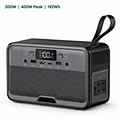
YOUYO R200 200W Portable Power Station with 100W USB-C
Model NO.:R200
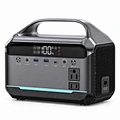
NEO300M 300W Portable Power Station with LED Light
Model NO.:NEO300M

NEO 501 500W Portable Power Station — 288Wh LiFePO4
Model NO.:NEO 501

1500W 1152Wh Portable Power Station
Model NO.:Cubus1500 Pro

2000W 2073Wh Portable Power Station
Model NO.:NEO2000
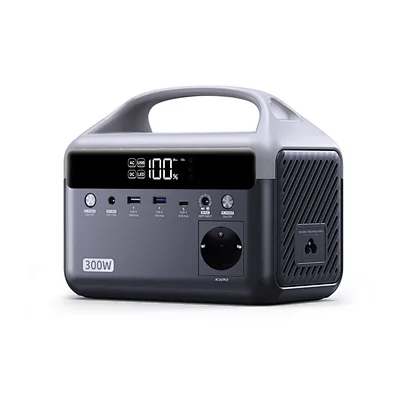
300W 192Wh Portable Power Station
Model NO.:STAR 300Z
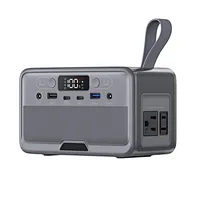
100W 89.6Wh Portable Power Station
Model NO.:YOUYO R100 Pro

1000W 960Wh Portable Power Station
Model NO.:Cubus1000 Plus
- 1
- 2