
LiFePO4 Battery
BEESTE supplies LiFePO4 battery packs in 12.8V, 25.6V and 48V configurations from 100Ah to 400Ah, for portable power stations, home backup and off-grid installations.
Voltage classes and what they suit
12.8V packs cover 12V loads: pumps, lighting, fridges and small inverters. 25.6V halves the current for the same power, which starts to matter above roughly 2kW. 48V is the usual choice for home backup and inverter systems with longer cable runs.
Choosing capacity
Capacity is set by runtime, not by habit. Take the load in watts, multiply by the hours you need, and divide by the usable depth of discharge. A 100Ah 12.8V pack holds about 1.28kWh nominal; a 200Ah 48V pack holds about 9.6kWh. Match that to the inverter and the recharge source.
Build options
- 12.8V / 25.6V / 48V, 100Ah to 400Ah
- Series and parallel configurations to order
- Terminal and enclosure options by model
OEM supply
Labelling, packaging and terminal configuration can be specified. Send your specification with voltage, capacity and duty cycle.
Cycle life and what it means for cost per kilowatt-hour
A lead-acid pack is cheaper per kilowatt-hour on the invoice and more expensive per kilowatt-hour delivered, because it is replaced several times over the life of a LiFePO4 pack. The comparison only works when both are calculated the same way: usable capacity, cycle count at a stated depth of discharge, and the replacement labour.
Two numbers are needed to make that comparison honestly. The first is the cycle count at a defined depth of discharge, because a cycle figure quoted at 100 percent DoD is not comparable to one quoted at 80 percent. The second is the capacity retention at end of life: a pack rated to 80 percent of original capacity after its stated cycles is a different offer from one rated to 60 percent. Ask for both in writing.
What a BMS should actually do
- Cell balancing. Passive balancing is common and adequate for most packs. Ask whether balancing runs during charge only or continuously.
- Over-current and short-circuit protection. The trip thresholds should be stated, not implied.
- Temperature protection on charge and on discharge. These are separate limits. Charging a cold pack is the case that damages cells, and it is a BMS setting.
- Low-voltage disconnect. The cut-off voltage decides how much of the rated capacity the buyer can actually use before the pack shuts down.
- Communication. RS485 and CAN are the two interfaces most inverter and solar charger brands expect. Confirm the protocol, not just the presence of the port.
Series, parallel and the limits that matter
Packs can be connected in series to raise voltage or in parallel to raise capacity, but only within the limits the manufacturer specifies, and only with packs at the same state of charge and age. Mixing an old pack with a new one in parallel causes circulating current that shortens the life of both.
Three rules cover most of it. Do not exceed the stated series or parallel count. Bring every pack to the same voltage before connecting. Use one BMS per pack rather than one BMS across several packs, unless the design is explicitly built for a single controller. Ask your supplier which arrangement the pack was tested in, because a pack rated for four in series is not automatically rated for four in parallel.
Where each voltage class is used
- 12.8V. Marine electronics, RV house banks, camping, small solar sheds and replacement of lead-acid in existing 12V systems.
- 25.6V. Larger RV and marine installations, golf carts, mobility equipment and mid-size off-grid storage.
- 48V. Home storage, telecom cabinets, server room backup and any system built around a 48V inverter or charger.
The voltage class is usually fixed by the equipment already installed. Buyer mistakes happen when capacity is chosen first and the voltage window is checked afterwards.
Questions buyers ask us
Can a LiFePO4 pack replace a lead-acid battery directly?
Usually yes for voltage and physical size, but not always for the charger. A lead-acid charger with a desulphation stage or an equalisation cycle can push a LiFePO4 pack above its limit. The charger profile needs to be set to lithium, or replaced.
Why is usable capacity lower than the nameplate figure?
Because the BMS disconnects before the cells are fully discharged, and because capacity is measured at a defined discharge rate. A pack quoted at a slow rate will deliver less at a high continuous current. Ask for the capacity at the current the application actually uses.
How does cold weather affect charging?
Charging below freezing damages lithium cells, so a pack with low-temperature protection will refuse to charge rather than accept the current. That is correct behaviour, and it needs to be stated on the datasheet so the buyer does not treat it as a fault.
What documentation should come with a battery shipment?
A UN38.3 test summary, an MSDS, and the transport declaration required for the shipping mode. Batteries travel as dangerous goods by air and sea, and a shipment without the correct documents will be held. Ask for the documents against the exact pack configuration being shipped.
Can the enclosure and terminals be customised?
Yes. Case format, terminal type, cable length, display and mounting brackets are all configurable, and they change the tooling and the minimum order quantity. Send the mechanical drawing you need and the quote will be built against it.
Turning a load list into a capacity
The reliable method is to build the list before looking at catalogues. Write down each appliance, its running watts, how many hours a day it runs, and whether it starts with a surge. Multiply watts by hours for each row and add the result. That number is the daily energy demand in watt-hours.
Then decide how many days of autonomy the installation needs, apply the usable depth of discharge the BMS allows, and add a margin for ageing. A pack sized to exactly one day of demand will be undersized within two years, because capacity fades. Sizing to two days of demand at 80 percent depth of discharge is the usual compromise between cost and resilience.
More reading
- portable power station certifications — The certification set that applies to the battery range.
- UN38.3 portable power station — Transport testing for lithium battery packs.
- portable power station manufacturer — How the cell and pack factory is verified.
- All manufacturing guides

25.6V 200Ah LiFePO4 Battery Pack
Model NO.:25.6V 200Ah
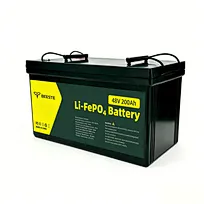
48V 200Ah LiFePO4 Battery Pack
Model NO.:48V 200Ah
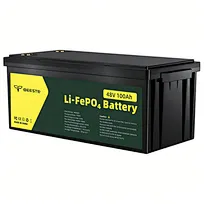
48V 100Ah LiFePO4 Battery Pack
Model NO.:48V 100Ah
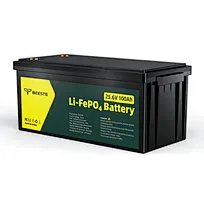
25.6V 100Ah LiFePO4 Battery Pack
Model NO.:25.6V 100Ah
12.8V 400Ah LiFePO4 Battery Pack
Model NO.:12.8V 400Ah
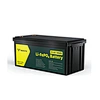
12.8V 300Ah LiFePO4 Battery Pack
Model NO.:12.8V 300Ah

12.8V 200Ah LiFePO4 Battery Pack
Model NO.:12.8V 200Ah

12.8V 100Ah LiFePO4 Battery Pack
Model NO.:12.8V 100Ah
- 1