How to Verify a Portable Power Station Manufacturer Is Reliable: A 12-Point Factory Checklist
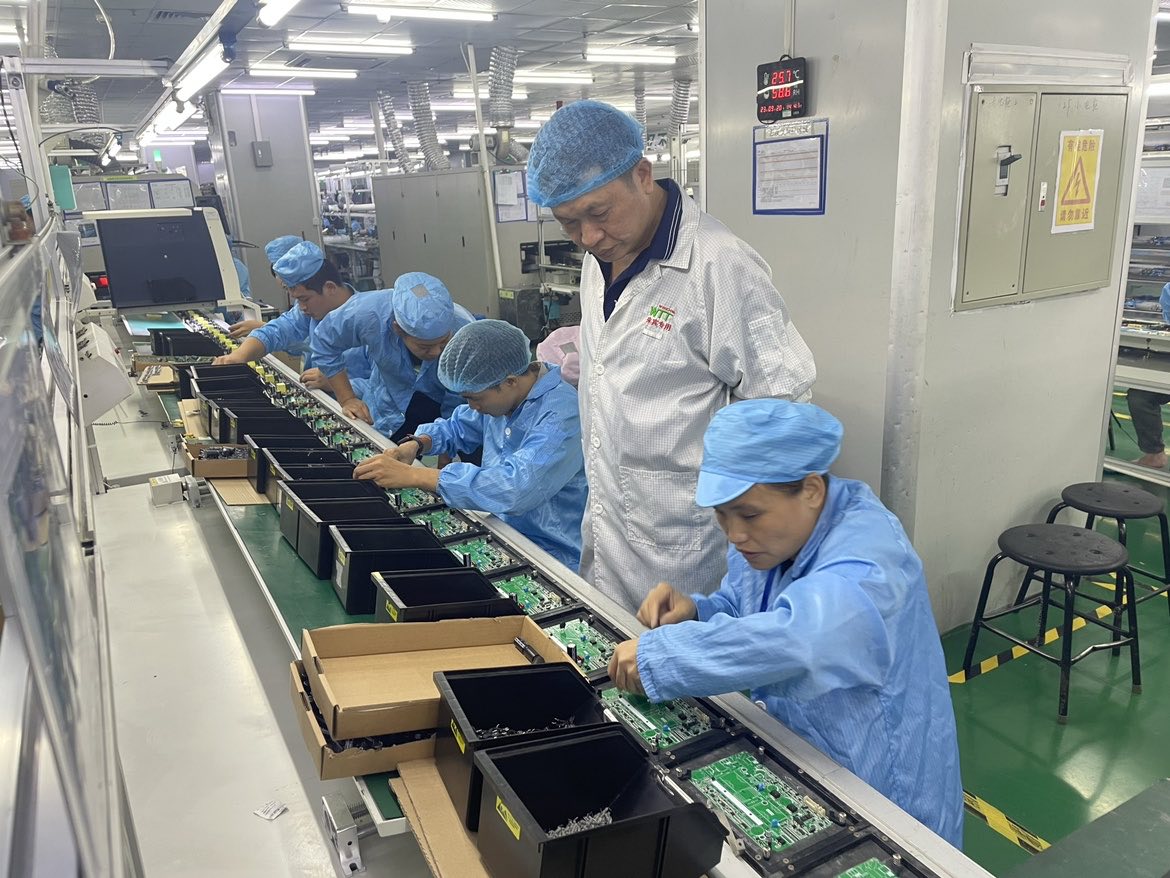
Verifying a portable power station manufacturer comes down to four questions. Do they own production, or only assemble a third party's parts? Can they show cell-level test records instead of a marketing certificate? Can you reach a decision-maker, not a sales relay? And will they accept an audit before you place a large order? Everything below is a way of testing those four.
The four questions that decide it
Ownership of production. Ask which parts of the unit are made in-house and which are bought in. A supplier that owns battery pack assembly and final testing can control quality; one that only screws together imported sub-assemblies cannot. This single question separates a manufacturer from a trading company more reliably than any document.
Test records, not certificates. A certificate proves what was tested once, on a sample. A test record proves what is tested routinely. Ask how many finished units per batch go through a full load and charge test, and who signs off.
A direct line to a decision-maker. Request the name and role of the person who owns quality and the person who owns production. If every answer routes through one sales contact, you have no way to escalate a problem later.
Willingness to be audited. A factory confident in its process will agree to a visit or a third-party audit before a large order. Reluctance is data.
The 12-point factory checklist
| # | What to verify | What a reliable answer looks like |
|---|---|---|
| 1 | Legal entity and factory address | The legal name, the address on the business licence and the address you are invited to are the same |
| 2 | In-house production scope | A clear list of make-versus-buy, with battery pack assembly and final test named as in-house |
| 3 | Cell sourcing | Named cell chemistry and supplier; no blank answers |
| 4 | Incoming inspection | Documented IQC on incoming cells and boards, with a record you can be shown |
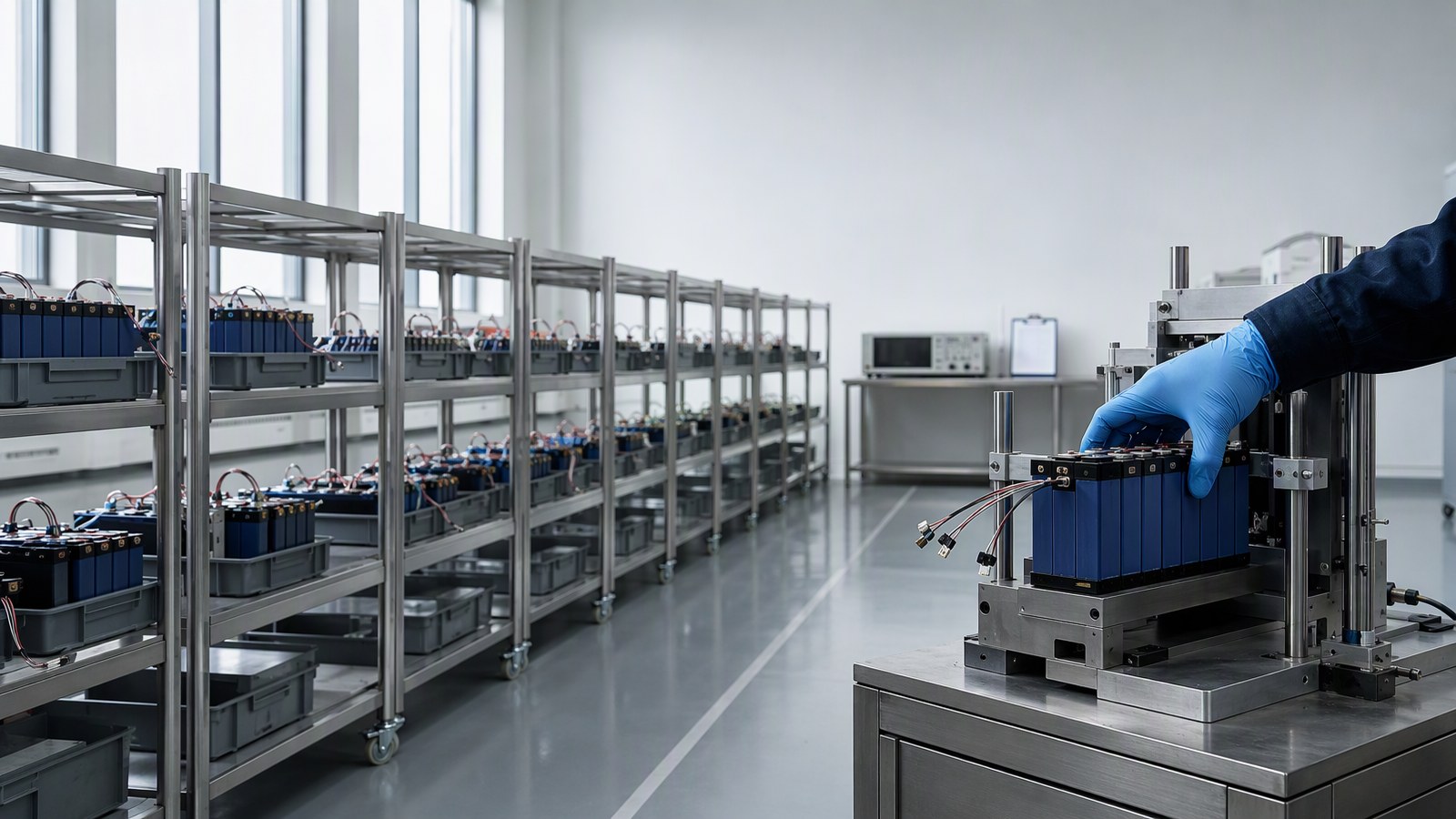
| 5 | Ageing and charge-discharge test | Racks and capacity data per unit or per batch; ask to see a recent log |
| 6 | Final QC gate | A defined pass/fail test before packing, not a visual check only |
| 7 | Traceability | A serial number that links a delivered unit back to its batch and test record |
| 8 | Transport and safety documentation | Test summaries and MSDS available for the exact model you are buying |
| 9 | BMS and firmware ownership | Whether protection parameters are set by the factory or inherited from an outside module |
| 10 | OEM and ODM capability | A clear line between relabelling, light customisation and genuine design work |
| 11 | Quality escalation path | Named owners for quality and production, with a stated response route |
| 12 | Audit readiness | Agreement to a visit or third-party audit before a large order |
Documents to request before you book a flight
Ask for these first. A supplier who can send them within a few days is telling you something about how the factory is run.
- Business licence, with the legal name matching the bank account you will pay
- For the exact model: the transport test summary and the MSDS
- A recent incoming-inspection and ageing-test log, redacted if needed
- A finished-product test report for the model you are considering
- An organisation list naming the quality and production owners
What a factory visit will and will not tell you
A visit is the fastest way to confirm ownership of production. What you can see in an hour: whether ageing racks are running and how full they are, whether the final test station is actually in the flow or parked in a corner, and whether the person answering your process questions is the person who runs the line. What a visit will not tell you is what happens in month six, when your order is routine and the sample unit you approved is a memory.
Red flags that usually mean stop
- The legal name on the invoice does not match the factory you visited
- Test documentation exists only for a sample, never for a shipped batch
- Ageing racks are visibly idle on a working day
- Every technical question is answered by a salesperson with no engineer present
- The quoted capacity or output changes depending on who you ask
Frequently asked questions
Is a trading company always a worse choice than a factory?
No. A good trading partner with a close factory relationship can be easier to work with than a distant factory. The risk is not the trading model — it is not knowing which one you are dealing with. Ask the ownership-of-production question first, and the answer will tell you which conversation you are in.
How many units should a sample order include before I trust the process?
Enough to test repeatability rather than a single good unit. Ask how many units per batch go through the full test, and request the batch records for the order you receive — not for the sample you approved.
Can I rely on a third-party inspection report instead of a visit?
For a first order, an inspection report plus the document pack is a reasonable substitute for a flight. What it cannot replace is the ownership-of-production question. An inspection confirms what was produced; it does not confirm who controls the process.
What should the first paid order look like?
Small enough to absorb, large enough to run the normal process. If the factory switches to a special line for your small order, you have learned nothing about how your volume order will be handled.
Next step
If you are sourcing portable power stations and want to run this checklist against a real factory, send us the model and target market you have in mind. We will answer the four questions above in writing first, so you can decide whether a visit is worth your time.
UN38.3 Portable Power Station Manufacturing: What Buyers Must Verify
Related Article