
YOUYO R200 200W Portable Power Station with 100W USB-C
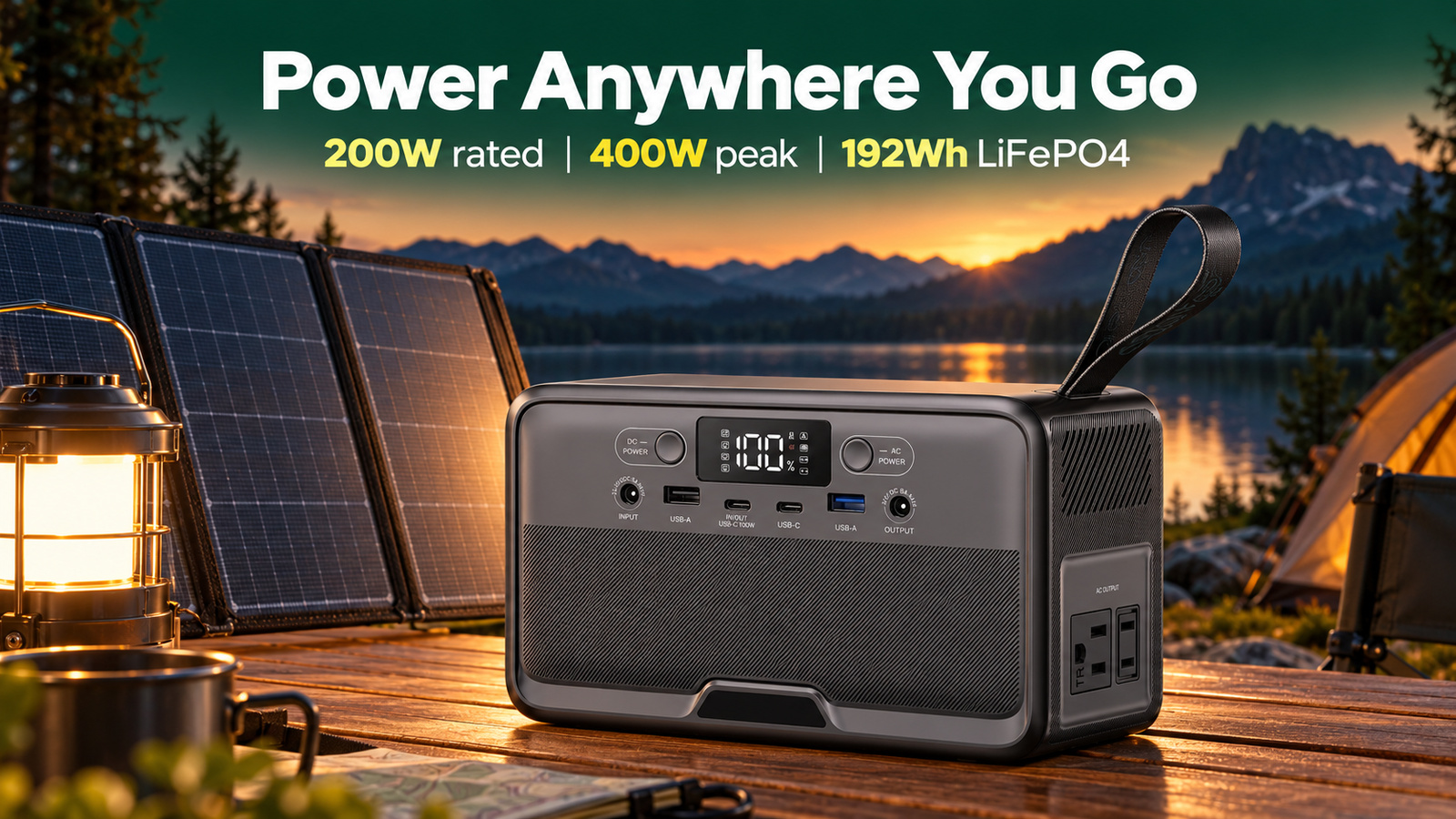
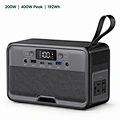
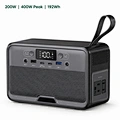
Short answer: the YOUYO R200 is a 200 W continuous, 400 W peak, 192 Wh LiFePO4 portable power station that fits in a lunch box. It carries seven ports — two 110 V AC outlets, one DC5521, two USB-C and two USB-A — a 100 W USB-C port that recharges the station as well as powering devices, and a 2 W LED with SOS. The AC output is a pure sine wave, so sensitive electronics and motor-driven appliances run the way they do on mains power.
How far 192 Wh goes
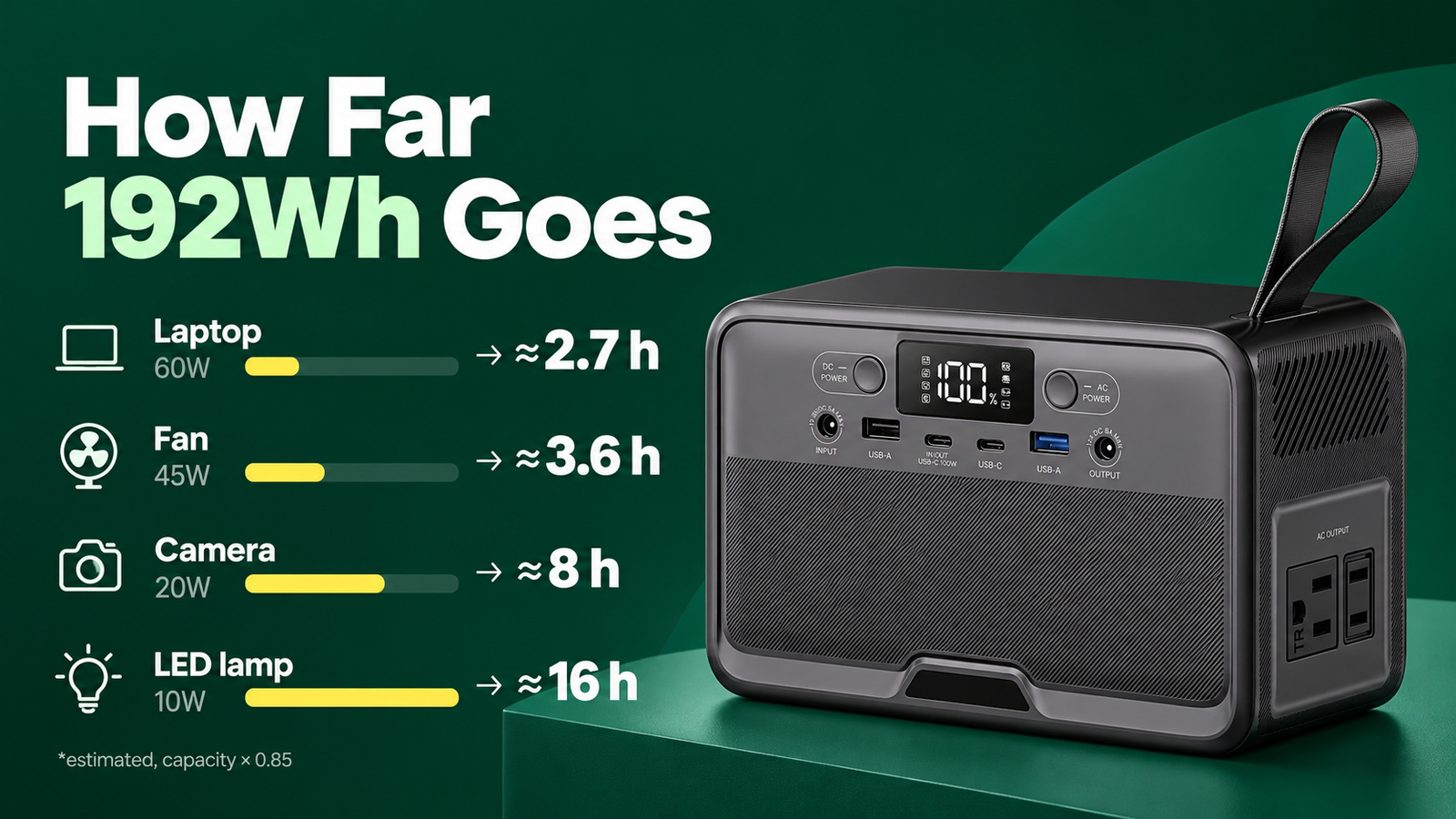
Runtime is capacity × 0.85 ÷ load. A 60 W laptop runs about 2.7 hours, a 45 W fan about 3.6 hours, a 20 W camera about 8 hours and a 10 W LED lamp about 16 hours (calculated). Kettles, hair dryers, heaters and compressors draw well beyond 200 W; anything with a heavy start-up draw should be checked against the rating first.
200 W continuous, 400 W peak
The AC side is rated 200 W continuous at 110 Vac, adjustable across 100–120 Vac, at 1.82 A and 60 Hz ± 3 Hz, with 400 W available for the moment a motor or a projector first draws current. The two outlets share the 200 W rather than each carrying it, and overload shuts the output down automatically.
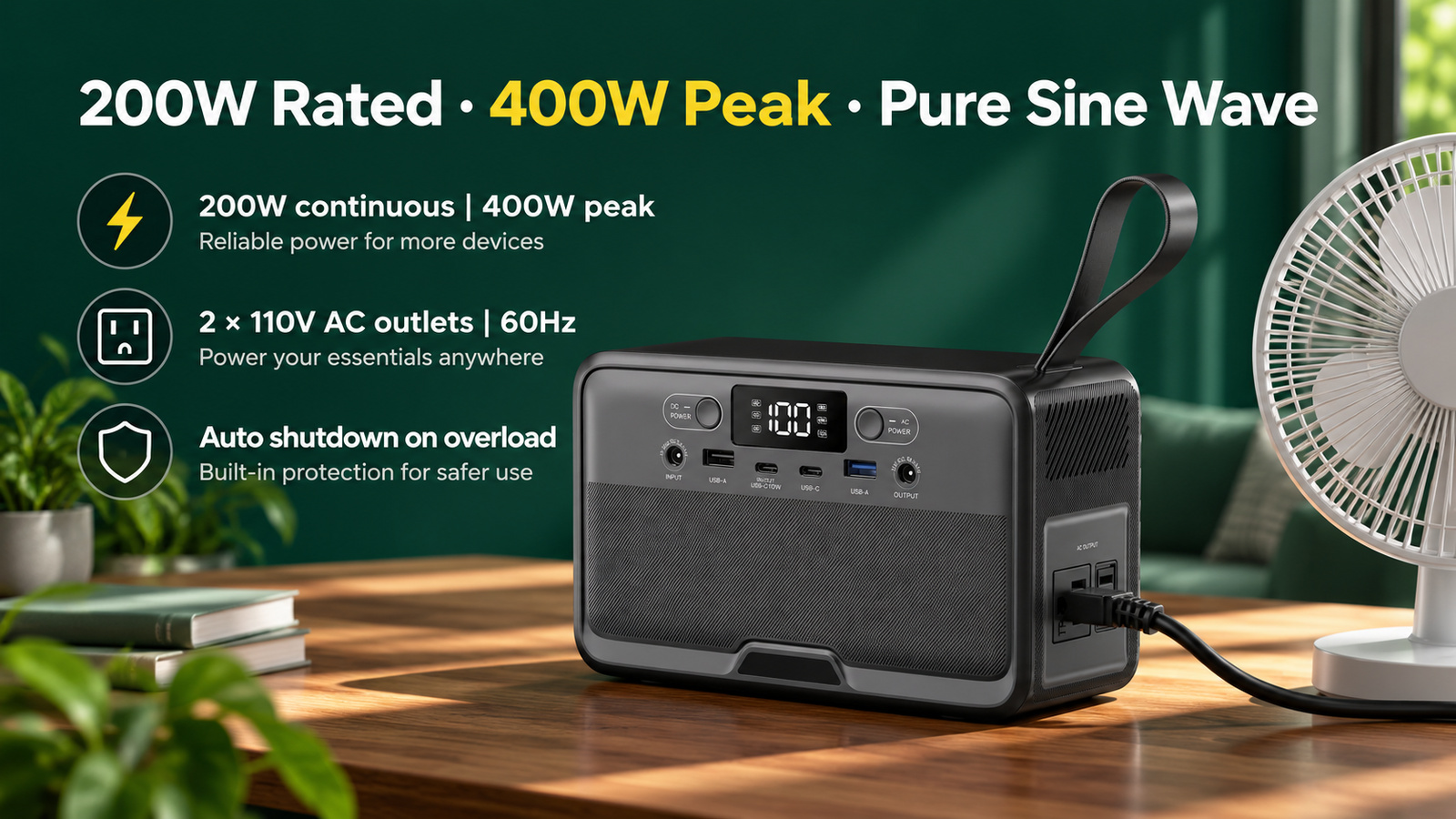
Pure sine wave output
A pure sine wave is what a wall socket delivers. It matters most on a station this size, because the loads people actually carry are the fussy ones: laptop adapters, camera chargers, audio gear, variable-speed fans and appliances with electronic controls run without the hum or extra heat a stepped waveform causes.
It also widens what 200 W can be trusted with — measuring instruments, small medical devices and motor-driven tools are specified against a clean sine wave. The rating decides what starts; the waveform decides whether it behaves.
Seven ports, one of them bidirectional
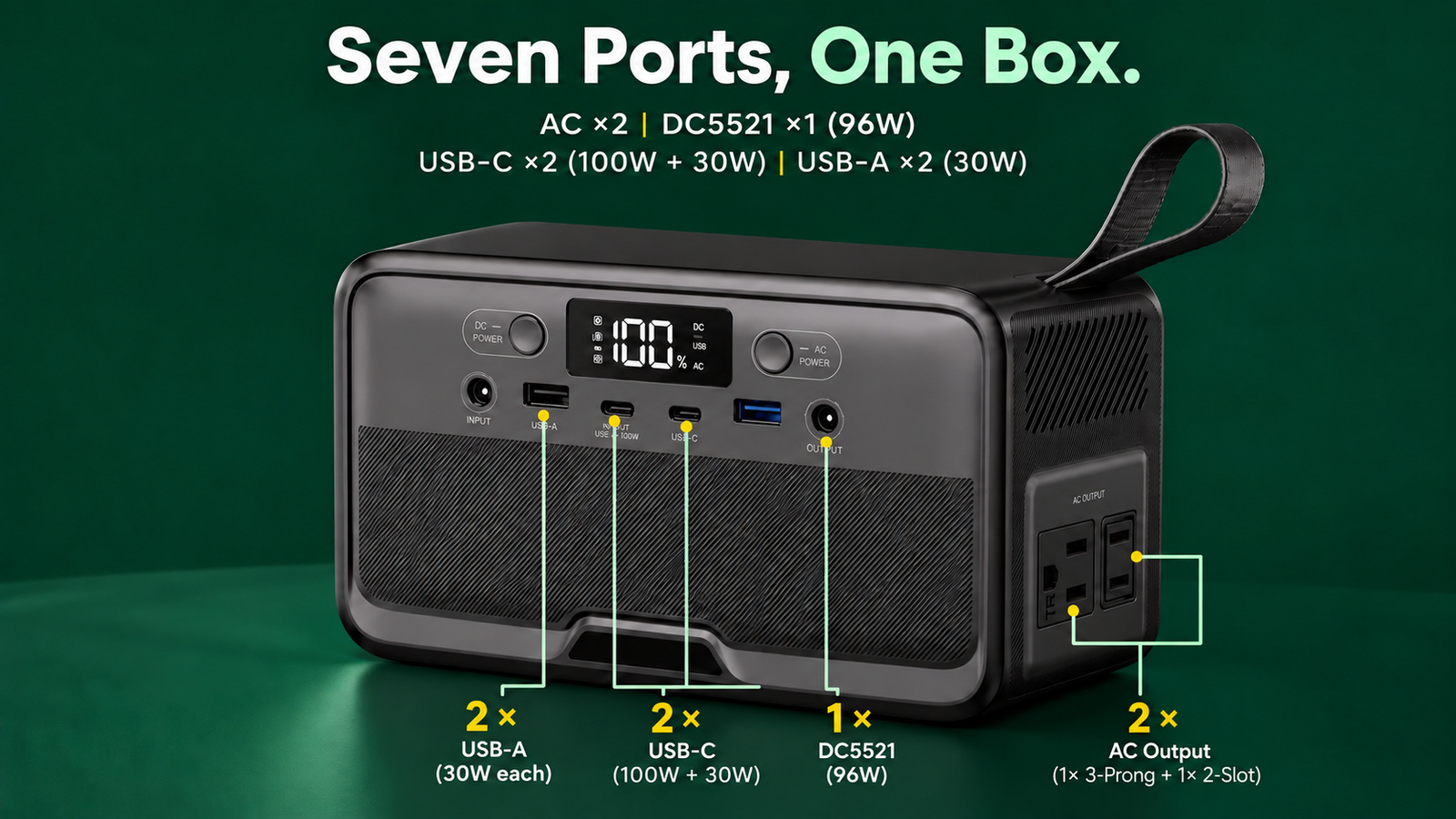 |
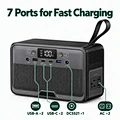
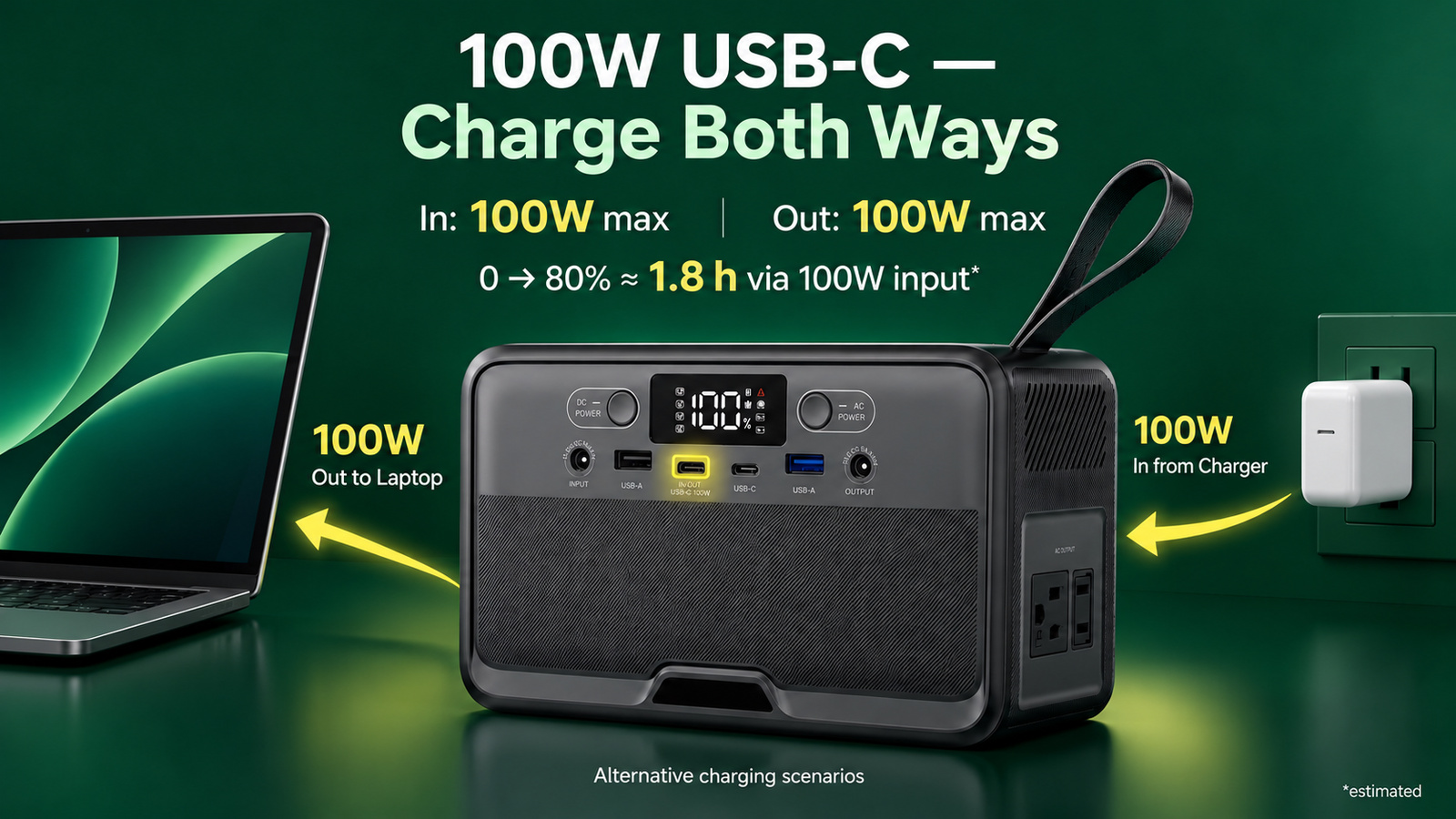
The panel carries two 110 V AC outlets, one DC5521 output at 12 V / 8 A and 96 W, two USB-A ports at 30 W each and two USB-C ports: USB-C1 at 100 W, which also accepts 100 W as a charging input across 4.7–20.5 V, and USB-C2 at 30 W. When several charging sources are connected, USB-C1 takes priority.
Figures are per-port maxima, and a shared pair divides 5 V / 3 A between its ports.
Four ways to recharge
Recharge time is usable energy divided by the power reaching the battery; each input applies its own limit.
| Input | Specification | Recharge time |
| AC wall charging | 110 Vac (100–120 Vac), 50/60 Hz, 55 W ± 5 W | about 4 hours (calculated) |
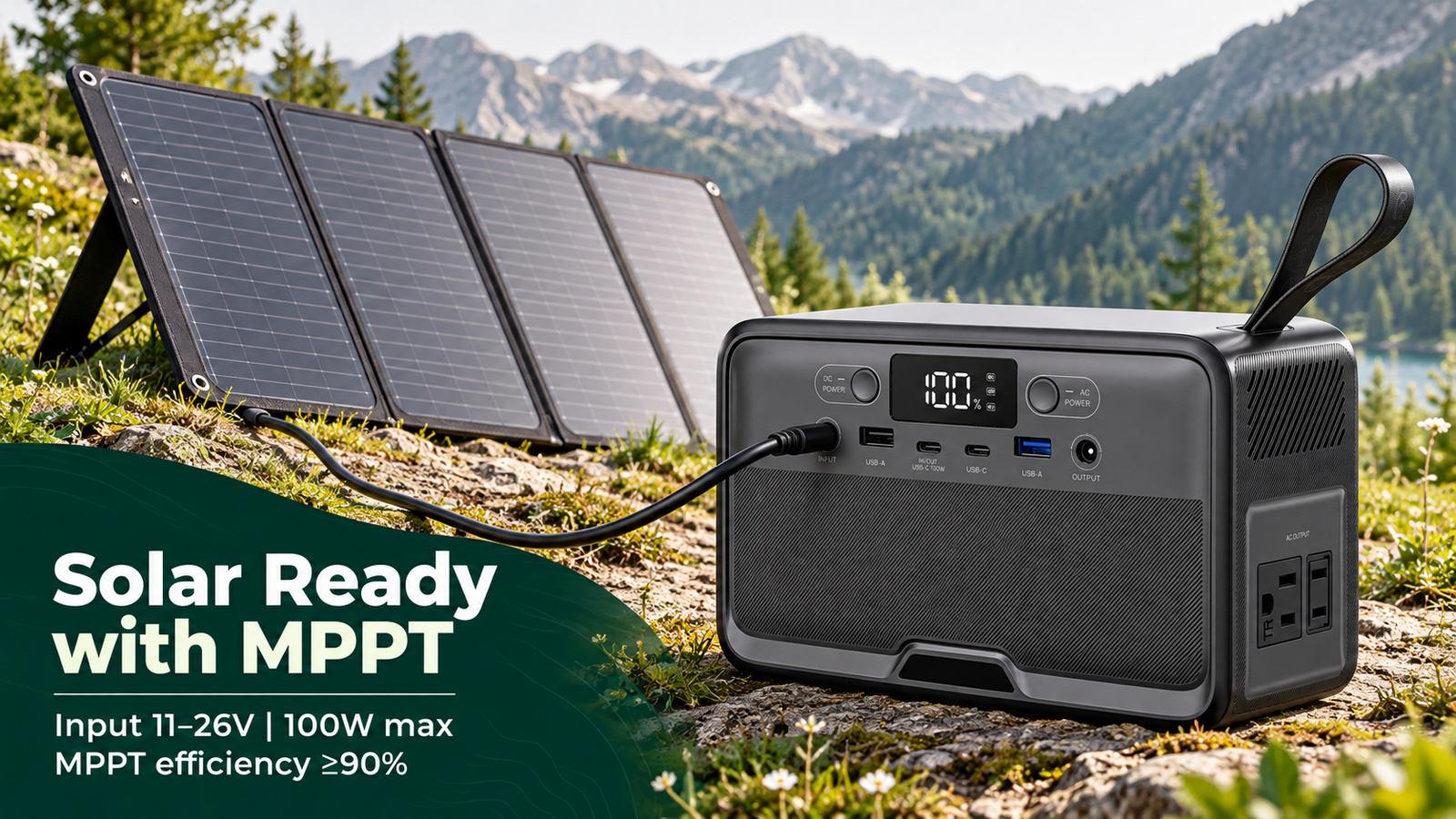
| Solar (MPPT) | 11–26 V, 100 W max, ≥90% efficiency | about 2 hours (calculated) |
| 12 V vehicle socket | Via the DC input, 5 A cap | about 3 hours (calculated) |
| USB-C1 (PD) | 4.7–20.5 V, 100 W max | about 1.8 hours (calculated) |
The AC adapter in the box is the slowest of the four: at 55 W it is smaller than the 100 W solar and USB-C paths. The 12 V car socket is bound by the 5 A input ceiling, so it lands closer to solar than to USB-C. Solar charging needs a panel, which is not included. Times are calculated from nameplate power, excluding the final taper.
 |  |
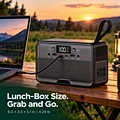
Lunch-box size, 4.29 lb
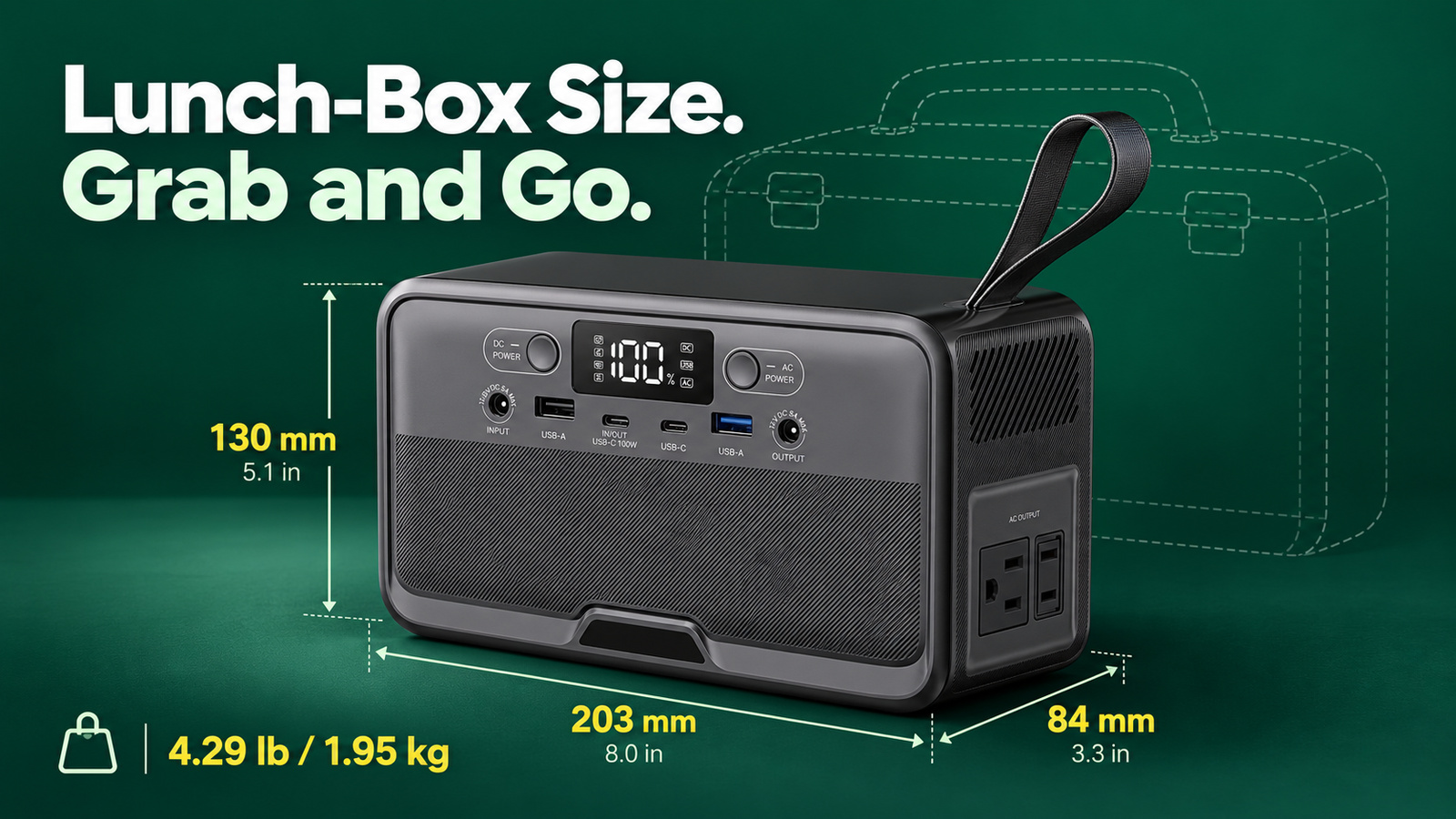
At 8.0 × 3.3 × 5.1 in (203 × 84 × 130 mm) and 4.29 lb (1.95 kg), it sits beside a laptop or goes into a backpack without displacing the rest of the kit. The top strap means one hand carries it; the horizontal body keeps it stable on a table.
2 W LED and a status display
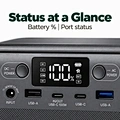
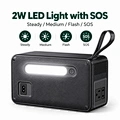
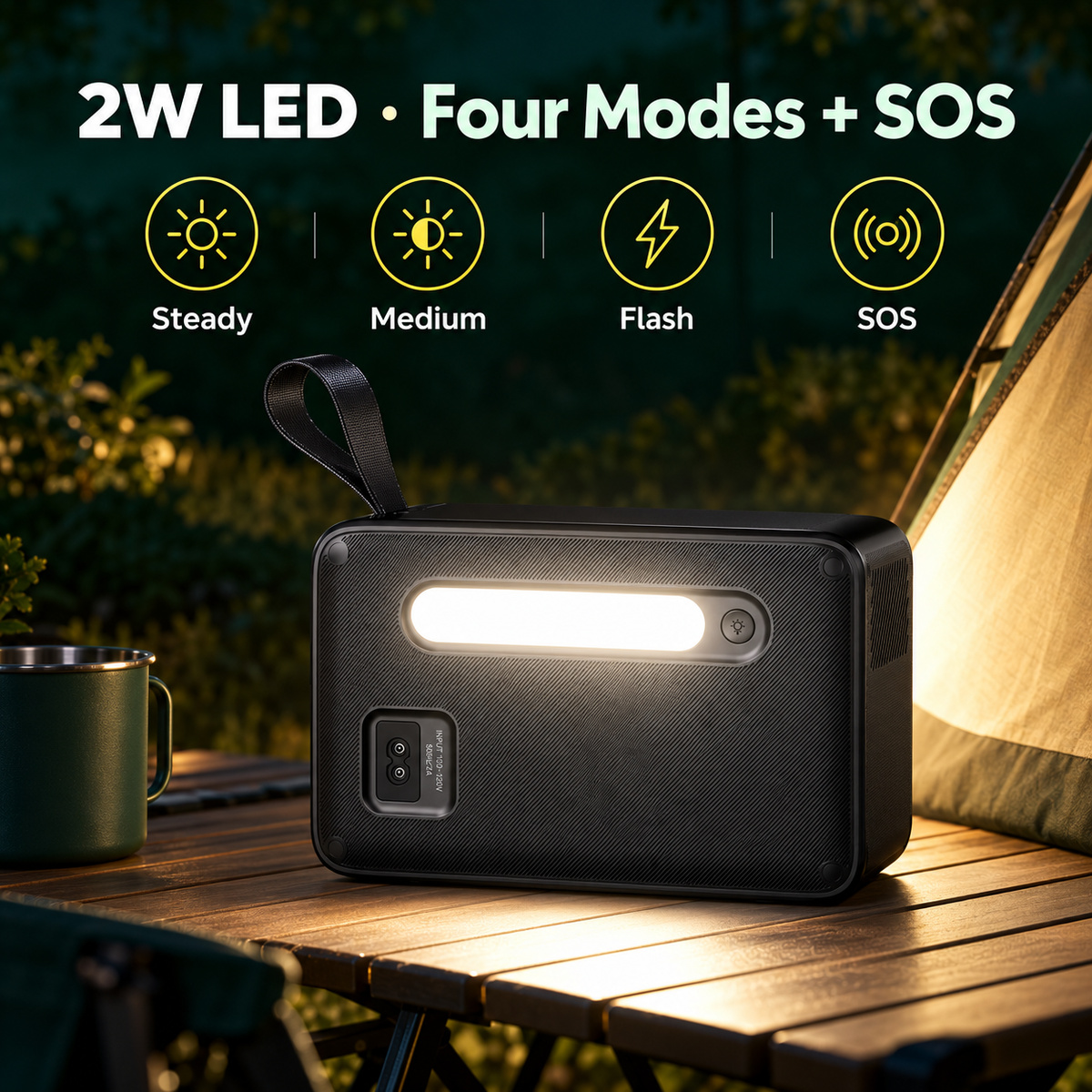
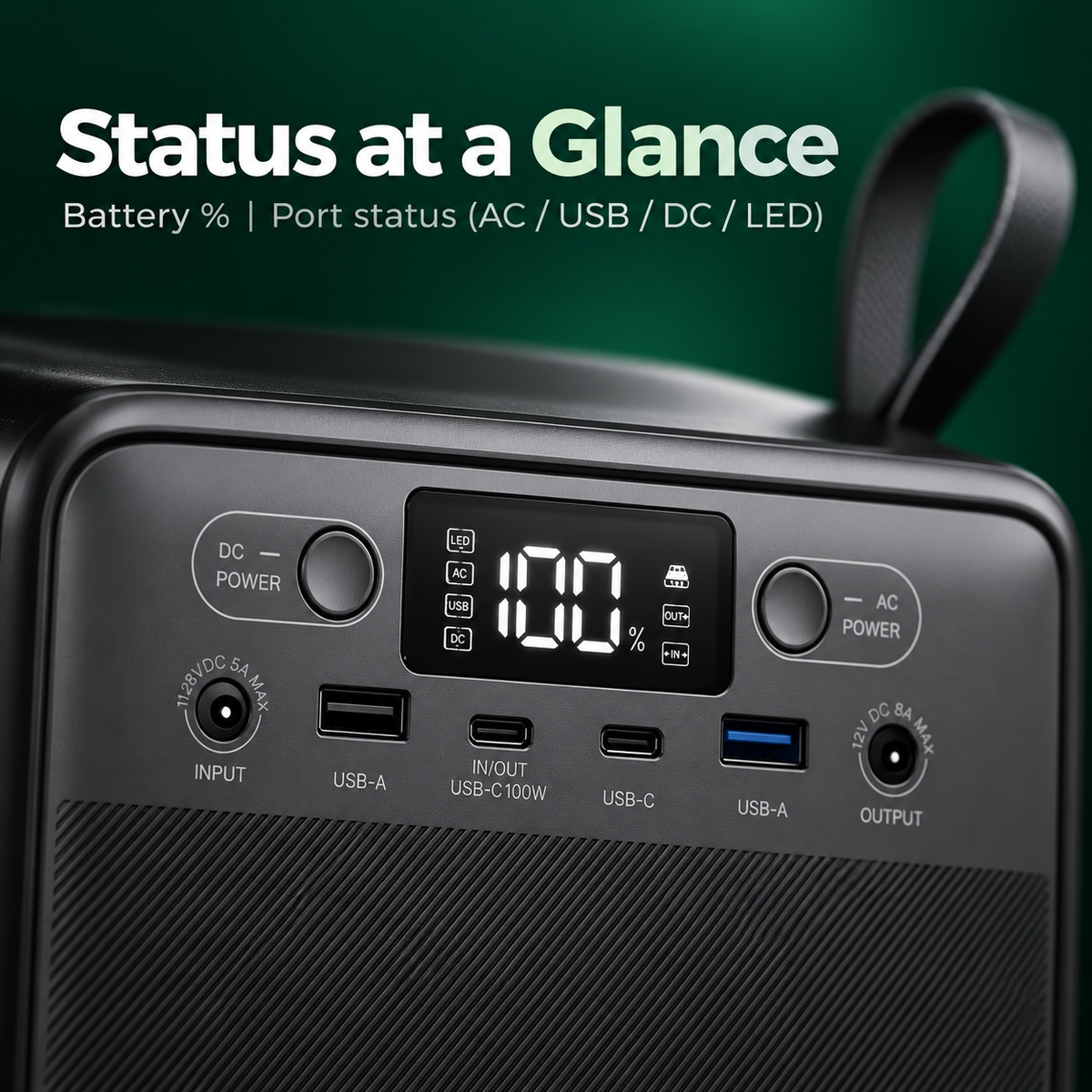
A 2 W light bar runs along the front face: press and hold to step through steady, medium and flash, with an SOS mode at the end of the sequence. The segment display alongside it shows remaining battery percentage together with AC, USB and DC output status, so a glance tells you what is drawing and whether the station is charging.
 |  |
Specifications
| Battery | |
| Cell chemistry | LiFePO4 (32140), 1P4S |
| Nominal voltage | 12.8 V (charge cut-off 14.6 V) |
| Capacity | 15 Ah / 192 Wh |
| Cycle life | 3,500+ cycles to 80% capacity (80% DOD, 25 °C, 0.5C) |
| AC output | |
| Rated power | 200 W continuous |
| Peak power | 400 W |
| Output voltage / frequency | 110 Vac (100–120 Vac) / 60 Hz ± 3 Hz |
| Rated output current | 1.82 A |
| Waveform | Pure sine wave |
| Efficiency / no-load draw | ≥85% at full load / <10 W |
| Protection | Overload auto shutdown, short circuit, over-temperature |
| Inputs | |
| AC charging | 110 Vac (100–120 Vac), 50/60 Hz, 55 W ± 5 W |
| Solar input (MPPT) | 11–26 V, 5 A, 100 W max, ≥90% efficiency |
| USB-C1 input | 4.7–20.5 V, 100 W max |
| 12 V vehicle socket | Feeds the DC input, limited to 5 A |
| Ports | |
| AC outlets | 2 × 110 Vac (shared 200 W) |
| USB-A | 2 × 30 W (5 V/3 A, 9 V/3 A, 12 V/2.5 A) |
| USB-C1 | 100 W, bidirectional (in and out) |
| USB-C2 | 30 W |
| DC5521 | 12 V / 8 A, 96 W |
| LED / display | 2 W LED with SOS / LED segment, battery % and port status |
| General | |
| Dimensions | 8.0 × 3.3 × 5.1 in (203 × 84 × 130 mm) |
| Net weight | 4.29 lb (1.95 kg) |
| IP rating / noise | IP21 / ≤50 dB |
| Operating temperature | 0–45 °C charging and discharging |
| In the box | Station ×1, AC charging cable ×1, user manual ×1 |
Where the limits are
Pass-through is tighter than battery-only operation: while the station charges and discharges at once, the AC load it will carry is lower than on battery alone. Heat derates the DC path when AC and DC run together. Environment: IP21, 50 dB or less, 0–45 °C charging and discharging, with a three-step fan that follows the load.
Tested before it ships
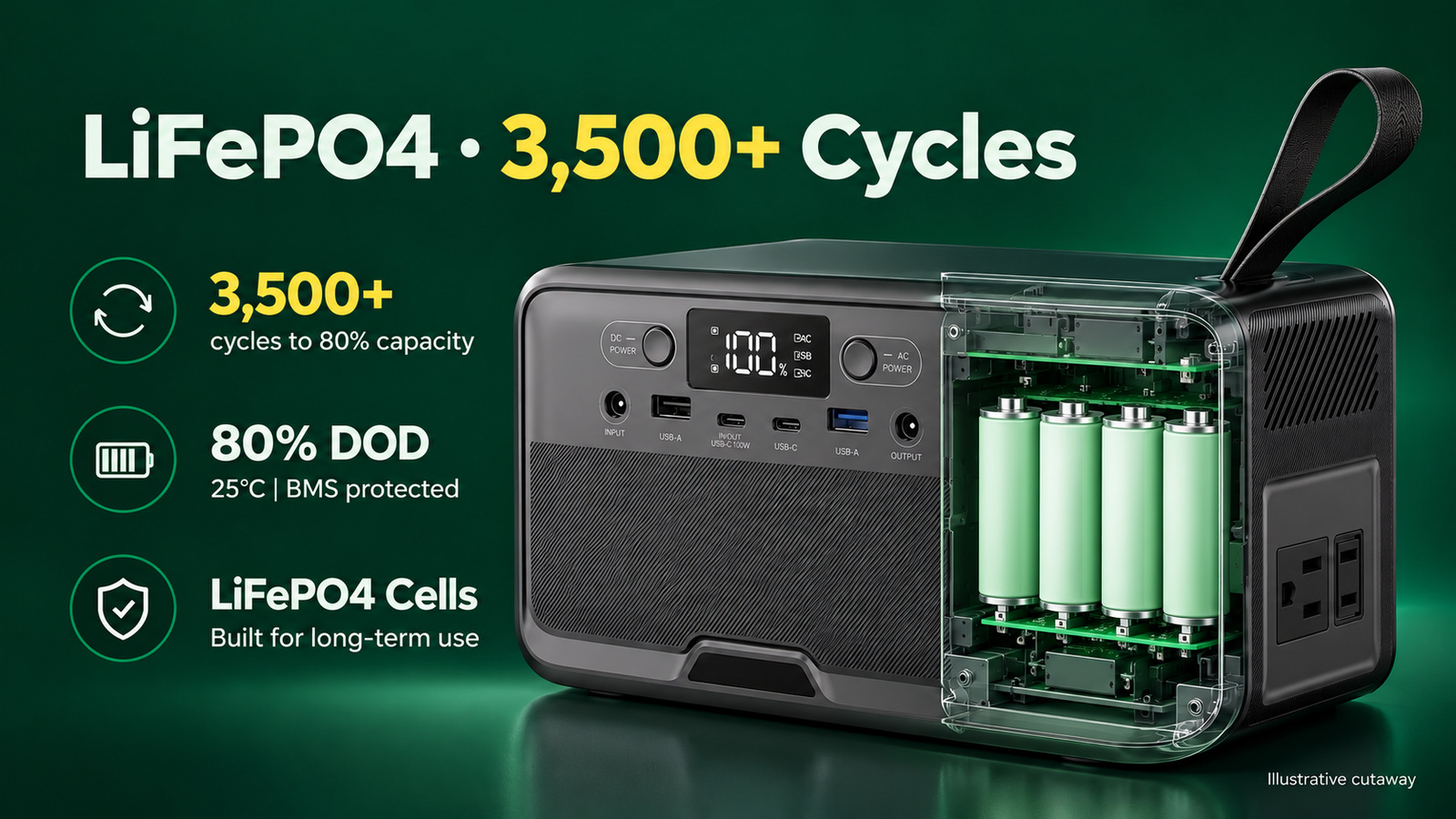
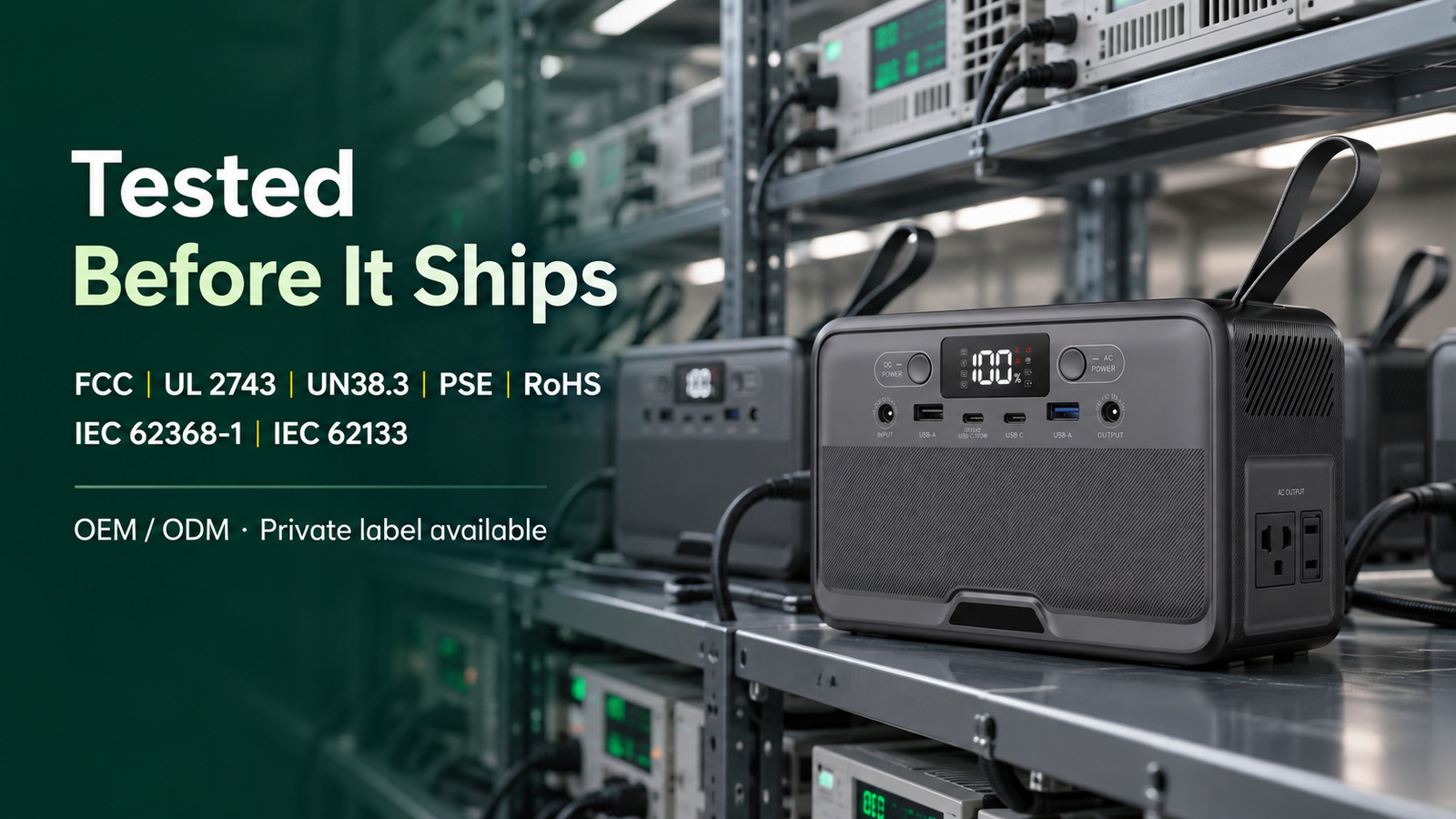
The pack is LiFePO4, rated for 3,500+ cycles to 80% capacity at 80% depth of discharge and 25 °C, with a BMS that cuts output on over-current, over-voltage, over-temperature and short circuit. Units are electrically inspected on our own line before packing.
Compliance: FCC · UL 2743 · UN38.3 · PSE · RoHS · IEC 62368-1 · IEC 62133. The carton holds the station, one AC charging cable and one user manual; a solar panel is not included. Tell us your market and we will send the documents that exist for that configuration.
 |  |
FAQ
What can the R200 run?
Laptops, cameras, fans, routers, lights, phones and small appliances within 200 W continuous. Anything with a heavy start-up draw should be checked against the rating first.
What does 400 W peak mean next to a 200 W rating?
200 W is what it delivers continuously; 400 W is available for the brief moment a motor or compressor first draws current. Sustained load above the rating trips overload protection.
Can I recharge it from a USB-C laptop charger?
Yes. USB-C1 accepts up to 100 W across 4.7–20.5 V and takes priority, so a 100 W PD charger refills it in about 1.8 hours — faster than the 55 W adapter in the box.
What waveform does the AC output produce?
A pure sine wave, matching mains power, which is why sensitive electronics, audio gear and appliances with electronic controls behave normally.
Can I charge it from a car?
Yes — from a 12 V vehicle socket through the DC input, one of four charging paths alongside AC, solar and USB-C PD. The input is capped at 5 A, so expect about 3 hours rather than the 2 hours a 100 W solar panel achieves.
Send us your market, expected load profile and first-order quantity, and we will confirm the port configuration, documents and packing for your channel.