Portable Power Station Manufacturers: How to Tell a Factory From a Trading Company
Most companies ranking for portable power station manufacturers are not manufacturers. They are trading companies with a good website, a catalogue of third-party units and a quote sheet. That is not automatically a problem — but it changes who owns the warranty, who controls the BMS and the firmware, and who is liable when a batch fails in the field. The four tests below separate the two in a single call, and none of them requires a factory visit. Every question here can be answered with one video walk-through and three documents.
Why the factory–trader line decides your risk
A trading company buys a finished unit, adds a margin and ships it. That model is efficient, and for a small first order it is often the right one. The problem appears later, at the three moments that cost real money.
The first is a change order. If you need a different output panel, a 100 W USB–C port instead of 30 W, or a housing in your own colour, a trader has to go back to the factory, wait for a quote, and hope the factory prioritises them. You are two steps removed from the people who actually decide.
The second is a field failure. When units come back, the question is who diagnoses the pack. A company that assembles and final-tests its own packs can open one, find the failing cell group and tell you the root cause in days. A trader forwards the failure report and waits.
The third is the certificate. Test reports are issued to a named applicant for a named configuration. If the report sits with a third party rather than the company you are buying from, your documentation chain has a gap that a retailer or a customs broker will eventually ask about.
Four tests that settle it in one call
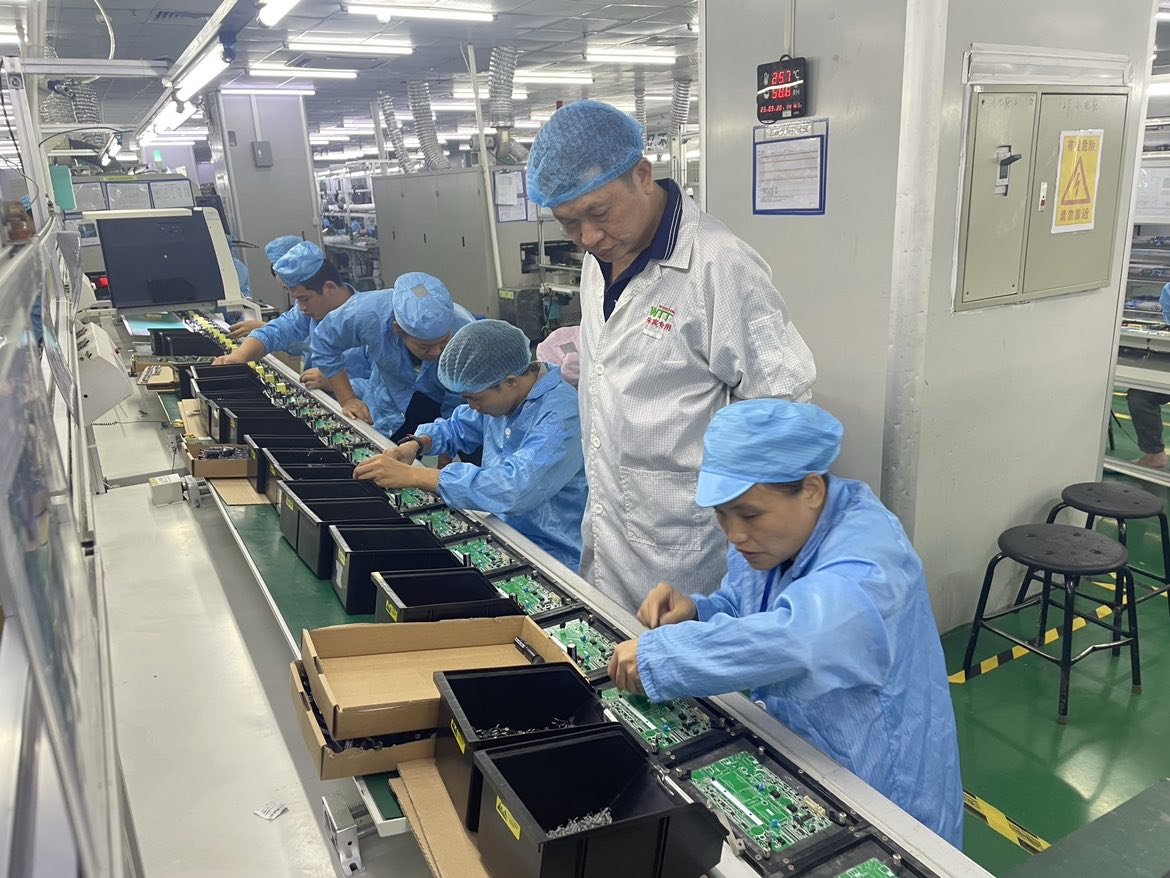
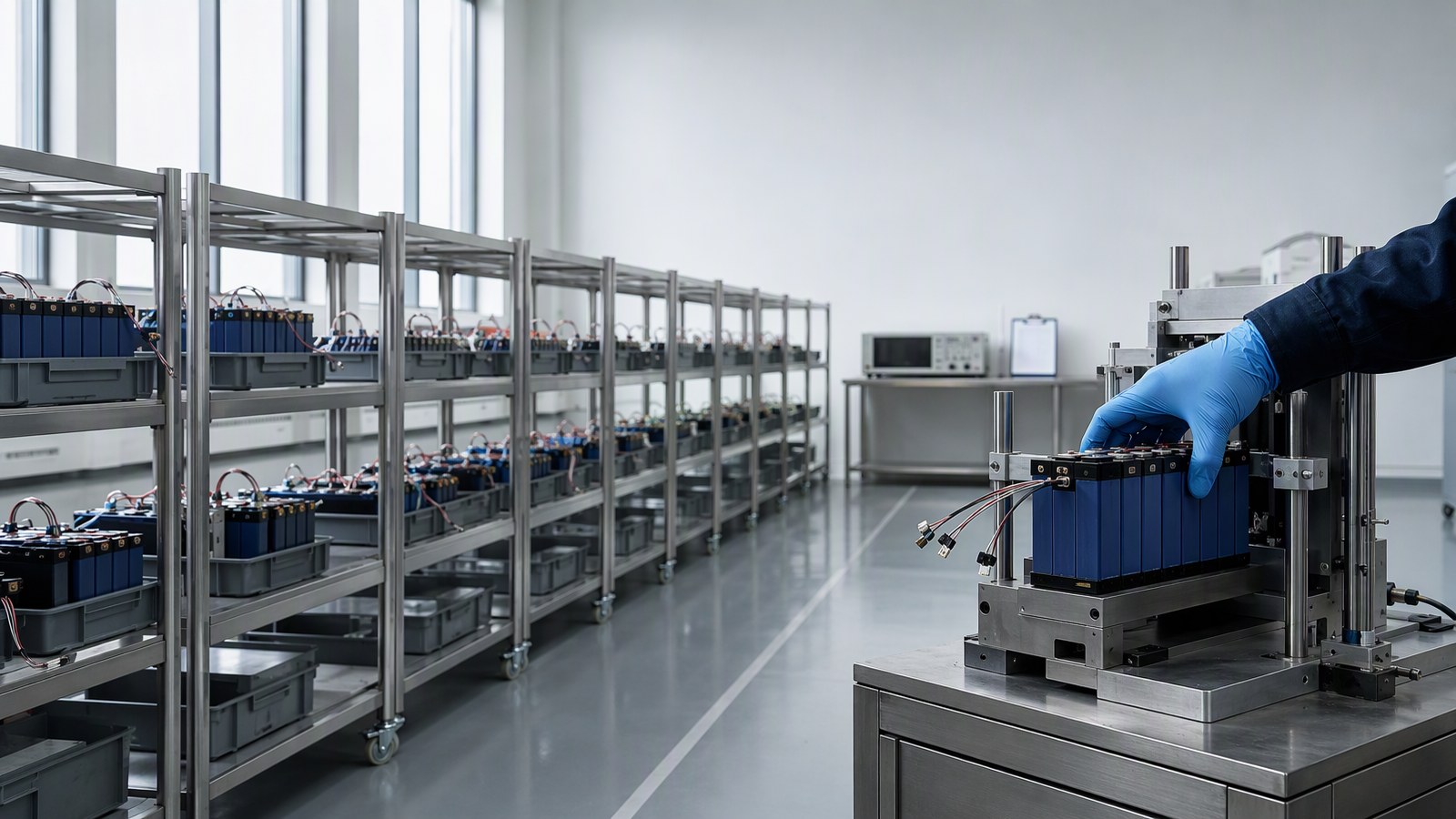
1. Ask which parts are made in-house. The answer you want is specific: pack assembly, BMS board, inverter board, and the housing or tooling. Listen for the difference between “we assemble the pack” and “we buy the finished unit”. A company that assembles packs and runs final test in-house can control quality at the point where most failures originate.
2. Ask for a cell-level test record, not a marketing certificate. A cell test record shows the batch, the test conditions and the result. A marketing certificate shows a logo. If the supplier sends a PDF with a badge and no batch number, that is your answer.
3. Ask who the engineer is, by name. A factory will put a technical person on the call within a day or two. A trading company will keep you on a sales relay, because the technical answer has to be requested from someone they do not control.
4. Ask for an audit before volume, and watch the reaction. A factory that owns its line will usually accept a visit or a video audit and show you where the units are built. A trader will offer a sample instead. Both answers are informative.
One practical shortcut: ask what the same platform looks like across the range. A real manufacturer can explain why a 600W 576Wh portable power station and a 2000W portable power station share an inverter topology or where they deliberately diverge. A trader reads the same spec sheet you do.
What each document actually proves
Documents are useful only when you know what they do and do not cover. This is the honest version.
| Document | What it proves | What it does not prove |
|---|---|---|
| Business licence and scope | The legal entity and what it is registered to do | That it produces anything itself |
| UN 38.3 test summary | That a specific cell and pack configuration passed transport testing | Product safety, performance, or the unit you are buying |
| IEC 62133 or UL 2743 report | That the tested sample met a defined safety standard | That every production unit matches the sample |
| ISO 9001 certificate | That a quality system was audited at a point in time | Which product line, or whether it is still followed |
| BMS and firmware source | Who can fix a protection bug and who owns the logic | Anything, unless you ask directly — which is why you ask |
Questions that get a straight answer
Send these eight in one message and read how the reply is structured. Short, specific answers are a better signal than a brochure.
1. Which production steps happen inside your building?
2. Who designs the BMS, and can I see the protection thresholds?
3. Can you send the UN 38.3 summary for the exact configuration I am quoting?
4. What is the failure rate on the model you are proposing, and how is it measured?
5. What changes between a 1500W portable power station and the next size up, in your own design?
6. Who signs the change order, and how long does tooling take?
7. What is your MOQ built from — cells, housing, or certification cost?
8. If I place an engineer on site for two days, what will they be allowed to see?
The MOQ question is the most revealing one. An MOQ driven by cell purchasing tells you they buy cells in volume. An MOQ driven by tooling tells you they own a mould. An MOQ driven by certification cost tells you the report is being paid for per configuration — all three are legitimate, but only one of them describes a factory.
FAQ: the questions buyers ask next
Is a trading company always the wrong choice?
No. For a first order under a container, or for a market you are testing, a trader can be faster and cheaper. The mistake is paying factory economics for trader service. Decide which one you are buying.
Can I verify a factory without visiting?
Yes, to a useful degree. Ask for a live video walk-through with the line running, not a recorded clip; ask to see the test bench and the pack assembly area in the same session; and ask for the name of the person operating it. Recordings can be reused, a live call with a named engineer is harder to fake.
What does the sample tell me?
A sample proves the design can be built once. It says nothing about the hundredth unit. Ask instead for the last three months of final-test pass rates on that model, and for the rework log.
Should the certificate be in my name?
If you intend to own the brand in that market, eventually yes. Ask at the quotation stage who the applicant will be on the report, because moving it later means retesting.
We build portable power stations and LiFePO4 packs, and we expect buyers to run this list on us rather than take our word for it. If you want to test the process, start from the range of portable power stations and pick a model to interrogate. Send us the eight questions above and we will answer them in writing, with the documents attached.
How to Choose a Portable Power Station Supplier for a New Brand
Related Article