





NEO 501 500W Portable Power Station — 288Wh LiFePO4
NEO 501 500W Portable Power Station — 288Wh LiFePO4
The NEO 501 is a 500 W portable power station built on a 288 Wh LiFePO4 battery. It delivers a 110 V / 60 Hz pure sine wave AC output, so sensitive electronics — laptops, monitors, routers and power tools with variable-speed motors — run the way they do on mains power. The battery is rated for 3,000+ cycles to 80% depth of discharge, and the unit measures a compact 231 × 187.2 × 136 mm with an integrated carry handle.
Why the NEO 501
500 W pure sine wave AC
A 110 V / 60 Hz pure sine wave inverter rated at 500 W continuous, with 550 W maximum combined AC + DC output. A clean waveform means no buzzing, no overheating and no risk to chargers, audio gear or motor-driven tools.
288 Wh LiFePO4, 3,000+ cycles
LiFePO4 chemistry (32140FS-15Ah, 1P4S) instead of lead-acid or NMC. Rated for 3,000+ cycles to 80% depth of discharge at 25 °C — far beyond the cycle life of a typical sealed lead-acid pack.
100 W USB-C PD output
One 100 W USB-C PD 3.0 port charges a laptop at full speed without a wall adapter, alongside two 18 W USB-A QC 3.0 ports, a 12 V/10 A DC5521 output and a 12 V/10 A car socket output.
Pure sine wave output — what it actually means
A modified sine wave inverter approximates mains power with a stepped square wave. Devices that rectify the waveform, or that rely on it for timing or speed control, can run hotter, hum audibly, or fail to start at all. The NEO 501 uses a pure sine wave inverter, so the 110 V it produces matches the shape of grid power.
Rated AC output: 500 W continuous, 110 Vac (90–130 V), 50/60 Hz ±5 Hz.
Peak capability: ≥530 W for 30 seconds, ≥600 W for 200 ms — enough to cover the inrush current when a motor or compressor starts.
What that covers: laptops and monitors, Wi-Fi routers and NAS drives, LED lighting, fans, cameras and drones, and motor-driven hand tools within the continuous rating.
A battery built for years, not seasons
Cycle life is the number that decides what a power station costs you per year of use. A 288 Wh pack rated at 3,000+ cycles to 80% depth of discharge is a different proposition from a pack that fades after a few hundred full discharges.
The NEO 501 uses a LiFePO4 (lithium iron phosphate) pack in a 1P4S configuration, built from 32140FS-15Ah cells at 3.2 V nominal. LiFePO4 is the chemistry of choice where thermal stability and cycle life matter more than the last few percent of energy density — it resists thermal runaway far better than NMC, and it holds its capacity across a much longer service life.
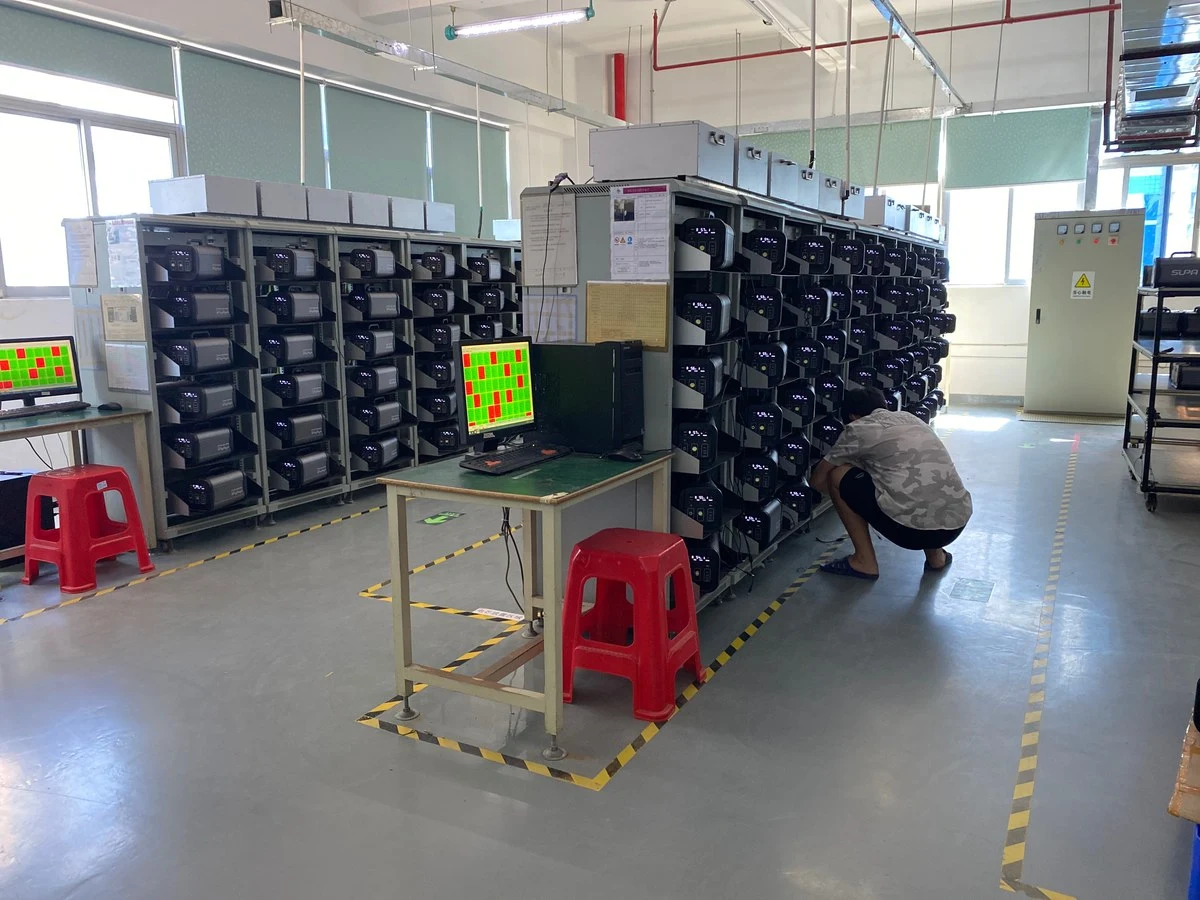
Every pack is cycled on charge/discharge aging racks before it leaves the factory. Battery packs are certified to UN38.3 for transport and shipped with an MSDS, so they move through air and sea freight without documentation surprises.
How long will it actually run your gear?
| Device | Typical draw | Estimated runtime |
| LED light | 3 W | ~81 hours |
| Smartphone | 10 W | ~24 hours |
| Wi-Fi router | 10 W | ~24 hours |
| Drone battery charge | 60 W | ~4 charges |
| Laptop | 60 W | ~4 hours |
| Portable cooler / mini fridge | 50 W | ~4.8 hours |
Estimates use 85% usable capacity (288 Wh × 0.85 ÷ device power). Real-world runtime varies with device efficiency, temperature and how the load behaves at startup. Devices with motors or compressors draw a surge well above their rated figure — check the peak capability above.
Where it gets used
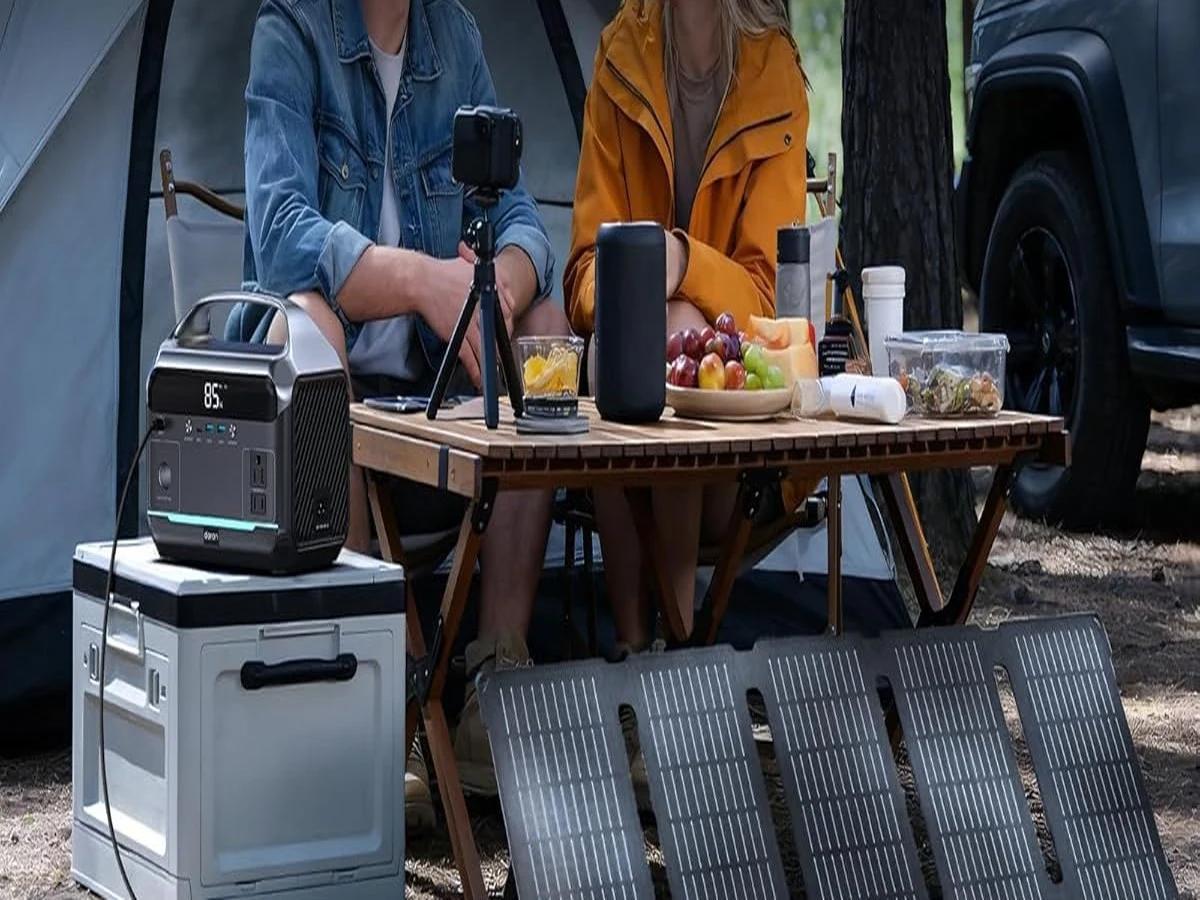
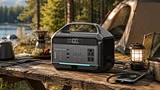
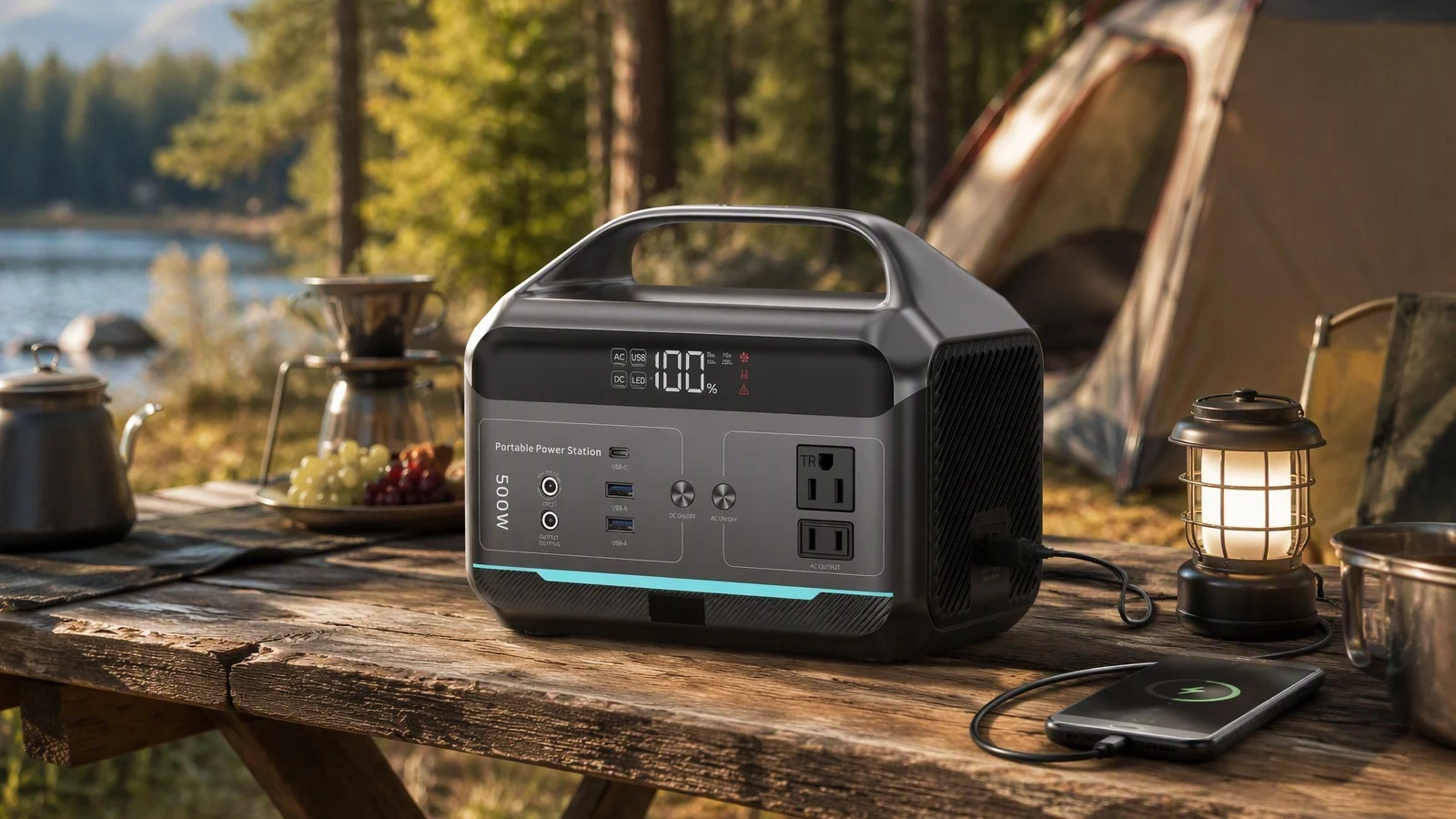
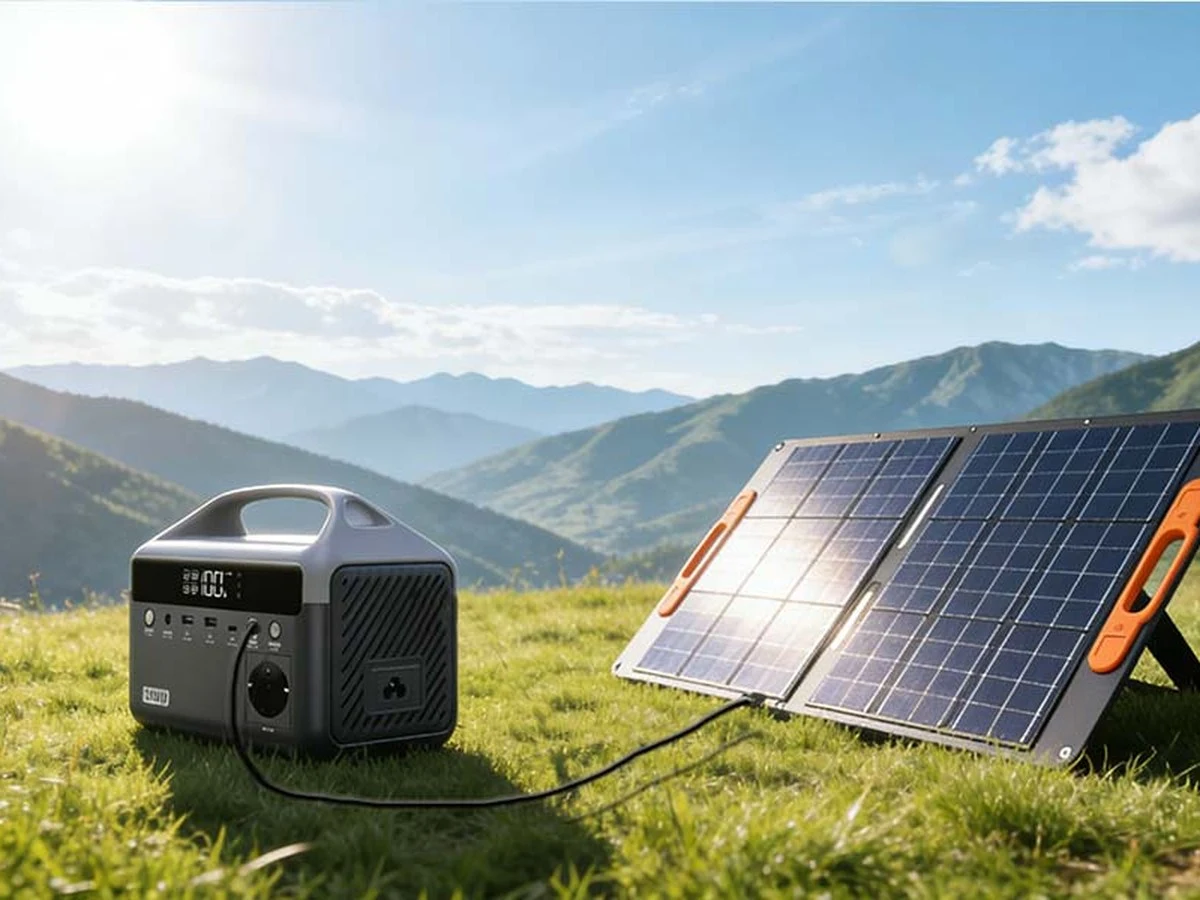
Outdoor and on the road. Camera bodies, drone batteries, lights and a laptop, driven from one unit instead of a pile of power banks — and topped up from a folding solar panel when there is no mains supply.
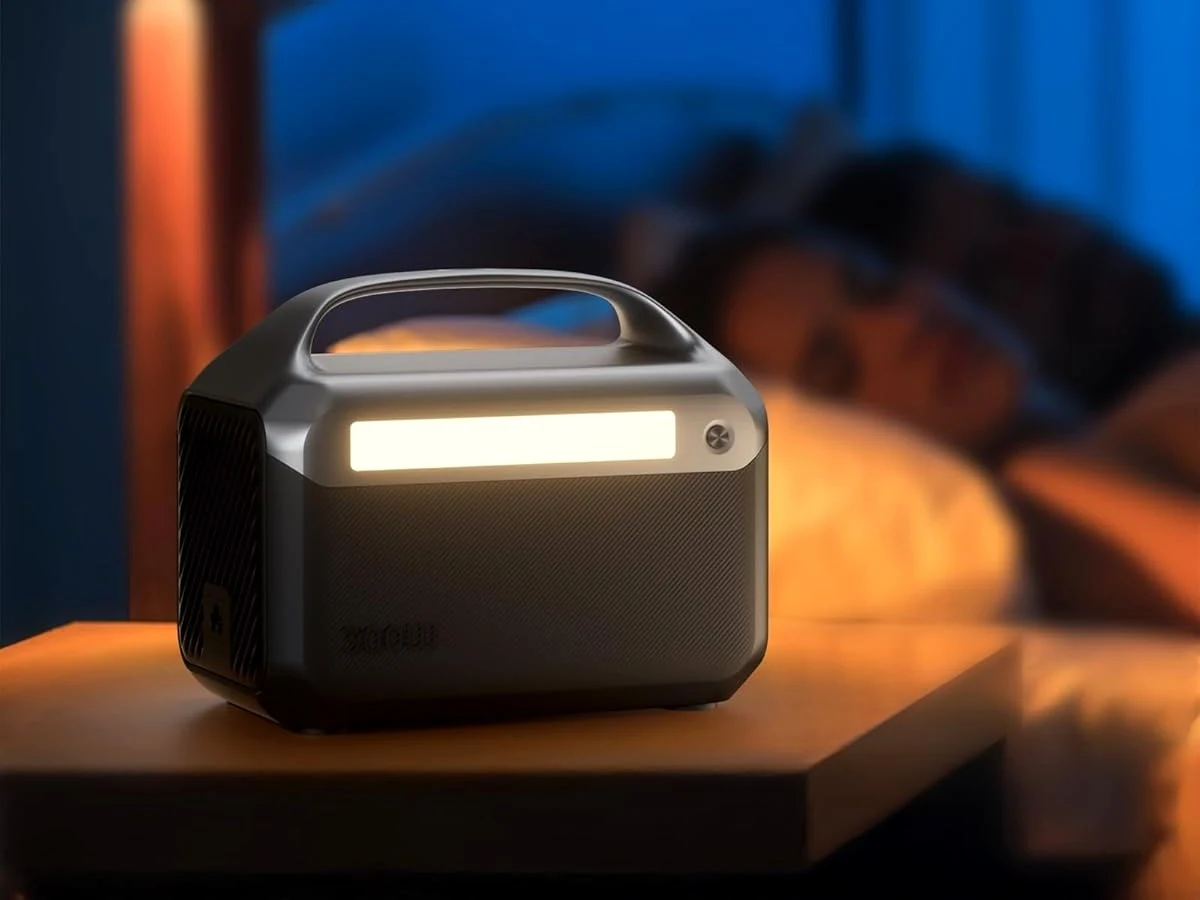
Indoors when the grid drops. Routers, a laptop, phone charging and lighting kept alive through an outage, with the built-in 3 W LED doing the work of a room lamp and the output staying a clean sine wave throughout.
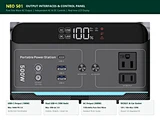
Every port on the front panel
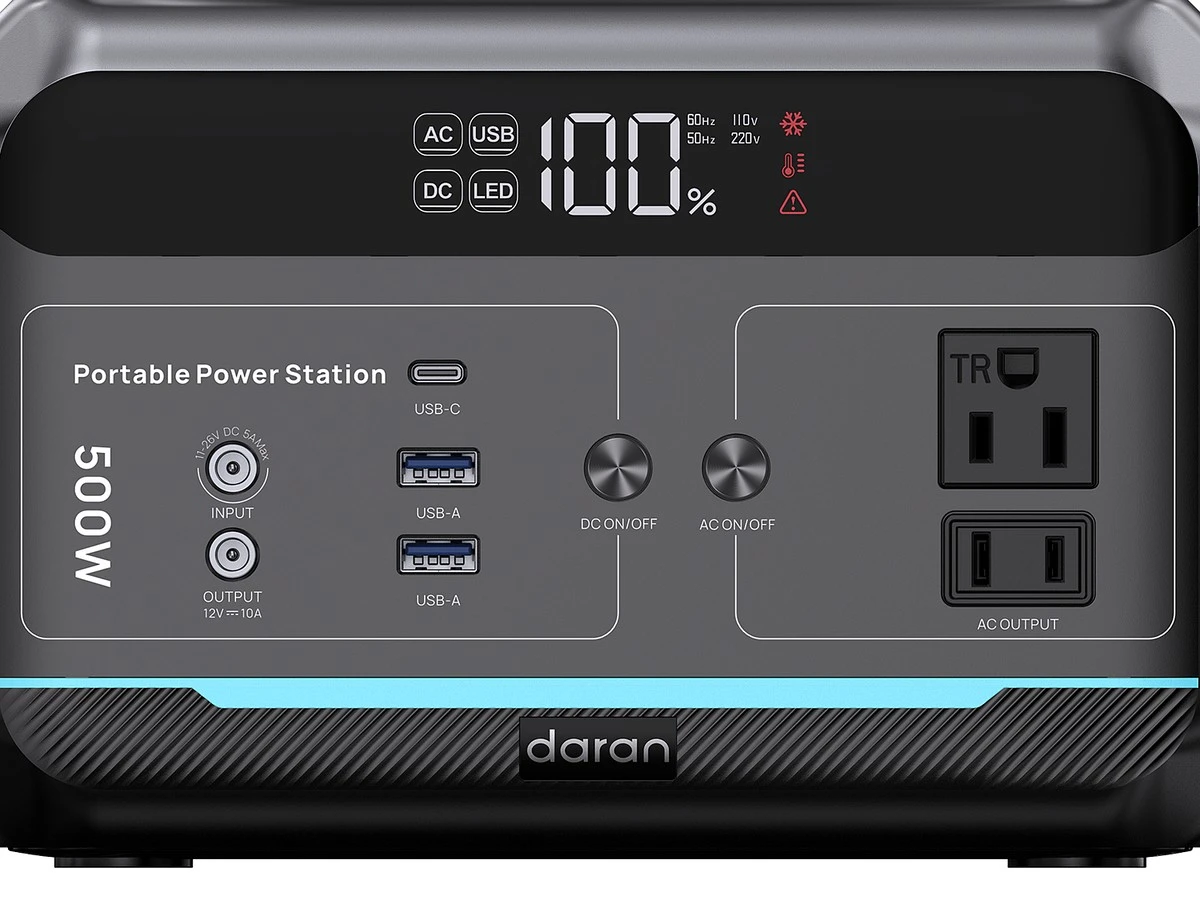
USB-C (PD 3.0) — 1 port, up to 100 W. Charges a laptop directly, no brick required.
USB-A (QC 3.0) — 2 ports, up to 18 W each. Phones, tablets, cameras, small accessories.
DC 5521 — 1 output, 12 V / 10 A. Routers, LED strips, 12 V accessories.
Car socket — 1 output, 12 V / 10 A. Car-style plugs, tyre inflators, portable fridges.
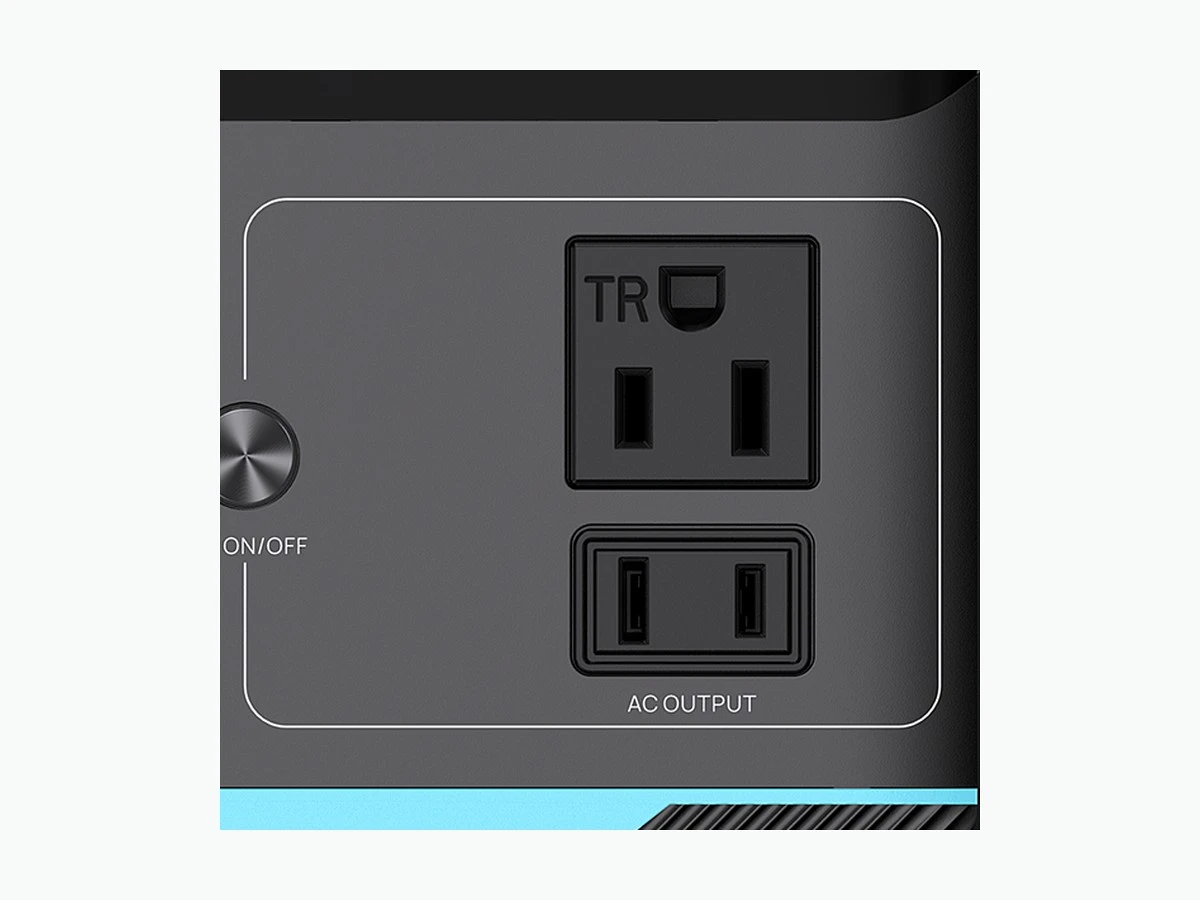
AC outlet — 110 V / 60 Hz pure sine wave, 500 W continuous.
LED light — 3 W built-in lamp with its own switch, usable as a work light or an emergency room light.
LCD display — shows remaining charge and which output groups are live, so you can see the state of the unit at a glance.
Maximum combined AC + DC draw is 550 W. The AC and DC sides have independent switches.
Two ways to charge it
From the wall. The AC input accepts 100–120 Vac at 60 Hz and charges at 150 W (±10 W). Plug it into a standard household outlet and leave it — no adapter, no separate charger to lose.
From the sun. The MPPT solar input takes 11–26 Vdc and accepts up to 80 W. That range covers the common folding panels used for camping and off-grid work, and the MPPT controller keeps the panel operating near its maximum power point instead of letting the voltage collapse as the battery fills.
For extended off-grid trips, a folding panel in the 80 W class will replace the charge you use in a normal day of camera, phone and lighting load.
Note on inputs: the AC input is 100–120 Vac / 60 Hz (US specification) and the solar input is 11–26 Vdc. The 12 V/10 A car socket is an output, not a charging input.
Size, weight and handling
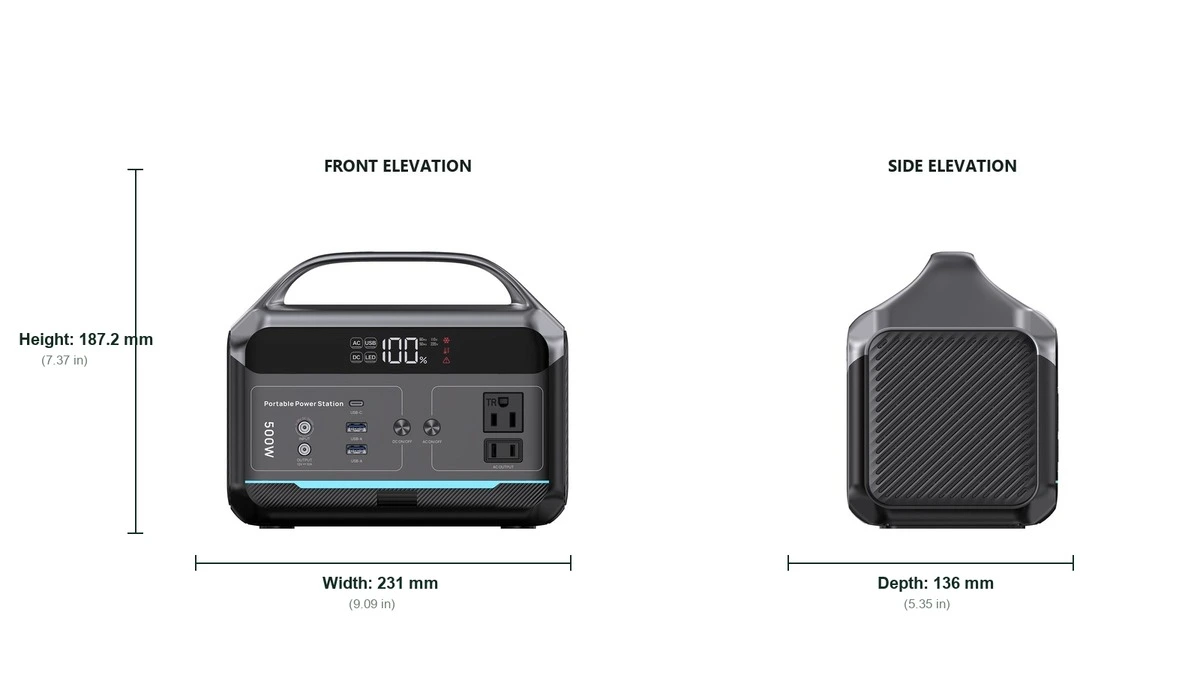
W 231 mm × H 187.2 mm × D 136 mm. A footprint small enough to sit on a shelf, in a footwell or on a workbench, with the handle on top for one-handed carrying.
The enclosure is rated IP21 — protected against solid objects over 12.5 mm and against vertically falling water droplets — and runs at 56 dB or less, quiet enough to sit next to you while it works.
Mounting and packing information, along with carton dimensions and loading quantities, is available on request for distribution and project orders.
Full technical specification
| Battery | LiFePO4 (lithium iron phosphate), 288 Wh |
| Cell / configuration | 32140FS-15Ah, 1P4S, 3.2 V nominal |
| Cycle life | 3,000+ cycles to 80% DOD, 25 °C, 0.5C |
| AC output | 110 Vac (90–130 V), 50/60 Hz ±5 Hz, pure sine wave |
| Rated / peak power | 500 W continuous; ≥530 W @ 30 s; ≥600 W @ 200 ms |
| Max combined AC + DC | 550 W |
| DC / USB output | USB-C ×1 (PD 3.0, 100 W); USB-A ×2 (QC 3.0, 18 W each); DC5521 12 V/10 A; car socket 12 V/10 A; LED 3 W |
| AC input | 100–120 Vac / 60 Hz, 150 W ±10 W |
| Solar input | 11–26 Vdc, 80 W max, MPPT |
| Mechanical | 231 × 187.2 × 136 mm; IP21; ≤56 dB |
| Compliance | FCC, CE, RoHS, UL2743, PSE, METI; transport UN38.3 with MSDS, SP188 |
Specifications as stated in the NEO 501 product specification sheet. Compliance markings apply to the configurations and destination markets stated in that document — confirm the exact certification package against your target market before purchase.
How it is built, and how to order it as your own

The NEO 501 is built in-house: SMT lines for the control and inverter boards, dedicated charge/discharge aging racks for every battery pack, and end-of-line functional testing before packing. Because the electronics, the enclosure and the battery assembly all sit under one roof, we can hold a specification steady across repeat orders rather than buying the whole unit in from a third party.
OEM and ODM. The NEO 501 is available for private label and co-development programmes: custom enclosure colours, your logo on the enclosure and the packaging, custom packaging design, and firmware or interface adjustments where the volumes justify tooling.
Distribution and projects. Carton and pallet loading data, lead times and container quantities are quoted per order. For project and installation work we supply the technical documentation set — specification sheet, dimension drawings and compliance certificates — with the shipment.
Tell us the destination market and the expected annual volume, and we will quote the right configuration rather than a generic one.
Frequently asked questions
Is the AC output a pure sine wave?
Yes. The NEO 501 produces a 110 V / 60 Hz pure sine wave at 500 W continuous, which is the same waveform shape as grid power. That matters for devices with motors, compressors or sensitive power supplies.
Does it work as a UPS?
No. The NEO 501 is a portable power station, not an uninterruptible power supply. There is a brief break when the AC output is switched on, so it is not intended to hold a desktop PC or server up through a mains failure without interruption.
Can I charge it from a car cigarette lighter socket?
The 12 V/10 A car socket on the NEO 501 is an output, for powering 12 V accessories. The charging inputs are the AC input (100–120 Vac / 60 Hz, 150 W) and the solar input (11–26 Vdc, 80 W max).
How long will the battery last?
The pack is rated at 3,000+ cycles to 80% depth of discharge at 25 °C and 0.5C. In practical terms, a daily full discharge cycle is well beyond what most users do; partial cycling extends the calendar life further.
Which certifications does it carry?
Per the product specification sheet: FCC, CE, RoHS, UL2743, PSE and METI, with UN38.3 and MSDS for transport and SP188 for the battery pack. Tell us your destination market and we will confirm the exact package that applies.
Can I put my own brand on it?
Yes. The NEO 501 is available for OEM and ODM programmes — enclosure and packaging branding, colour variants and packaging design. Contact us with your target market and volume for a quotation.