STAR 300Z: A 300W Portable Power Station Built for CPAP, Routers and 12V Fridges
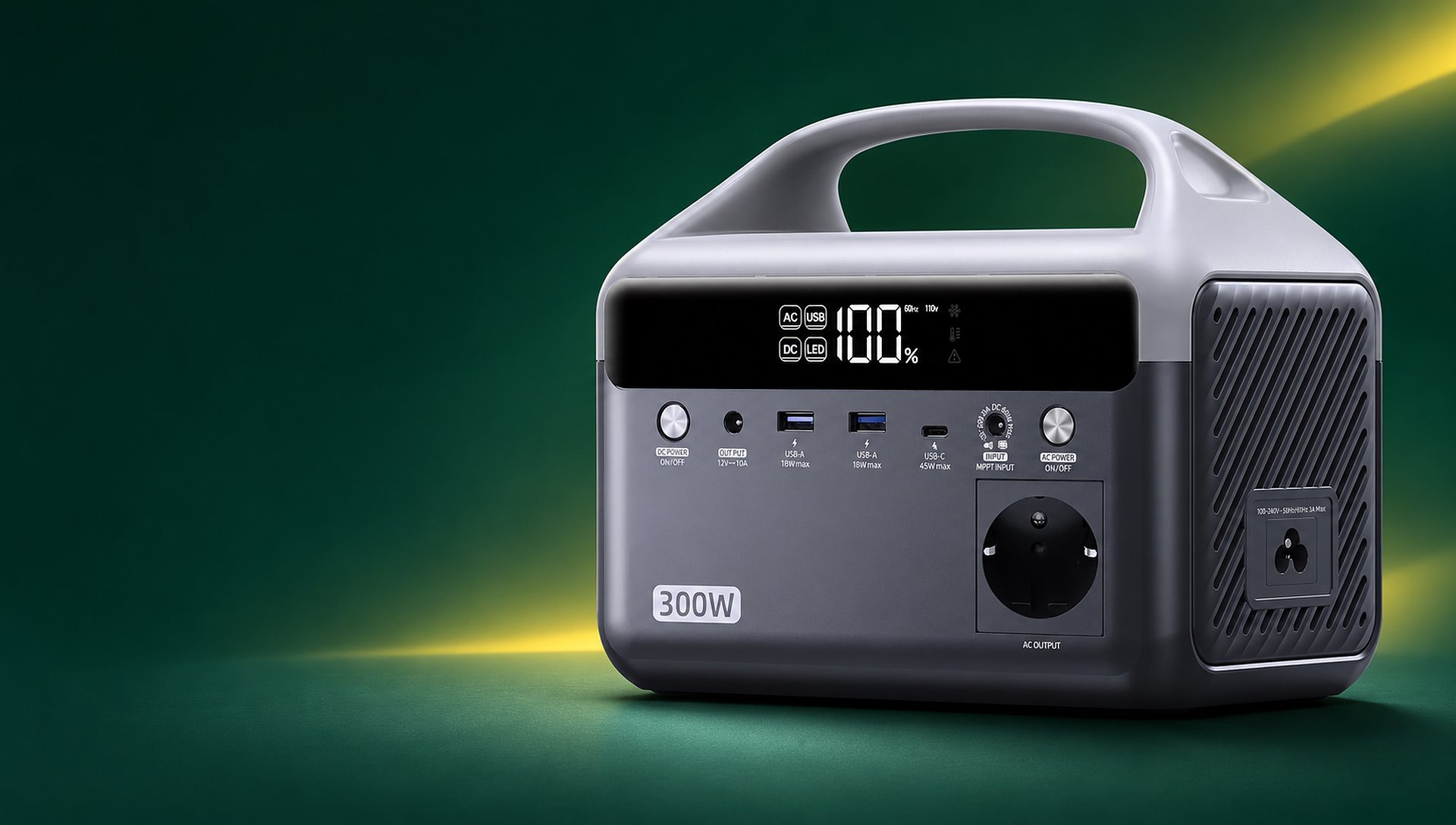
The BEESTE STAR 300Z is a 300W portable power station — 600W surge, 192Wh LiFePO4, 2.5 kg — with a 12V DC output rated to 120W. That DC rating is the whole argument. It is the port that decides whether a CPAP, a router, a 12V compressor fridge or a radio runs natively instead of through an inverter. The trade is honest: a 2.5 kg body and a plain box list (unit, AC cable, manual, quick start guide) with no bundled accessories.
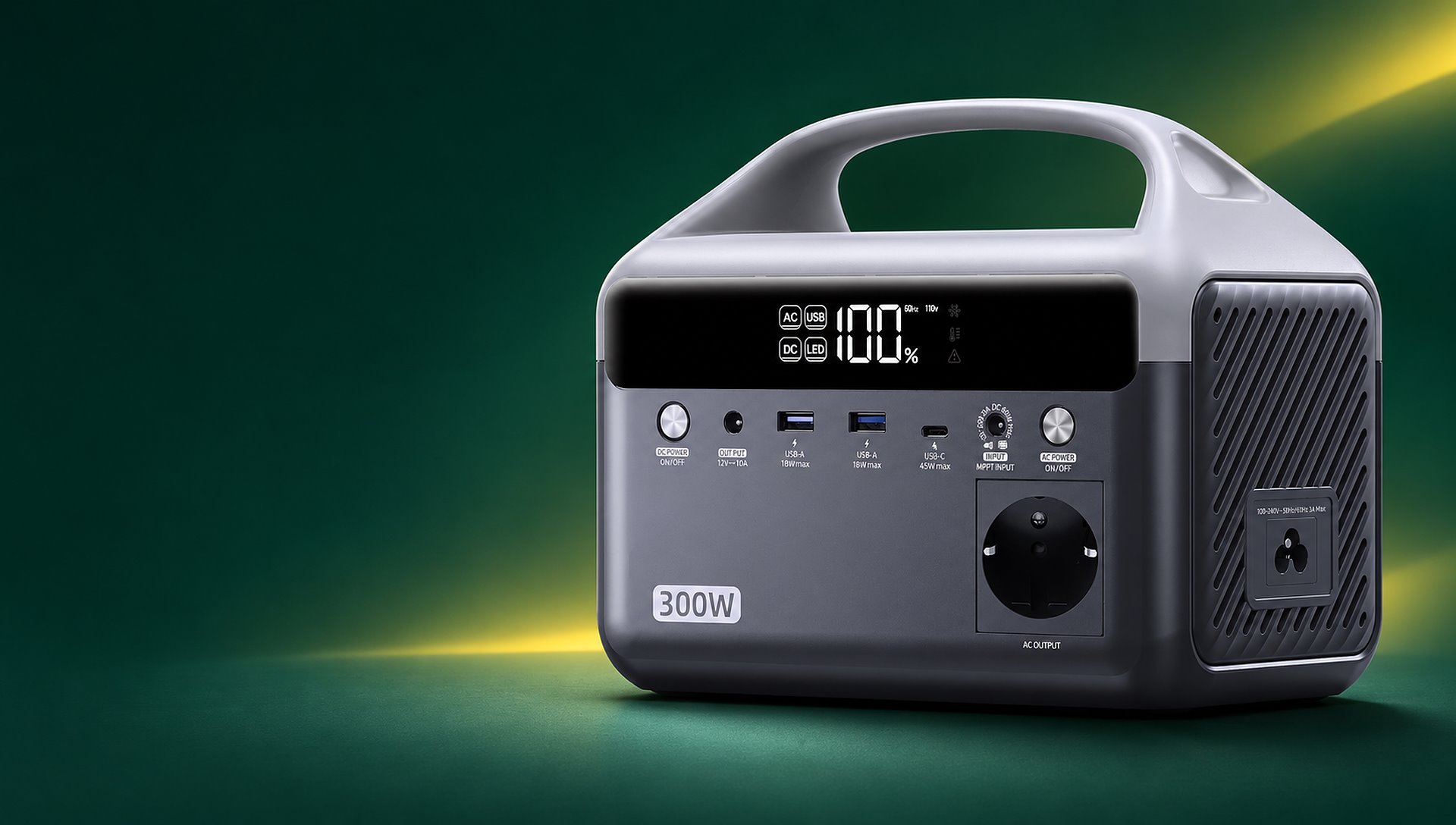
STAR 300Z — 300W continuous, 600W surge, 192Wh LiFePO4, 2.5 kg.
Why 192Wh at 2.5 kg is the right trade
Portable power stations in this class are sold on wattage. Wattage is easy to print and easy to compare, and almost never the constraint. The constraint is energy per kilogram, and how much of that energy you can actually withdraw.
The STAR 300Z carries 192Wh (60,000mAh) in a 2.5 kg body — 22 × 13 × 18 cm, small enough to sit on a car seat or a bedside table without being moved to the floor. Its LiFePO4 cells are rated over 3,000 cycles to 80% of original capacity. At one cycle a night that is roughly eight years before capacity degrades meaningfully.
Two numbers matter more than the headline 300W:
| What the number means | STAR 300Z figure | Why it decides the purchase |
|---|---|---|
| Rated vs surge power | 300W rated / 600W surge | Surge covers motor and compressor start-up — fridges, pumps, fans |
| Energy capacity | 192Wh (60,000mAh) | Sets runtime; the real limit for overnight and outage use |
| DC output | 12V ⎓ 10A, 120W max | Runs 12V devices directly, skipping the inverter and its losses |
| AC output | 100–240V, 50/60Hz, 1× EU Schuko | Mains socket for one appliance; pair it with USB and 12V loads |
| Recharge (AC) | 55W max, ~3.5 h to full | Wall recharge overnight, no bulky adapter |
| Recharge (solar/DC) | 10–30V ⎓ 5A, 60W max, ~3 h | One 60W panel refills it in a day of decent sun |
| Weight / size | 2.5 kg / 22 × 13 × 18 cm | Carryable with one hand; fits a backpack side pocket |
| Chemistry | LiFePO4, >3,000 cycles to 80% | Long service life, thermally stable chemistry |
Selling point 1: a 120W DC output changes what you can run
A car-charger-style DC port rated around 60W is the common spec in this class. The STAR 300Z runs 12V ⎓ 10A, up to 120W on its DC output. That single spec widens the load list considerably:
- CPAP machines — most accept a 12V DC input, though some run on 24V and need a step-up converter (check the label). Going DC-to-DC avoids the inverter conversion, so the same battery lasts measurably longer than it would on the AC brick.
- 12V compressor fridges — the classic van-life load. A 120W DC port can carry start-up current that a 60W port will trip on.
- Routers, ONT boxes, CCTV and access control — the loads that matter most during an outage, and most of them take a 12V DC barrel input (check the adapter's output rating).
- Starlink-style terminals and radio gear — 12V DC input, continuous draw.
This is also why BEESTE sells a separate DC UPS line for always-on network equipment: the STAR 300Z is the portable version of the same idea, and the DC output is the bridge between them.
Selling point 2: five outputs on one 2.5 kg unit
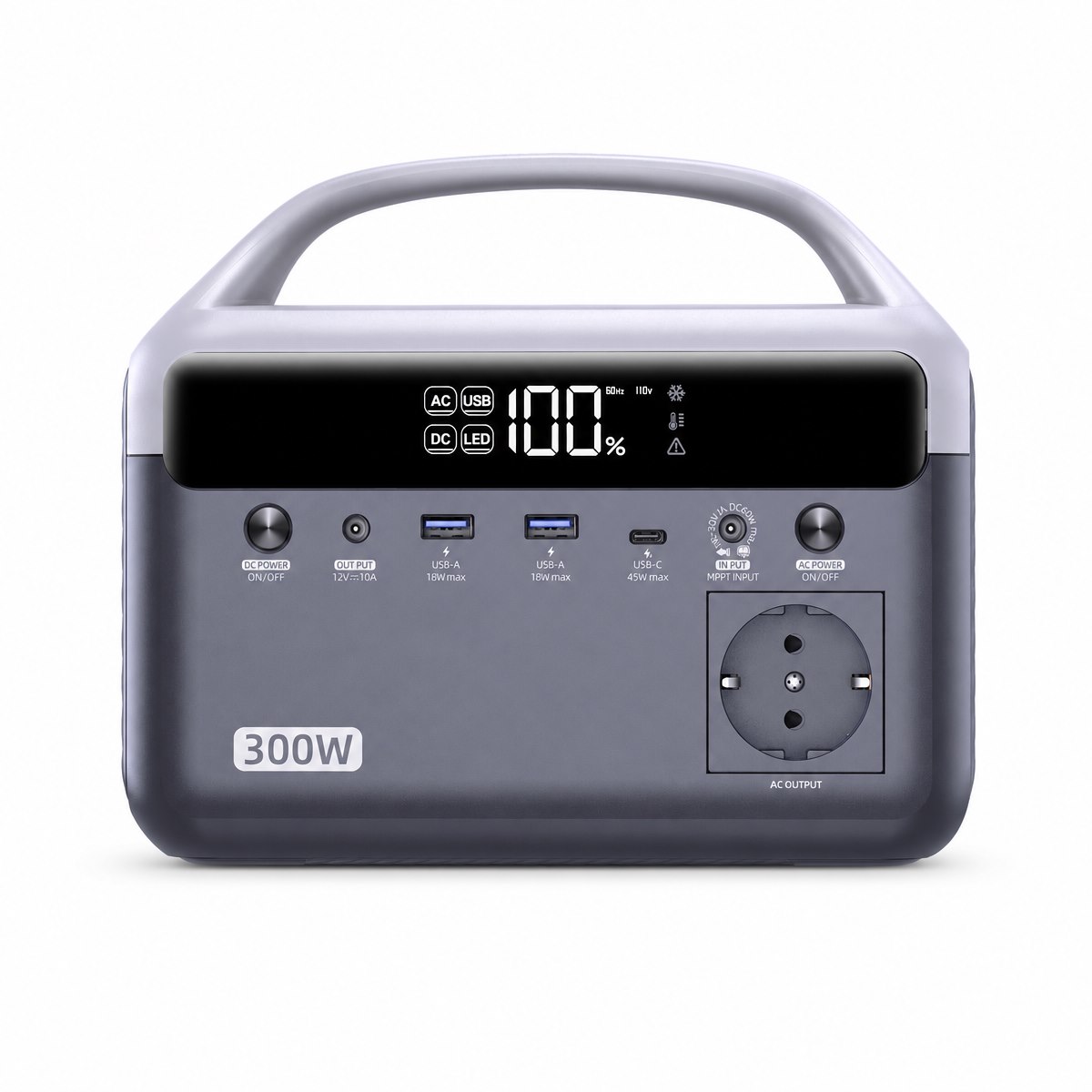
On a campsite table or a bedside during an outage, port count beats port power. The STAR 300Z exposes:
| Port | Count | Rating |
|---|---|---|
| AC outlet (EU Schuko) | 1 | 100–240V, 50/60Hz, 300W (600W surge) |
| DC 12V | 1 | 12V ⎓ 10A, 120W max |
| USB-C | 1 | 45W max (PD) |
| USB-A | 2 | 18W max each |
| LED light | 1 | 2W, rear-mounted |
Five outputs on a 2.5 kg unit means one station replaces the small power strip most people otherwise pack: one AC appliance, one 12V device and three USB devices, simultaneously. The 2W rear LED is a small thing that gets used more than expected — it lights a tent or a stairwell during an outage without costing you a phone flashlight.
Selling point 3: verified runtime, stated in devices not adjectives
BEESTE publishes runtime against named loads rather than vague claims. These are the manufacturer's figures on a single full charge:
| Load | Published runtime / cycles |
|---|---|
| 60W laptop | ~3 hours, 2–3 full charges |
| Camera | ~10 charges |
| 70W projector | ~2.3 hours |
| Drone (50Wh class) | ~3.2 charges |
| Smartphone | 12+ charges |
| 10W camping light | 30+ hours |
How to read these numbers. A 192Wh pack does not deliver 192Wh at the socket — the inverter costs you roughly 10–15%, so plan on something near 165Wh of usable AC energy. Divide that by your device's actual draw and you get an honest runtime. A 60W laptop: 165 ÷ 60 ≈ 2.75 hours, which matches the published ~3 hours. A 70W projector: 165 ÷ 70 ≈ 2.35 hours, matching the published 2.3. The numbers are consistent with physics, which is the point — they were not inflated for the page.
CPAP: the runtime question that decides this purchase
CPAP is the single most common reason people buy a 300W-class station, and the single most common reason they are disappointed by one. The machine is not the problem — the humidifier is.
CPAP machines run on low-voltage DC, which is why the DC output matters here. Check the label before you buy a cable: most accept a 12V input, but some models — ResMed's AirSense line, for one — run on 24V and need a step-up converter rather than a direct lead. Past that, the 120W DC port skips the inverter, so roughly 90% of the pack reaches the device instead of about 86% through AC. The table below is calculated, not measured: usable DC capacity ≈ 192Wh × 0.9 ≈ 173Wh, usable AC ≈ 165Wh, divided by the draw of your machine. Check the label on your own unit — draws vary by model and pressure setting.
| CPAP setup | Typical draw | Best path | Estimated runtime |
|---|---|---|---|
| Standard machine, humidifier off | 30–45W | 12V DC port | 3.8–5.8 hours |
| Travel CPAP, humidifier off | 15–25W | 12V DC port | 7+ hours |
| Heated humidifier on high | 60–90W | AC outlet | under 2 h to ~2.7 h |
Two conclusions follow, and neither is flattering. First, without the humidifier a 192Wh pack covers one night, not two. Second, with a heated humidifier this is the wrong class of product — no 300W station will carry an 8-hour humidified night, and a 500Wh unit is the honest answer. If you need two full nights, size up rather than buying a second 300W unit.
Selling point 4: three ways to recharge, including from a car
Recharging is where small stations fail in practice — not because charging is slow, but because there is only one way to do it.
| Method | Input | Time to full |
|---|---|---|
| AC wall charging | 100–240V, 55W max | ~3.5 hours |
| Solar / DC5521 | 10–30V ⎓ 5A, 60W max | ~3 hours in good sun |
| 12V car socket | via car charging cable | Trickle over a drive |
The 100–240V AC input means the same unit works on UK, EU and US mains without a transformer — relevant if you are shipping one SKU across markets. Solar input accepts 10–30V, so a single 60W folding panel is enough to refill it in a day, and the panel does not need to be a BEESTE panel to work.
Scenario 1: camping and road trips
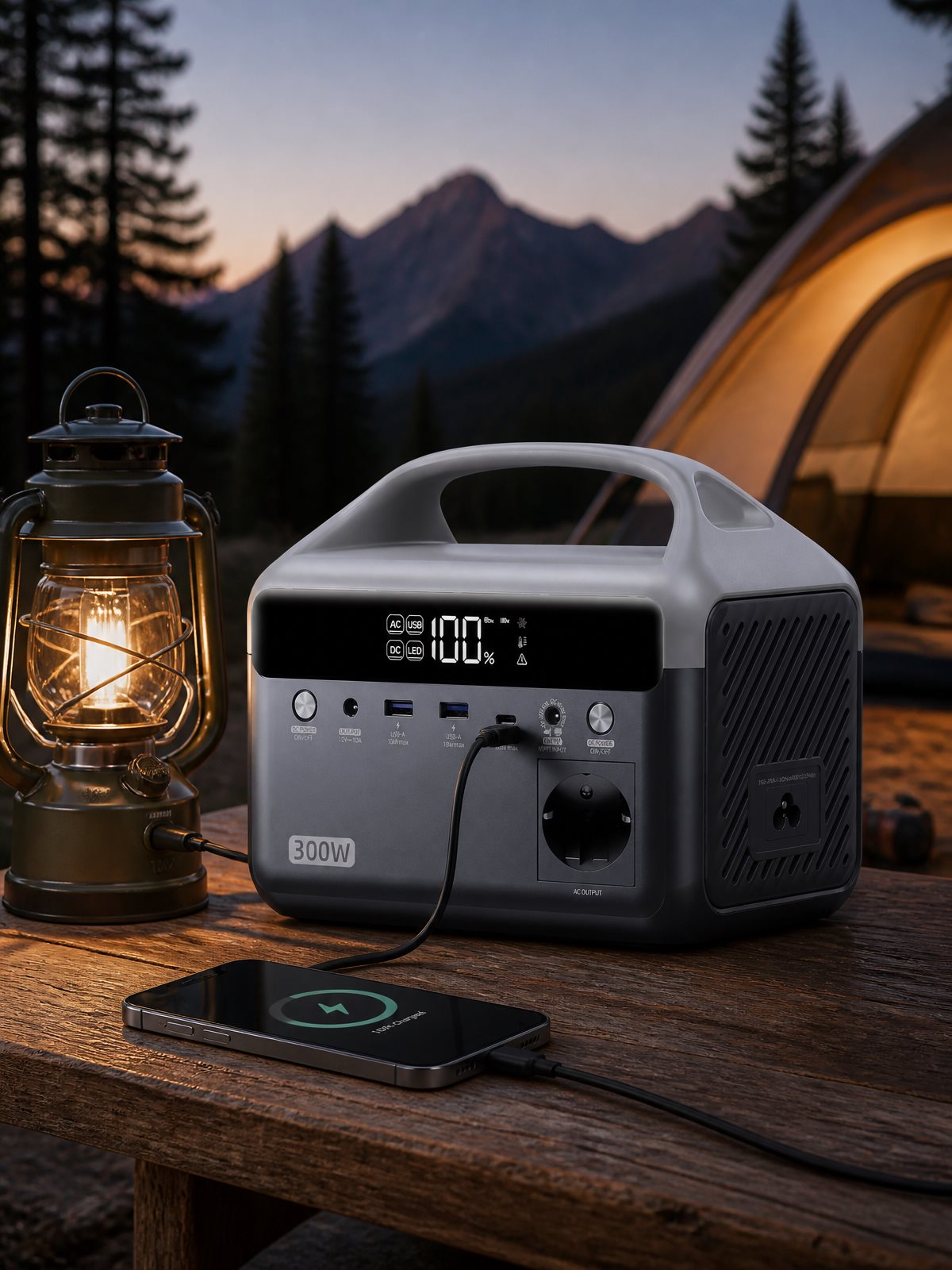
For a two-night car camp, the realistic load list is phones, a camera, a drone, a lantern and a laptop. That fits comfortably: 12+ phone charges, 10 camera charges, 3.2 drone charges and 30+ hours of 10W lighting all draw from the same 192Wh. The 2.5 kg body and 22 × 13 × 18 cm footprint mean it travels in the footwell rather than the roof box.
Scenario 2: home power outages
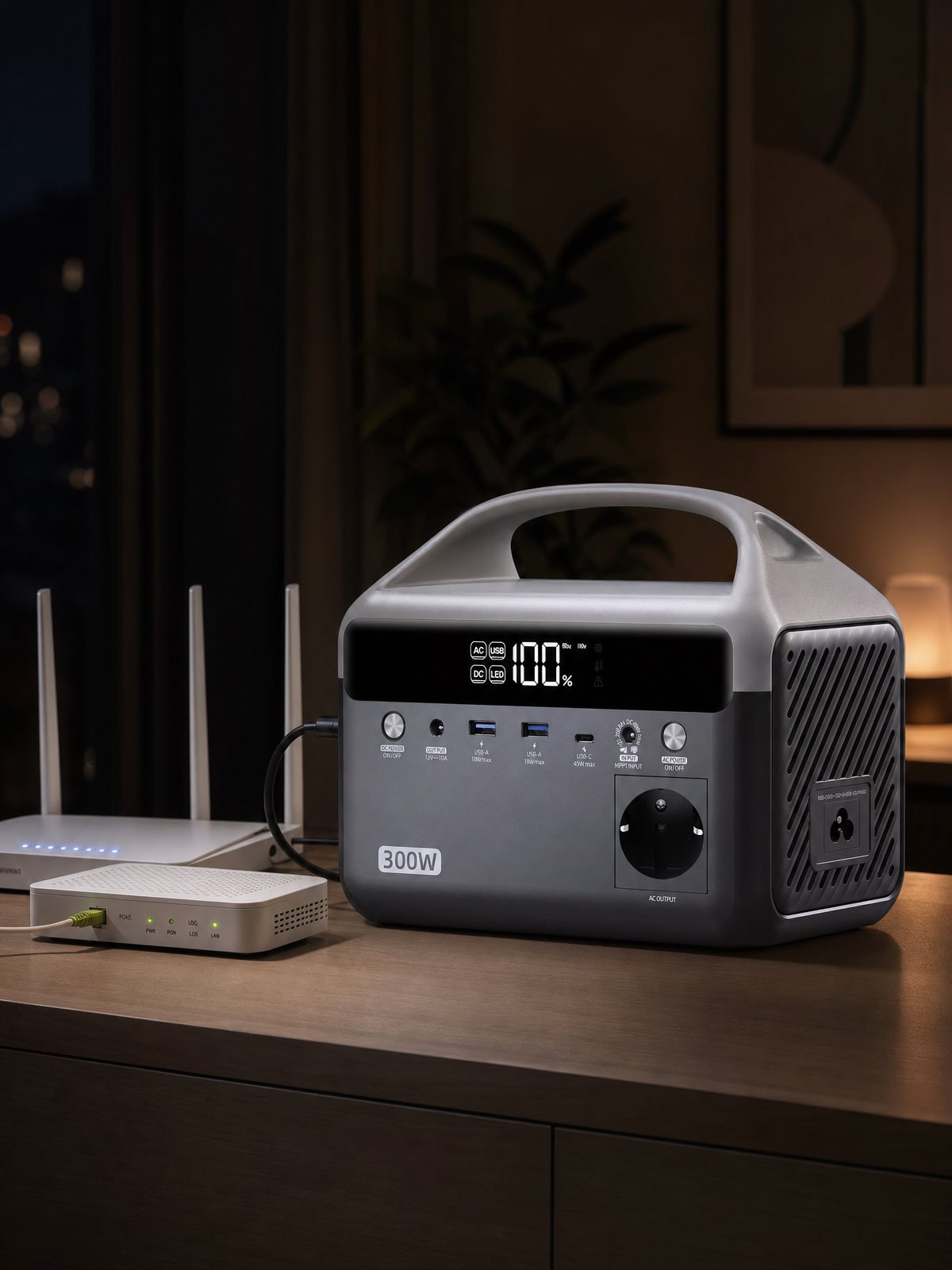
Outages are a different load profile: a router, an ONT, a phone, a light, and possibly a CPAP. Those are low-draw, long-duration loads — exactly where 192Wh goes furthest. A router plus ONT draws well under 30W combined, so the station runs them for many hours; the constraint is usually the CPAP, not the network gear.
Two practical notes for outage use. First, the 120W DC output is the efficient path for 12V network gear — skip the AC adapter and its losses. Second, this is a portable station, not a UPS: if you need automatic switchover with zero interruption for always-on equipment, a dedicated DC UPS is the correct device, and BEESTE makes that line separately.
Scenario 3: vehicle, RV and van life
This is where the DC output earns its place. A 12V compressor fridge cycling on and off needs start-up current that a 60W DC port cannot supply; 120W gives headroom. Recharging from the car socket while driving tops the pack back up between stops, and the 3.5-hour AC recharge covers a full reset at a campsite hookup.
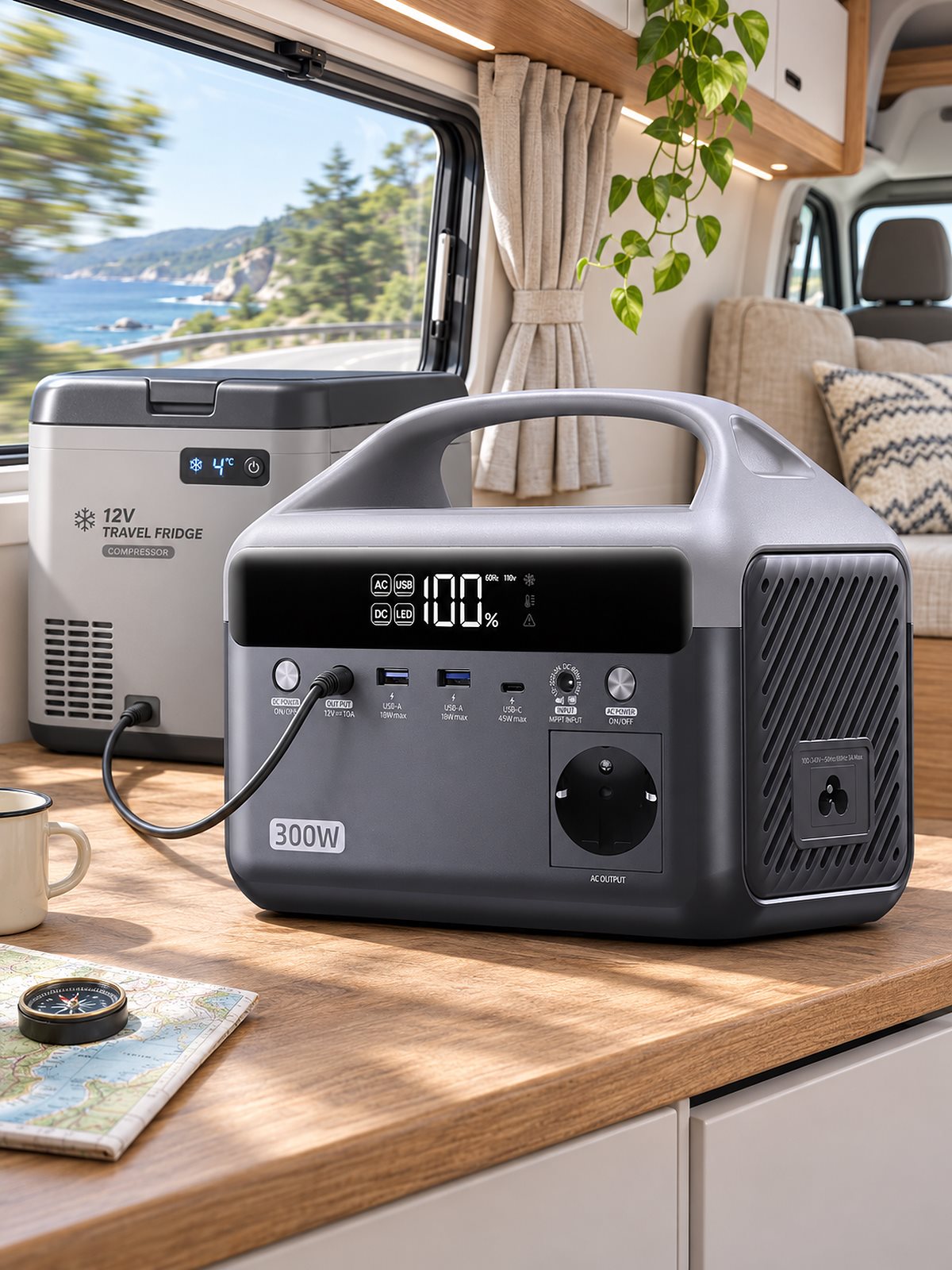
The operating range is −10°C to 45°C (14°F to 113°F). That covers a hot car interior within reason and a cold night, but it is a deliberately narrower window than the larger Cubus units — if the station will live in a vehicle through a hard winter or a desert summer, read the section below before choosing.
Certification and compliance
The STAR 300Z has test documentation on file for the following. These are the reports BEESTE holds, not marketing claims:
| Area | Standard | Document reference |
|---|---|---|
| Electrical safety (LVD) | EN/IEC 62368-1 | Report 00340AX0004S + licence |
| EMC | EN 55032 | Report 00450AX7022E + licence |
| Transport — lithium battery | UN38.3 | CCJC2511696R01, CCJC2510913R01 |
| Transport — safety data | MSDS | CCJC2511696R02, CCJC2510913R03 |
| Sea freight | Sea transport report | BEESTE STAR 300Z sea freight report |
For buyers, the practical reading is this: LVD and EMC documentation supports EU market entry, UN38.3 plus MSDS is what a carrier will ask for before accepting a lithium shipment, and the sea freight report is the piece most suppliers cannot produce on request.
One honest caveat, because it comes up in every serious evaluation: a certificate covering a model does not automatically certify every variant in a family, and CE marking is a self-declaration, not an independent quality rating. Ask for the report matching your exact SKU, and check the model number on the first page. BEESTE's certification documents are on file per model for exactly this reason — see the UN38.3 and transport documentation page.
STAR 300Z vs Cubus300L: same 300W envelope, different jobs
Both units are 300W rated / 600W surge with a 192Wh LiFePO4 pack, which is exactly why they need a stated difference — two near-identical listings with no declared split end up competing for the same searches. The split is this:
| Spec | STAR 300Z | Cubus300L |
|---|---|---|
| Capacity / rated power | 192Wh / 300W (600W surge) | 192Wh / 300W (600W surge) |
| Weight | 2.5 kg | 3.2 kg |
| Dimensions | 22 × 13 × 18 cm | 22.8 × 15 × 18.4 cm |
| DC output | 12V ⎓ 10A, 120W max | 12V ⎓ 5A, 60W max |
| Solar input | 10–30V ⎓ 5A, 60W max | 11–30V, 80W max |
| Operating temperature | −10 to 45°C | −10 to 75°C |
| USB ports | 1× USB-C 45W, 2× USB-A 18W | Same layout |
Pick the STAR 300Z when the load list is 12V-heavy (CPAP, router, fridge, radio), when 2.5 kg versus 3.2 kg on your back matters, or when the unit travels between home and vehicle.
Pick the Cubus300L when the unit lives in a hot environment (the 75°C ceiling matters for a car in summer), when you want a larger solar array to recharge faster, or when the extra 0.7 kg is irrelevant because it never leaves a shelf.
Neither is "better". They are two answers to the same envelope, and publishing both on one site without a stated difference is how you end up competing with yourself.
FAQ
What can the STAR 300Z actually power?
300W continuous with 600W surge covers laptops, projectors, mini fridges, fans, lights, routers, CPAP machines, cameras and drones. Anything with a motor or compressor draws surge current at start-up, so check the device's start-up wattage, not just its running wattage.
How long does it run a CPAP machine?
It depends on the humidifier. With the humidifier off, a standard CPAP drawing 45W runs about 3.8 hours through the 12V DC port and about 3.5 hours through the AC outlet; a low-draw travel CPAP at around 25W runs well past 7 hours. With a heated humidifier at high setting, draw can approach 90W and runtime drops under 2 hours. For a full 8-hour night with the humidifier on, this is the wrong size — go to a 500Wh class unit.
Is 192Wh allowed on a plane?
Not in passenger baggage. Most carriers cap carry-on lithium batteries at 100Wh, and allow 100–160Wh only with prior airline approval; 192Wh sits above both thresholds. It moves as declared freight with the UN38.3 and MSDS documents BEESTE holds per model, and for the flight itself you carry a sub-100Wh pack.
How long does the battery last?
Over 3,000 cycles to 80% capacity on LiFePO4 chemistry. One full cycle per day is roughly eight years of service before capacity falls to 80%.
Can I run an AC appliance and USB devices at the same time?
Yes. The AC socket, the 12V DC output and the three USB ports work simultaneously, sharing the 300W continuous budget. A 200W appliance plus a 45W laptop charger plus two phones stays inside the rating; pushing past 300W total will trigger the unit's protection.
Does it work with any solar panel?
The solar input accepts 10–30V and up to 60W. Any panel within that voltage window works; you do not need a BEESTE panel. Size the panel to the 192Wh pack, not to the 300W output — a 60W panel refills the unit in roughly 3 hours of good sun.
Is it a UPS? Can it switch over automatically?
No. This is a portable station: you plug devices into it, and it runs them from its battery. If you need automatic, uninterrupted switchover for always-on network or medical equipment, a dedicated DC UPS is the right product, which BEESTE makes as a separate line.
What is in the box?
Main unit, AC charging cable, user manual and quick start guide. There are no solar panels, car cables or extra adapters included — those are ordered separately, which is why the unit weighs 2.5 kg and the packed colour box 3.2 kg.
What is the shipping weight?
2.5 kg for the unit alone, 3.2 kg including the colour box, 3.4 kg as a full carton.
Can I order it under my own brand?
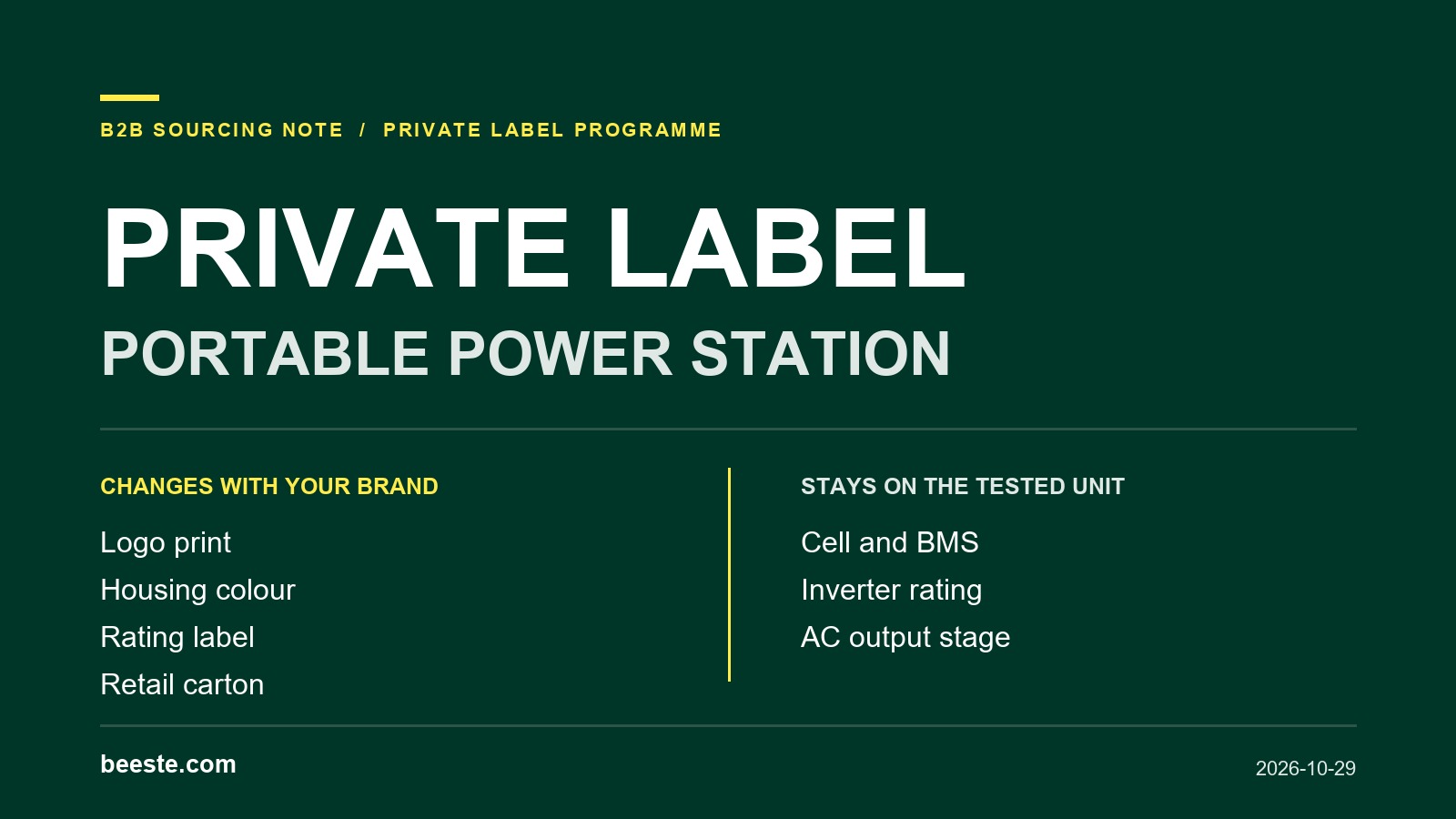
Yes. BEESTE manufactures this model for OEM and private-label programmes; MOQ, tooling and certification ownership are agreed per project. Start from the power station range or the supplier page for the commercial terms.
Where to go next
- Full specification and current configuration: STAR 300Z product page
- The rest of the range, including the 500W and 1000W classes: portable power station range
- Transport and certification documentation: UN38.3 page
- OEM / wholesale enquiries: supplier page
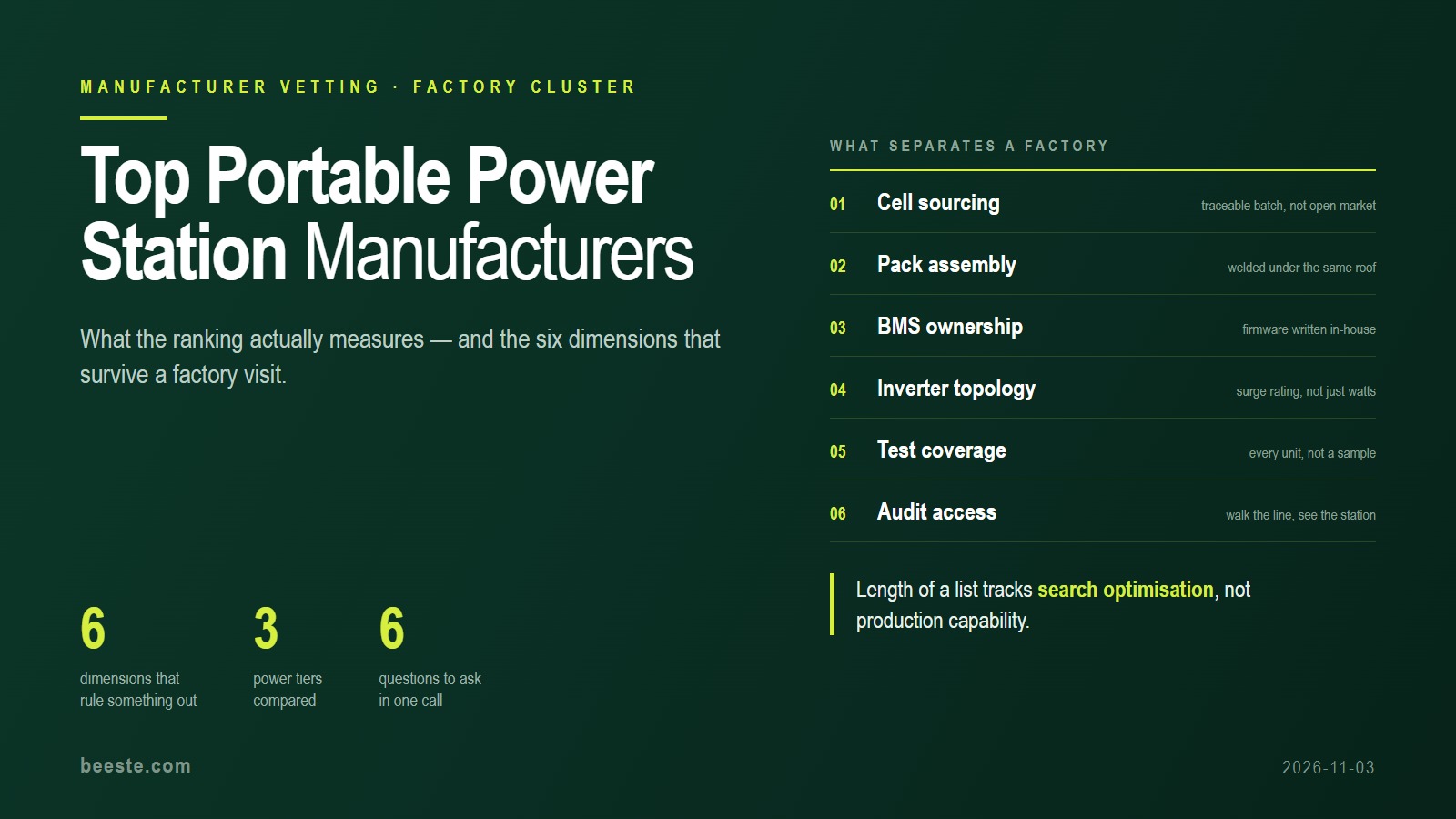
Top Portable Power Station Manufacturers: What the Ranking Measures
Related Article