Solar Generator Manufacturers in China: Factory Types and What They Supply
Buyers searching for solar generator manufacturers in China usually expect one thing: a factory that builds the whole kit — panel, battery, inverter, enclosure — under one roof. In practice, the Chinese supply base is split into three distinct factory types, and each one supplies a different part of that kit. Confusing them is the single most expensive mistake in sourcing this product category, because it leads to quotes that cannot be compared, samples that do not match production, and tooling paid twice.
This guide breaks down what each type of factory actually manufactures in-house, what it buys in from upstream suppliers, how to size a kit before you ask for a quotation, and which documents you should physically hold before releasing a deposit. It is written for brand owners, distributors and project buyers placing container-level orders, not for consumers buying a single unit.
What the term covers in the Chinese supply base
In English-language search, "solar generator" describes a portable power station bundled with a folding solar panel. Chinese factories do not use that framing internally. They separate the two halves of the product, and that separation determines who you should be talking to.
Portable power station factories
These factories assemble the battery pack, BMS, inverter board and enclosure. Their core competence is system integration and safety testing: cell matching, thermal layout, charge/discharge logic and the test regime behind a UN38.3 report. Many of them do not make solar panels at all, and will source folding panels from a partner factory when a buyer wants a kit.
Folding solar panel factories
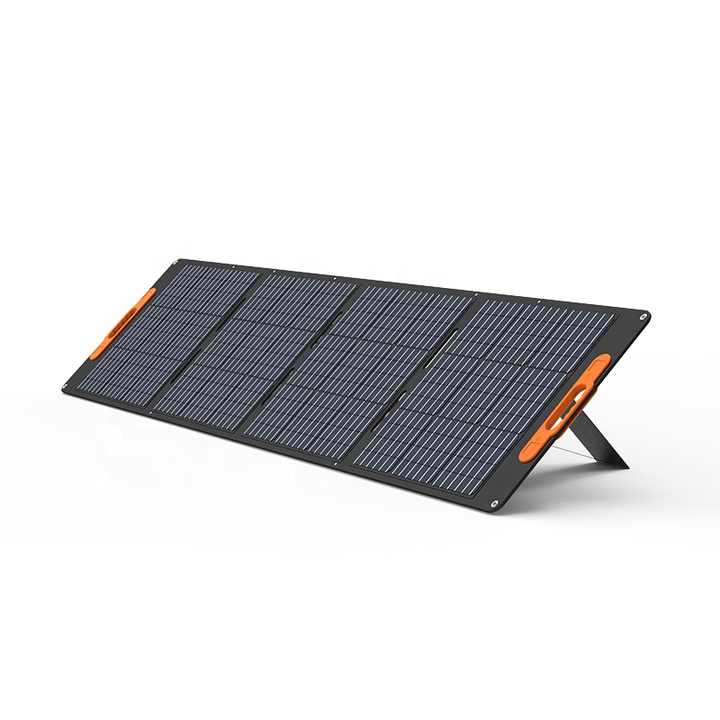
These factories laminate cells into PET or ETFE surfaces, sew or heat-seal the fabric backing, and terminate the output with MC4 or DC barrel connectors. Their competence is cell sorting, lamination yield and waterproofing. They rarely build power stations, and they typically sell panels as standalone SKUs to brands that already have a station supplier.
Kit integrators
A smaller group does both: it holds a panel line and a station line, and can ship a matched kit with a single compliance file. This is the type most buyers are actually looking for, and the type that is hardest to verify, because "we make everything" is easy to say and expensive to prove.
The three factory types, compared
Before requesting quotations, decide which type you need. The comparison below is the practical difference between them, not a quality ranking — a specialised panel factory can be far better than a generalist integrator at making panels.
| Factory type | Makes in-house | Typically buys in | Best fit for |
|---|---|---|---|
| Power station factory | Battery pack, BMS, inverter board, enclosure, final assembly | Cells, solar panels, some ICs | Buyers who need one station SKU with multiple capacity options |
| Folding panel factory | Cell lamination, fabric housing, cable and connector termination | Solar cells, junction components | Buyers who already have a station and need a matched panel SKU |
| Kit integrator | Both halves, plus kit-level compliance file | Cells, some power components | Buyers launching a complete retail kit under one brand |
Why the distinction changes your quotation
A power station factory quoting a "solar generator kit" is quoting a station plus a purchased panel. The panel margin sits with a third party, and the delivery date depends on that third party's schedule. When you compare that quote against a kit integrator's quote, you are comparing two different supply chains, not two prices for the same item.
Why the distinction changes your sample
Samples from a station factory and samples from a panel factory will not match each other's connectors, voltage windows or packaging. If you approve a sample kit assembled from two sources, you have approved a configuration that no single factory will reproduce at volume without a coordination step you have not budgeted for.
What each type actually sources from upstream
Almost no factory in this category is vertically integrated to the cell level. Knowing which components are bought in tells you where quality risk actually sits, and which questions to ask the supplier you are evaluating.
| Component | Station factory | Panel factory | What to ask |
|---|---|---|---|
| LiFePO4 cells | Bought in, grade-sorted | Not used | Which cell grade, and is matching data available per batch? |
| BMS | Often designed in-house, assembled from bought ICs | Not used | Over-current, over-temperature and cell-balance thresholds |
| Inverter / MPPT board | Bought in or contract-assembled | Not used | Which topology, and does the board carry its own test record? |
| Solar cells | Not used | Bought in, sorted by efficiency bin | Efficiency bin range and lamination defect rate |
| Fabric and housing | Injection moulding or bought enclosures | Sewn or heat-sealed in-house | Water resistance claim and the test behind it |
The cell grade question
Cell grade affects cycle life more than any other single input, and it is the easiest thing to swap silently between sample and mass production. Ask for the grade in writing, and ask whether the factory can supply per-batch matching data. A factory that cannot produce this data is not necessarily bad, but it is telling you something about its process control.
The board question
If the inverter or MPPT board is bought in, the factory's quality system is largely a system for screening someone else's work. That is normal and can be perfectly reliable — but it means your audit should focus on incoming inspection and end-of-line testing, not on board design.
Sizing a kit before you ask for a price
Most quotation problems start before the quotation. If the buyer cannot state the target load and daily energy, the factory will quote its closest standard SKU, and the conversation drifts toward whatever is already on the line. Four formulas settle the specification.
The four formulas you need
Daily energy demand: Wh per day = Σ (load in watts × hours used per day).
Usable battery capacity: required Wh = daily Wh ÷ depth of discharge. For LiFePO4, a planning figure of 0.8 is common; for older chemistry it is lower.
Panel array size: panel watts = daily Wh ÷ (peak sun hours × 0.75), where 0.75 accounts for controller and cabling losses plus temperature derating.
Runtime check: hours = capacity Wh × 0.85 ÷ load watts. The 0.85 factor is the same derating used elsewhere on this site and is a planning estimate, not a laboratory figure.
Worked examples across typical loads
| Use case | Load | Hours/day | Daily Wh | Panel W (4 sun hours) | Battery Wh at 0.8 DoD |
|---|---|---|---|---|---|
| Phone and lighting only | 30 W | 5 | 150 | 50 W | 188 Wh |
| Laptop and router | 90 W | 8 | 720 | 240 W | 900 Wh |
| Compressor fridge, small | 60 W average | 24 | 1,440 | 480 W | 1,800 Wh |
| Site office, lights and tools | 400 W | 6 | 2,400 | 800 W | 3,000 Wh |
The panel column is deliberately larger than the battery column suggests at first glance. A kit sized only for storage will not recharge within a working day, and the buyer discovers this after the first cloudy week, not during the quotation.
Why the panel figure usually surprises buyers
Peak sun hours are not daylight hours. A location with twelve hours of daylight may deliver four effective peak hours in winter. Sizing on daylight hours produces a panel array that is roughly three times too small, and a kit that works in July and fails in November.
Certification and documentation to confirm before a deposit
Compliance is where inexperienced buyers lose the most money, because the paperwork looks complete until a carrier or customs officer disagrees. The documents below are the ones that actually get checked in transit and at import.
| Document | What it covers | Issued by | Why it matters operationally |
|---|---|---|---|
| UN38.3 test summary | Lithium battery transport safety | Accredited test laboratory | Without it, air and many sea carriers will refuse the shipment |
| MSDS / SDS | Chemical and handling data | Factory, based on cell data | Requested by freight forwarders before booking |
| IEC 62109 report | Safety of power conversion equipment | Accredited laboratory | Commonly referenced in EU and AU market files |
| CE declaration | EU conformity, self-declared | Manufacturer or importer | Must name the responsible economic operator |
| Packaging test report | Drop and stack performance | Laboratory or in-house | Carrier claims and retailer chargebacks |
What a factory cannot legally claim on your behalf
A factory can supply test reports. It cannot certify your product for you, and it cannot let you use its own certificates as if they covered your brand and model. The CE declaration, in particular, is issued by the economic operator placing the goods on the market — which is normally you, not the factory. Any supplier offering to "give you CE" without naming the responsible party is offering a document that will not survive an audit.
The trap in copied reports
Reports are frequently shared between buyers, and a report for a different model number is not evidence for yours. Check that the model designation, capacity and cell configuration in the report match the goods you are ordering. This takes ten minutes and prevents the most common import hold.
MOQ, tooling and lead time
These three numbers decide whether an order is viable, and all three move depending on which factory type you choose and how much of the product you are willing to accept off-the-shelf.
What drives MOQ
MOQ is usually set by the smallest run the line can start without scrapping material, not by the factory's preference. Changing the panel wattage or the enclosure colour resets that calculation. Accepting a standard station colour and a standard panel size typically lowers MOQ by a step, because it lets the factory batch your order with existing production.
Tooling: what you pay for and what you keep
Tooling covers injection moulds for the enclosure, printing plates for the panel surface, and any custom packaging die. Two commercial points matter: who owns the tool after the order ends, and whether the tool can be moved to another factory. Get both in writing. A mould that lives permanently at one supplier is leverage you have handed away.
Lead time, realistically
Sample lead time and mass production lead time are unrelated figures, and the gap between them is where launch dates slip. A first article can be built by hand in days. A production run has to wait for cell allocation, board delivery, lamination scheduling and packaging — and each of those is a separate queue at a separate supplier.
How to audit a factory without flying there
Remote verification is imperfect but not useless. Done properly, it filters out trading companies presenting themselves as factories before you spend money on a visit.
Documents to request first
Ask for the business licence, the scope of business on that licence, and a recent utility bill for the stated address. Then ask for the production line layout and the equipment list. A trading company can produce the first set; it struggles with a coherent equipment list that matches the products it claims to make.
A video audit that actually shows something
Ask for an uninterrupted video walk from the entrance to the specific line that will build your product, with the machine nameplates visible. Request that the person filming read out the date and the order number. Edited highlight reels show you marketing, not capability.
Red flags that repeat
Quotes that arrive faster than the specification discussion. A single contact who answers every technical question without consulting anyone. Certificates whose model numbers do not match the quoted product. A willingness to print any logo on any product with no discussion of compliance boundaries. Each of these appears in genuine factories occasionally; several together usually means you are talking to an intermediary.
Where buyers most often go wrong
Comparing quotes that describe different products
A quote for a kit with a purchased panel and a quote for a kit built around an in-house panel are not comparable, even when the headline wattage matches. Normalise the specification before comparing price: cell grade, panel efficiency bin, DoD assumption, connector type, packaging standard.
Treating the sample as the specification
The sample is a single unit, often hand-assembled. The specification is the document that production will follow. If the two disagree and only the sample exists, production will follow the sample, and the disagreement will surface in the third container.
Ignoring the recharge path
Buyers test the station and forget the panel. The panel is the part that determines whether the product works in the field, and it is the part most likely to be sourced from a factory the station supplier does not control.
Putting the sourcing plan together
A workable sequence, for a buyer placing a first order, looks like this. Define the load and daily energy first, using the formulas above, and write them down. Decide whether you need a station, a panel, or a matched kit, and accept that the answer changes which factory type you are looking for. Request documents before quotes, so the compliance conversation happens while you still have negotiating room. Audit remotely, then place a sample order against a written specification rather than a verbal one. Hold the tooling ownership question until it is answered in the contract, not in an email.
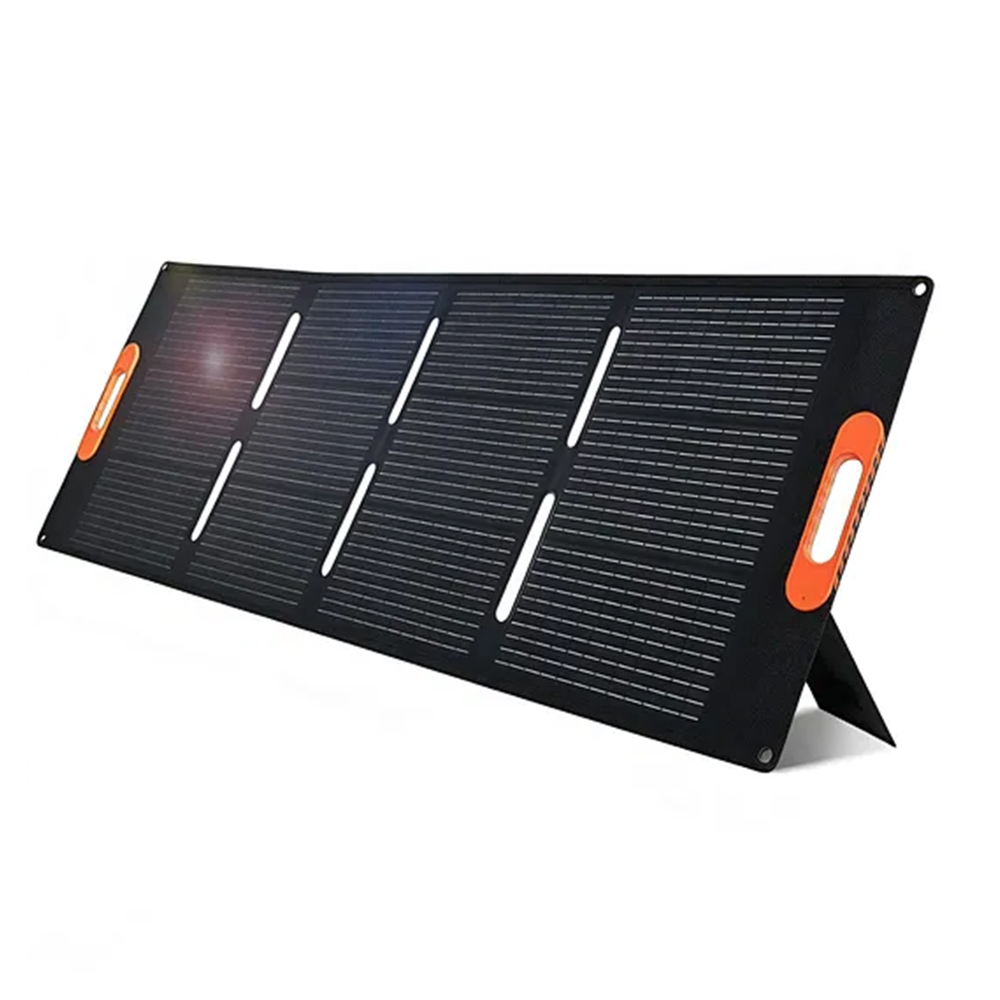
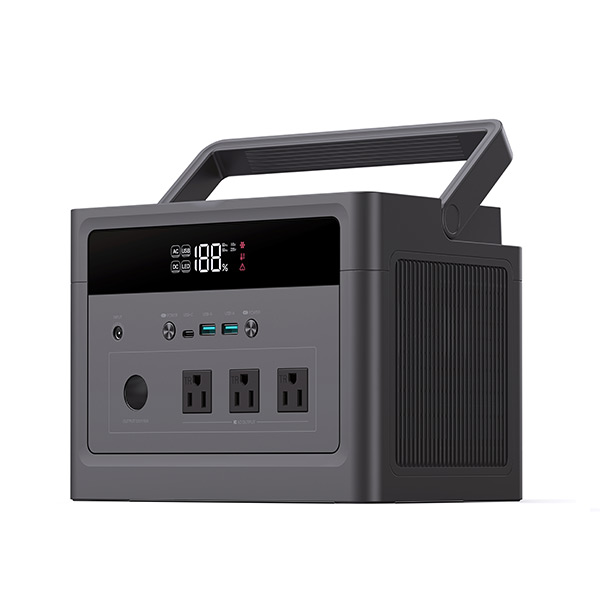
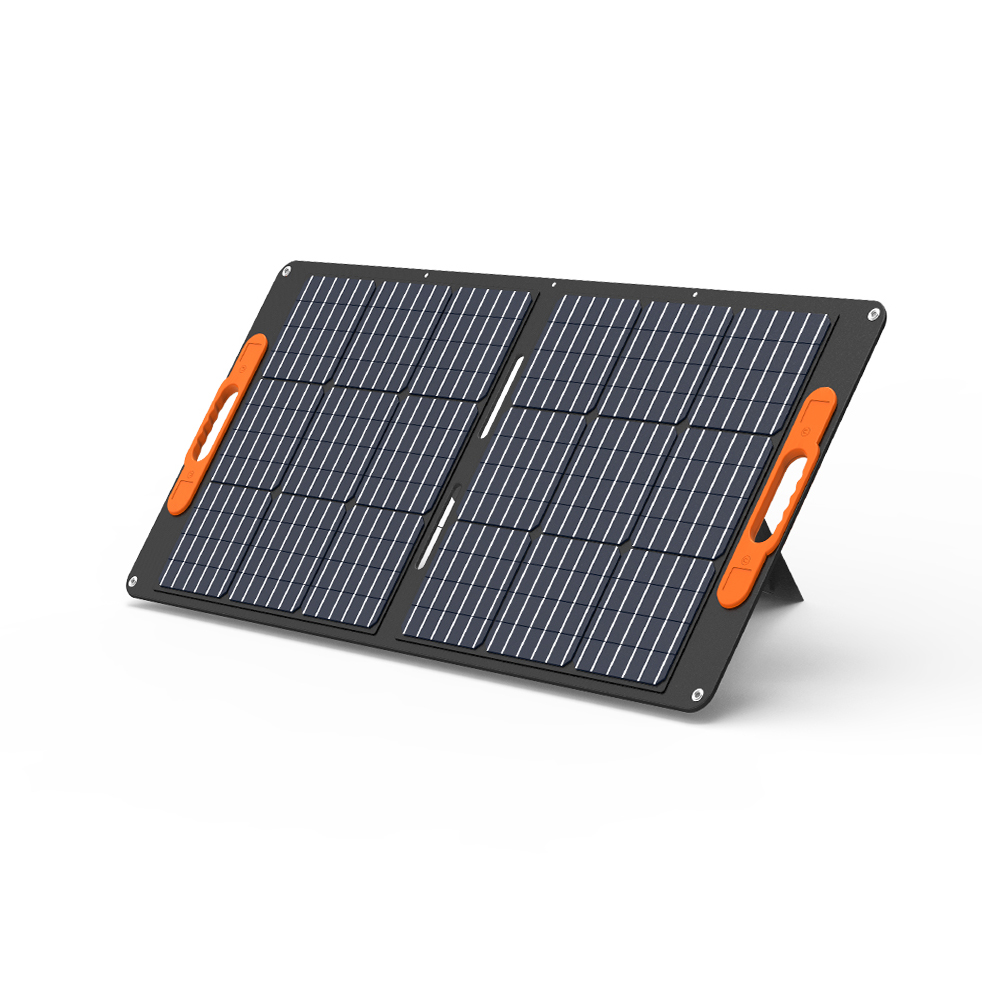
For reference points on the hardware side, the 300W foldable solar panel and the 200W foldable solar panel show how panel SKUs are positioned for kit use, the 600W 576Wh portable power station shows the station half of a matched pair, and the full solar panel range shows how wattages are tiered across a catalogue.
Frequently asked questions
How do I verify a Chinese solar generator factory is a real manufacturer?
Match three things: the scope of business on the business licence, the equipment list against the products claimed, and an uninterrupted video walk showing the line that would build your order. If all three agree, you are probably dealing with a factory. If any one of them cannot be produced, treat the supplier as a trader until proven otherwise.
What is a typical MOQ for an OEM solar generator kit?
MOQ is driven by the smallest viable production run for the specific configuration, so it moves with colour, wattage and packaging choices. Accepting standard colours and standard panel sizes usually lowers it. Ask for the MOQ of the exact configuration you want rather than a catalogue figure.
Which certifications should I expect from a solar generator supplier?
At minimum, a UN38.3 test summary for transport and an MSDS for the forwarder. For market access, an IEC 62109 report is commonly referenced, and the CE declaration must be issued by the economic operator placing goods on the EU market. Confirm model numbers on every document match your order.
Can one factory supply both the solar panel and the power station?
Some can, and that is what a kit integrator is. Many cannot, and will source the panel from a partner. Neither situation is a problem by itself, but you should know which one you are buying, because it determines who is accountable when the two halves do not match at the connector.
How long do tooling and first production usually take?
Tooling and first-article approval are separate from production scheduling, and the production run also waits on cell allocation, board delivery and packaging. Ask for a line-by-line schedule with each dependency named, not a single total figure, so you can see which step is the real constraint.
Next step
If you are specifying a kit and want the sizing checked against a real configuration, send the load list and the daily energy target through the contact page and we will return a component breakdown with the assumptions stated.
Private Label Portable Power Station: Branding, Packaging, Certification