500W Portable Power Station for Camping and Road Trips: The 444Wh Reality Check
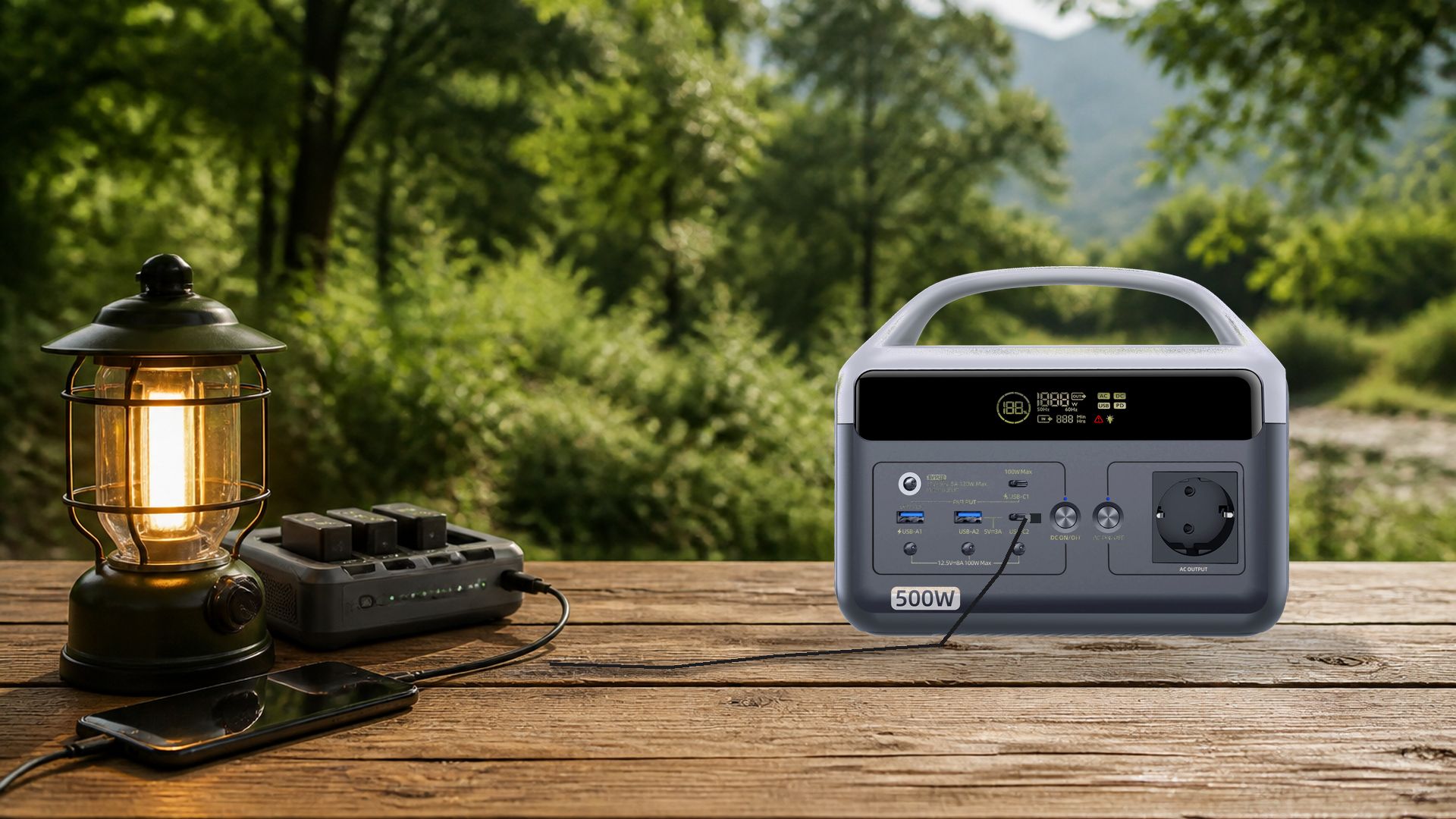
The BEESTE STAR 500Z is a 500W / 444Wh NMC (ternary lithium) portable power station weighing about 3.4 kg, with one 500W AC outlet, 100W USB-C PD, 60W USB-A, 15W USB-C, a 100W 12.5V DC output, a 12V car socket and a 2W LED light. In plain numbers: after inverter losses it gives you roughly 377 usable watt-hours, which is about 6.3 hours on a 60W load, 2.5 hours at 150W, and 45 minutes at its full 500W rating. That makes it the right purchase for a two-night camping or road-trip load in the 30–150W band, and the wrong purchase for anything that heats water or air.
Most 500W-class listings lead with the inverter rating because it is the bigger number on the box. This article does the opposite: it starts from the watt-hours, converts them into hours at the loads people actually run, and then states where the unit stops being the right answer. The full specification sheet is on the STAR 500Z product page; what follows is the interpretation.
What the STAR 500Z is, in one paragraph you can quote
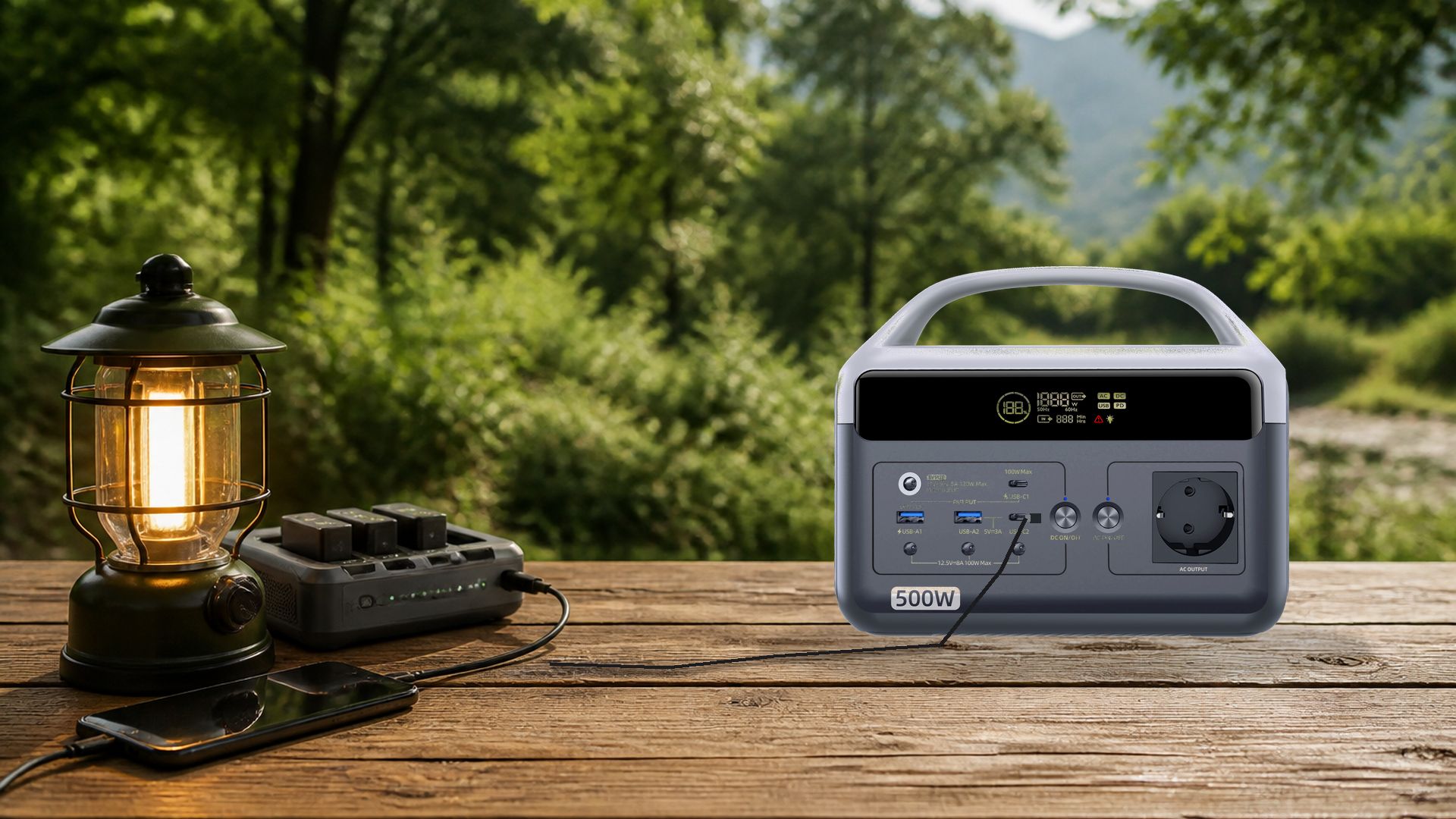
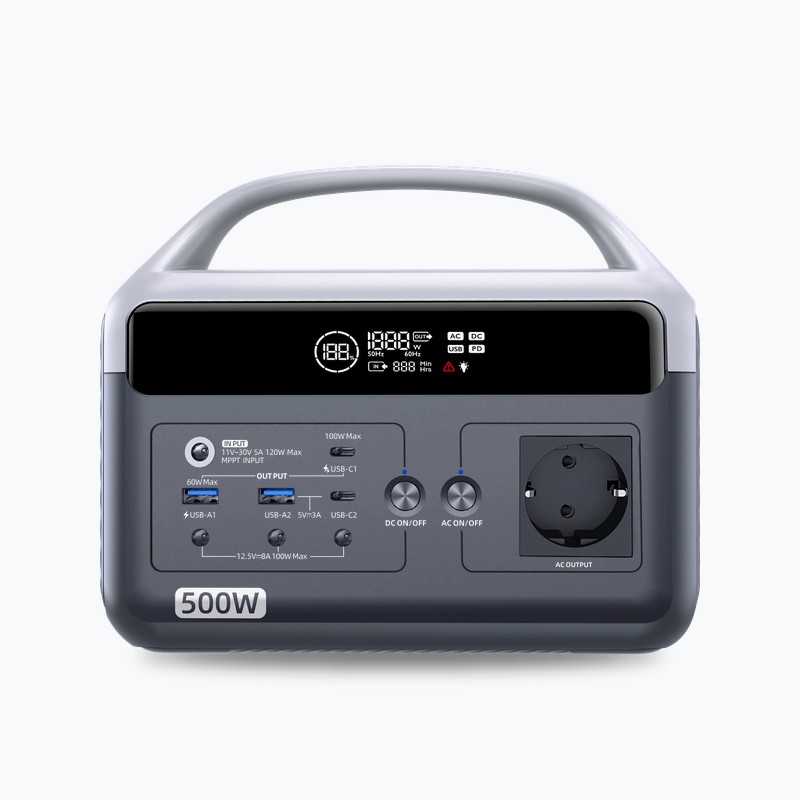
The STAR 500Z is a portable NMC (ternary lithium) power station with a 500W pure-output AC inverter and a 444Wh pack, sold as the middle size in BEESTE's STAR range between the 300W/268Wh STAR 300Z and the 1000W class. It carries seven outputs, recharges from mains in about three hours at 170W, from solar in about four hours at a 120W input ceiling, or from a car socket in about four and a half hours, and it supports pass-through charging so it can sit permanently on a shelf and still feed a router or a lamp. Its operating range is -10°C to 45°C, its body measures 22 × 13 × 18 cm, and it is not permitted on commercial flights because 444Wh is well past the 160Wh carry-on limit.
The single most useful thing to know before comparing models is that the two headline numbers answer different questions. Capacity decides how long. Output decides what will start at all. A unit with a large inverter and a small pack runs a heavy load for a few minutes; a unit with a large pack and a small inverter runs light loads for days but trips the moment a compressor tries to start.
The STAR 500Z sits deliberately in the middle of that trade: 444Wh behind a 500W inverter with a 1000W surge. In practice that means camping loads, cameras, drones, laptops and lights are comfortable, a 12V fridge is possible but tight, and anything with a heating element is out of scope.
Spec sheet: the numbers that matter
| Parameter | STAR 500Z | Why it matters on a trip |
|---|---|---|
| Rated AC output | 500W (1000W surge) | Surge is what starts a fridge compressor; 500W continuous caps kettles and heaters |
| Capacity | 444Wh (120,000mAh) | About 377Wh usable after inverter losses |
| Battery chemistry | NMC (ternary lithium) | Lighter than LiFePO4 at the same capacity — the reason this unit stays near 3.4 kg |
| Cycle life | 1,000 cycles to 80% | Half or less of a LiFePO4 pack; the price paid for the weight saving |
| AC outlet | 1 × 100–240V, 50/60Hz (EU Schuko) | One outlet, so bring a short power strip for multiple devices |
| USB-C1 / USB-A1 / USB-C2 | 100W PD / 60W / 15W | 100W USB-C runs a laptop without its AC brick |
| DC output | 12.5V 8A, 100W | Runs 12V fridges, lights and routers directly, skipping the inverter |
| Car socket | 12V 8A, 100W | Same port family, cig-lighter plug devices |
| AC recharge | 170W, about 3 hours | One mains top-up between trips |
| Solar recharge | 120W ceiling, about 4 hours | Two 100W panels do not charge it twice as fast; the input caps at 120W |
| Car recharge | About 4.5 hours | Workable on a long drive, not on a 40-minute commute |
| Dimensions / weight | 22 × 13 × 18 cm / 3.4 kg | One-hand carry with the moulded handle |
| Operating temperature | -10°C to 45°C | Winter camping is fine for discharge; charge above freezing |
| Air travel | Not permitted (444Wh > 160Wh) | Road trips and campsites only |
Runtime, calculated instead of claimed
Published runtime claims in this category are usually quoted at a load nobody runs. The arithmetic below uses the pack's own numbers and a 0.85 inverter efficiency, so it is a floor rather than a best case. A 444Wh pack does not deliver 444Wh at the AC outlet; roughly 15% is lost as heat in the inverter, which leaves about 377Wh for the devices.
| Load | Typical device | Calculated runtime |
|---|---|---|
| 10W | Camping light, phone charging | About 37 hours |
| 20W | Small fan, camera batteries | About 18 hours |
| 40W | 12V fridge on duty cycle, router | About 9 hours |
| 60W | Laptop, LED work light | About 6.3 hours |
| 100W | Drone charging hub, projector | About 3.8 hours |
| 150W | Large laptop plus monitor | About 2.5 hours |
| 300W | Small appliance, power tools | About 1.3 hours |
| 500W | Anything at the rated maximum | About 45 minutes |
Two things follow from that table. First, the unit is far more capable at 60W than the "500W" badge suggests — six hours of laptop work is a real working day. Second, the gap between 300W and 500W is only about 20 minutes of runtime at the top end, so the inverter rating is not where the value sits. The 444Wh pack is.
A fridge deserves its own note. A 40W average draw over 24 hours is 960Wh, which is more than twice this pack. A 500W-class station can carry a 12V fridge through one night on duty cycle, not through a two-day trip. If the fridge is the reason for buying, go up a class instead of buying two of these.
Seven ports, and the one that matters most
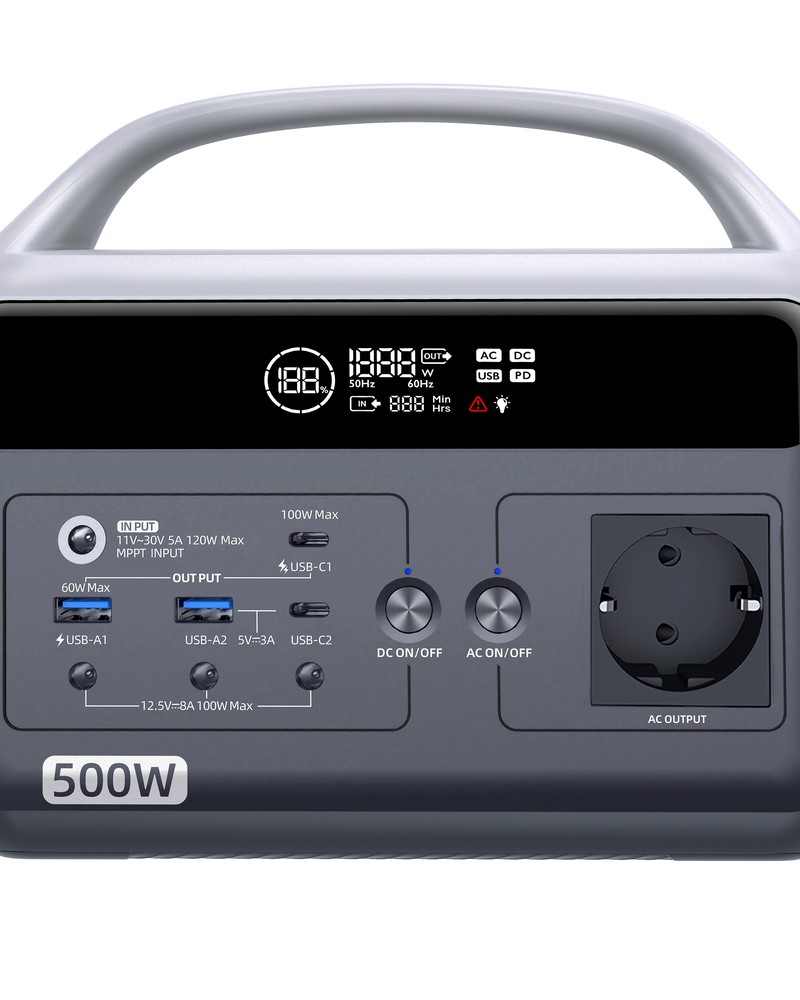
Port count is a weak differentiator; port allocation is the real one. The STAR 500Z spreads its outputs across four voltage domains, which is what lets it run several devices without stacking them all on the inverter.
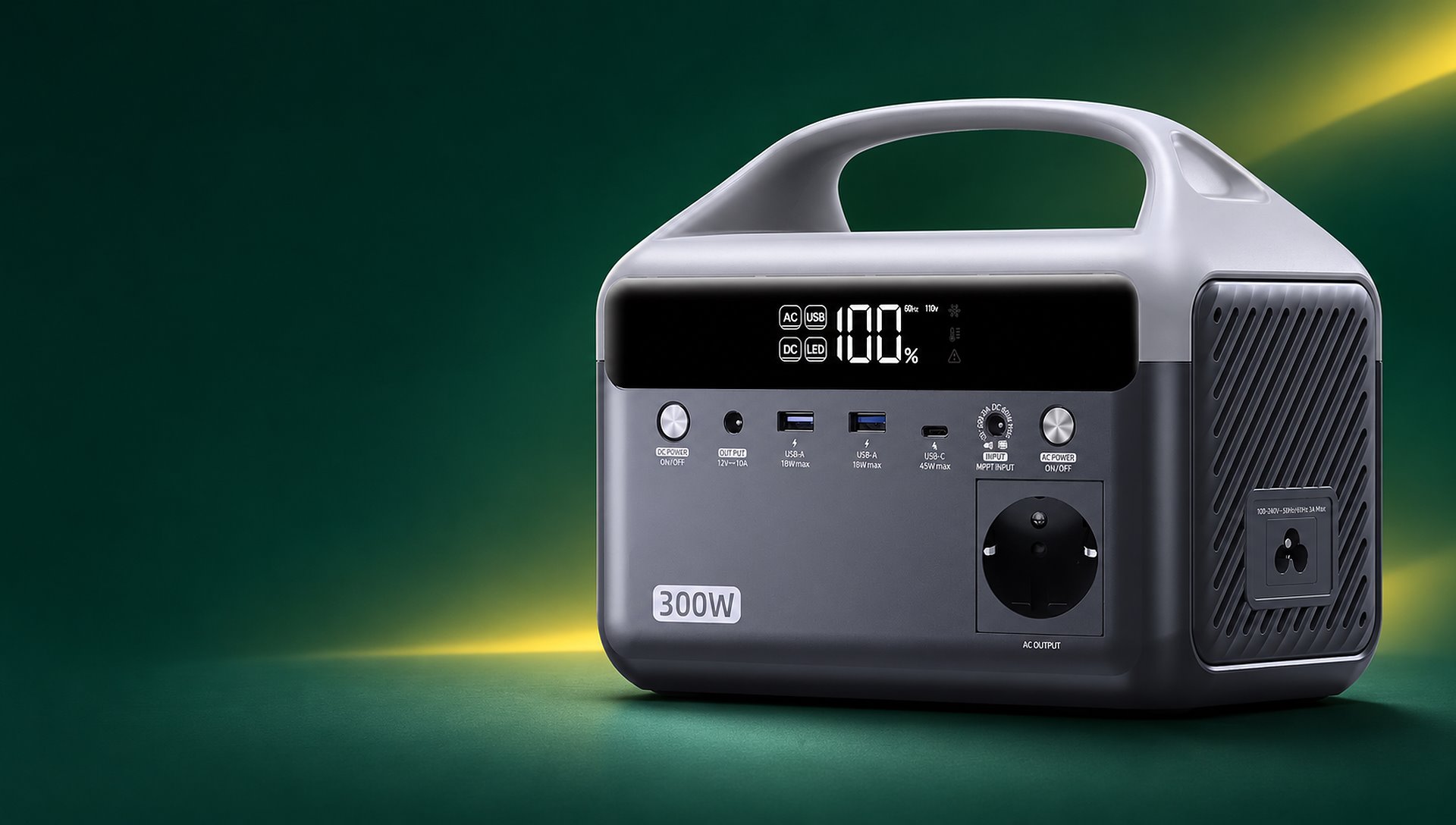
The panel is laid out by function rather than by wattage: AC on one side with its own on/off button, DC and the car socket grouped with a second button, and the USB cluster between them. Two separate switches matter more than they look — the AC side can stay off while the USB and 12V ports keep running.
| Port | Rating | What it is genuinely for |
|---|---|---|
| AC outlet | 500W, 1000W surge | Laptop bricks, camera chargers, small appliances, a fan |
| USB-C1 | 100W PD | Laptop at full speed, 100W phone or tablet charging |
| USB-A1 | 60W max | Older phones, action cameras, headlamps |
| USB-C2 | 15W max | Overnight phone charging, watch, earbuds |
| DC 12.5V output | 100W | 12V fridge, LED strip, router — no inverter loss |
| Car socket | 100W | Cigarette-lighter devices, tyre inflator |
| LED light | 2W, four modes | Tent light, and an SOS beacon if something goes wrong |
The 100W USB-C port is the one that changes how the unit is used. A modern 14-inch laptop draws 45–65W while working, so it runs from USB-C at close to full speed and leaves the AC outlet free for something else. That is a more efficient path than plugging the laptop's 90W brick into the inverter, because DC-to-DC conversion wastes less than DC-to-AC-to-DC.
The 2W LED is a work light with 50% and 100% brightness plus strobe and SOS, not a campsite lantern: it lights a tent interior or a repair job under a bonnet.
What it will not run
Being explicit about the exclusions is more useful than another list of things it can do, because the failure mode is confusing: an undersized inverter does not brown out gracefully, it shuts down.
| Device | Typical draw | Result on a 500W station |
|---|---|---|
| Electric kettle | 1,500–3,000W | Will not start; overload protection trips |
| Induction plate | 1,800W+ | Will not start |
| Hair dryer | 1,200–2,000W | Will not start |
| Space heater | 1,000–2,000W | Will not start |
| Microwave | 700–1,000W input | Marginal to no; a 700W oven draws more than its rated output |
| Coffee machine (brew phase) | 800–1,500W | No for espresso and filter brewers; yes for a 300W pod machine |
| Full-size fridge | 100–150W running, 600–800W start | Starts only if surge lands inside 1,000W; not a reliable pairing |
| Laptop, lights, phones, drone, camera | 5–100W | Yes, comfortably |
The pattern is simple: if the device's job is to make heat, this class of station is the wrong tool regardless of brand. If the device's job is electronics, lighting or a small motor, the 500W inverter has ample headroom and the limiting factor becomes the 444Wh.
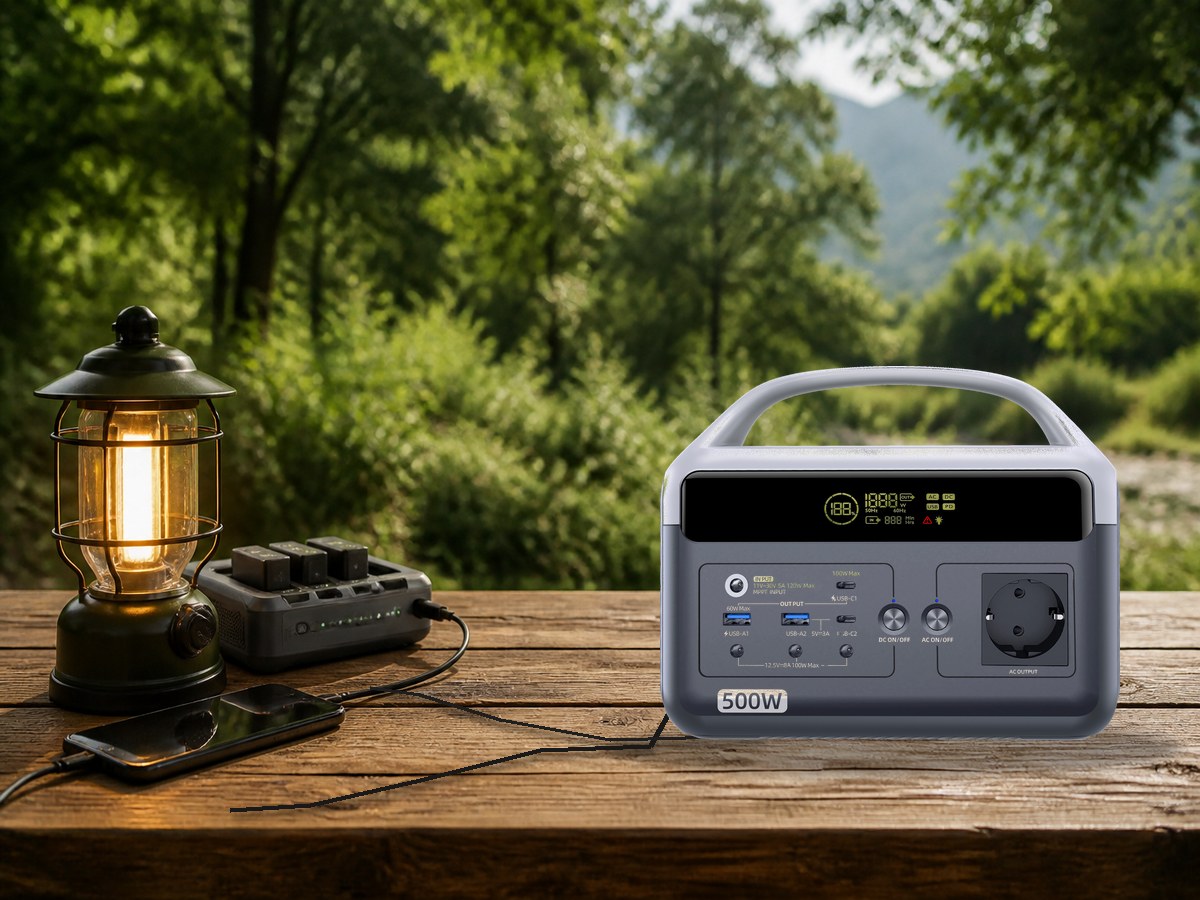
Sizing is the step almost everyone skips, and it is the only step that decides whether the trip ends with a working battery or a dead one. Write down the loads, the hours and the watt-hours, then compare the total with 377Wh. The budget below is a realistic two-night trip for two people; the numbers are deliberately unglamorous.
Sizing a two-night camping trip
| Load | Power | Hours over two nights | Energy |
|---|---|---|---|
| Two phones | 12W | 6 | 72Wh |
| Headlamp and tent light | 5W | 12 | 60Wh |
| Camera batteries | 20W | 3 | 60Wh |
| Laptop (photo backup, one session) | 60W | 3 | 180Wh |
| Drone charging (three batteries) | 60W | 2.5 | 150Wh |
| Portable speaker | 15W | 4 | 60Wh |
| Total | 582Wh |
That total is over budget by about 200Wh, and the honest fixes are the ones a shop will not tell you: drop the laptop to one hour and charge the drone from the car on the drive in, and the trip lands at roughly 360Wh — inside one pack with nothing to spare. Add a 12V fridge and the requirement roughly triples, which is the point where a second unit or a bigger class of station becomes cheaper than buying this one twice.
The rule of thumb that survives contact with reality: plan for 70% of the pack's usable energy, not 100%, because cold mornings, older cells and an unplanned extra day all eat into the margin.
Road trips: charging from the car and pass-through
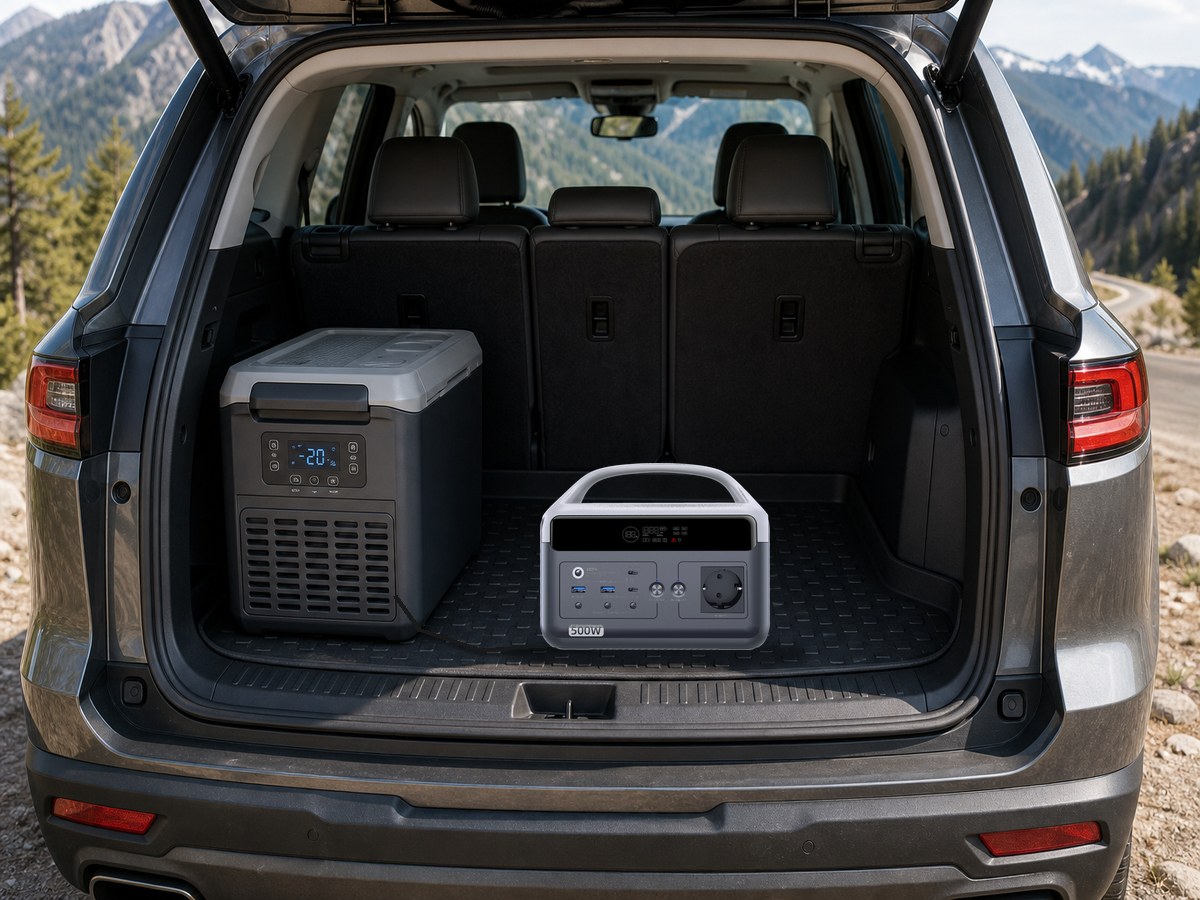
A 444Wh pack recharges from a 12V socket in about four and a half hours of driving, which fits a travel day and does not fit a commute. Two details matter more than the headline time. First, the socket has to stay live with the ignition off if you want to top up while parked; many cars cut it. Second, a 100W-class draw on a cigarette-lighter circuit is near the limit of what some vehicles fuse at, so check the handbook before relying on it.
Pass-through charging is the feature that makes the unit useful in a vehicle rather than merely present: it can charge and discharge at the same time, so a dashcam, a router or a fridge keeps running while the pack tops up from the socket. That is also the configuration to use if the station lives permanently in a van.
For road trips the practical load list is short: a 12V fridge, phones, a camera and an inflator. The first three run from the DC side, which avoids the inverter loss entirely and stretches the pack by roughly 15%. The inflator is the one to watch — it draws 100W+ in bursts and is better run from the car's own battery with the engine on.
Solar: 120W in, four hours, and the caveats
The solar input is capped at 120W, and the published figure is a full charge in about four hours under good conditions. The cap matters more than the panel you own: a 200W folding panel will not charge the unit faster than a 120W one, because the input stops accepting at 120W. Buying a larger panel only helps on days when output is below the cap — cloud, low sun angle, partial shading.
Three caveats are worth stating plainly. Panel ratings are measured at standard test conditions that a camping field rarely meets, so a 100W panel typically delivers 60–80W in real sun. Shading one cell of a series string can cut output by more than half, which is why panel placement matters more than panel count. And solar is a daytime resource: on a two-night trip with one travel day, the realistic plan is mains before leaving plus one solar top-up, not solar alone.
Cold mornings and hot cars
The published operating range is -10°C to 45°C, which covers winter camping and a hot car park. Two chemistry limits sit outside that headline. Lithium cells — the NMC pack here included — should not be charged below 0°C: discharge in the cold is fine, charging is what damages them, so a pack that spent the night at -5°C should be warmed to above freezing before it goes on the charger. And capacity, not just power, drops in the cold: expect roughly 10–20% less usable energy at freezing than at 20°C, which is another reason to plan for 70% of the pack rather than 100%.
At the top end, 45°C is a genuine ceiling, not a marketing number. A black car interior in summer passes it easily, and a pack stored there should be allowed to cool before charging.
Weight, chemistry and the one-hand test
At 3.4 kg in a 22 × 13 × 18 cm body, this is a one-hand carry with the moulded handle — the difference between a station that goes on every trip and one that stays in the garage. That size fits a car boot corner or the gap behind a van seat, which is where a station actually lives.
That weight is not an accident: this unit runs on NMC (ternary lithium) cells rather than LiFePO4, which is the choice most of its rivals make. It is worth spelling out because the two chemistries trade against each other and the spec sheets rarely say so.
| NMC (this unit) | LiFePO4 | |
|---|---|---|
| Energy density | Higher | Lower |
| Weight at 444Wh | 3.4 kg, one-hand carry | Heavier for the same capacity |
| Cycle life to 80% | 1,000 cycles | 3,000+ cycles |
| Best fit | Carried on trips, cycled a few dozen times a year | Fixed backup, daily cycling |
The practical reading: if the pack rides in a car boot and cycles 20–40 times a year, 1,000 cycles is decades of use and the weight saving is worth more than the extra cycle count. If it lives on a shelf as a UPS and cycles every day, LiFePO4's 3,000+ cycles is the more durable buy — and the heavier one. Neither is "better"; they are sized for different owners.
Flying with it: 444Wh is not carry-on legal
444Wh is roughly three times the 160Wh ceiling that airlines apply to lithium batteries in carry-on baggage, so this station cannot fly — not as a carry-on, not as checked luggage, and not with an airline's dangerous-goods form. It is a road-trip and campsite product. If a trip starts with a flight, the station has to be bought or rented at the destination, or replaced with a sub-160Wh power bank for the flight and a station for the ground.
Shipping is a separate question from flying, and it is handled per order with the transport documents that carriers require. Model-level certification status is listed on the certification page rather than asserted in a blog post.
500W versus 1000W: what you are actually trading
Moving up a class buys two things: more energy, and an inverter that can start appliances with heating elements. It costs weight, volume and money, and it costs the one thing that decides whether a station gets used — the willingness to carry it.
| Decision | 500W / 444Wh class | 1000W class and above |
|---|---|---|
| Best load band | 30–150W | 200–800W |
| Typical trip | Two nights, electronics and lights | Family camping, basecamp, short outages |
| Kettle, induction, hair dryer | No | Usually yes at 1000W+, still no for 1,500W+ devices |
| Carrying | One hand, 3.4 kg | Two hands, 10 kg and up |
| Failure mode | Runs out of energy | Too heavy to bring |
The failure mode column is the honest one. Oversized stations are rarely limited by capacity; they are limited by nobody wanting to lift them. For a couple doing weekend trips with phones, a laptop, a drone and lights, this class is the correct size and the next class up is a purchase that stays at home.
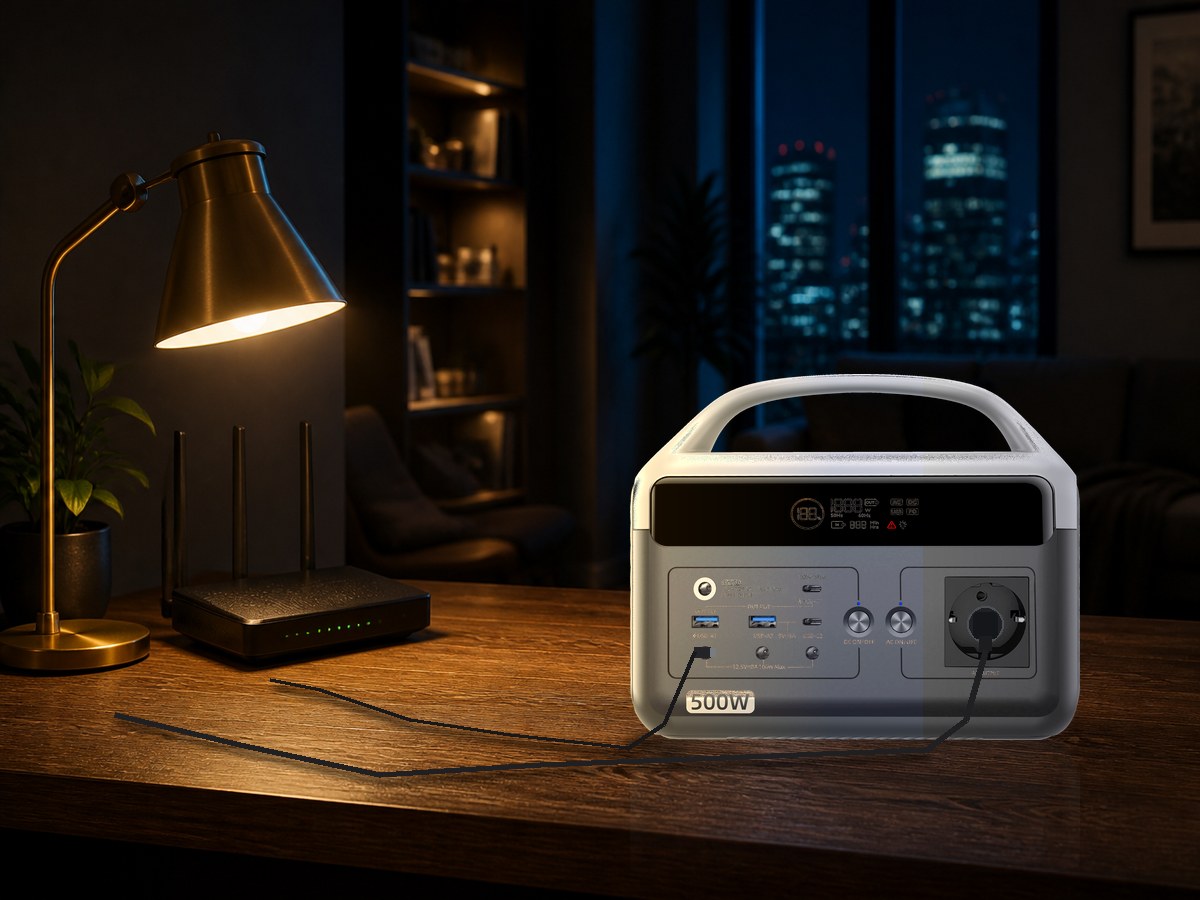
The same unit earns its place at home during a short outage: a router at 10W and a lamp at 8W run for more than a day on one charge, which is exactly the load profile a 444Wh pack handles well and a 500W inverter does not strain at.
Who should buy it, and who should not
Buy the STAR 500Z if the load list looks like this: two people, two nights, phones, headlamps, a camera, a drone, a laptop for an hour or two, a speaker, and maybe a 12V fridge for one night. Buy it if it will double as a home backup for a router and a lamp. Buy it if one-hand portability is the reason the last station stayed in the garage.
Do not buy it for a kettle, an induction plate, a hair dryer, a space heater or a microwave. Do not buy it to run a full-size fridge through a multi-day outage — that is a 1000Wh-and-up requirement with a much larger inverter. Do not buy it expecting to fly with it. And do not buy it as a solar-only system for a week off-grid; 120W of input over four hours is a top-up, not a supply.
If your load list lands between this unit and the next class, the 1000W/960Wh station is the honest comparison, and the full power station range puts the whole ladder on one page.
FAQ
Is 444Wh enough for a two-night camping trip?
Yes for electronics and lighting, no for a fridge. A realistic two-person load of phones, headlamps, a camera, a drone and two hours of laptop is about 360–400Wh, which one charge covers with little margin. Add a 12V fridge and the requirement roughly triples, so plan a second pack or a larger class.
How long will the STAR 500Z run a 60W laptop?
About 6.3 hours at the AC outlet, or slightly longer through the 100W USB-C port because DC-to-DC conversion loses less than the inverter. That is most of a working day, and it leaves the AC outlet free for a lamp or a camera charger at the same time.
Can it run a 12V fridge?
It can carry a 40W-average fridge for roughly nine hours of duty cycle, which covers one night, not a two-day trip. A 24-hour fridge load is about 960Wh — more than twice this pack — so a fridge-led trip needs the next class of station rather than a second small one.
Will it run a kettle or a coffee machine?
No for kettles, induction plates, hair dryers and space heaters: they draw 1,200–3,000W and the 500W inverter will trip its overload protection rather than underperform quietly. A 300W pod coffee machine is within range; a 1,000W filter brewer is not.
How fast does it recharge from the wall?
About three hours from a standard mains socket at 170W input, which is one top-up between trips rather than an overnight wait. Pass-through charging is supported, so devices can keep running while the pack refills.
Can I charge it with a 200W solar panel?
It will work, but not faster than a 120W panel, because the solar input stops accepting at 120W. A larger panel only helps in poor light — cloud, low sun or partial shading — where the panel's real output falls below the input cap. Expect 60–80W from a 100W panel in typical field conditions.
Can I take it on a plane?
No. At 444Wh it is more than double the 160Wh limit airlines apply to lithium batteries in carry-on baggage, and it cannot be checked either. It is a road-trip and campsite product; for flights you need a sub-160Wh power bank instead.
Does it work in winter?
Discharge works down to the published -10°C, with roughly 10–20% less usable capacity at freezing. Charging is the constraint: lithium cells should not be charged below 0°C, so let a cold pack warm up above freezing before putting it on mains or solar.
How long do the cells last?
The NMC pack is rated 1,000 cycles to 80% of original capacity. For weekend use that is still several years — and at 20–40 full cycles a year, most owners never reach the rating. Cycle life is counted in full charge-discharge cycles, so partial top-ups between trips cost proportionally less. If the unit will cycle daily as a UPS, a LiFePO4 model with 3,000+ cycles is the more durable choice, at the cost of extra weight.
Can it power a router and a lamp during an outage?
Yes, and this is its most underrated use. A router at about 10W plus an 8W LED lamp draw 18W, which is more than 20 hours of runtime on one charge — long enough to cover most residential outages, with the 500W inverter nowhere near its limit.
NEO1800 Pro 1800W/1382Wh Portable Power Station for Home Outages
Related Article