Solar Generator Manufacturers: Compare Capability, Not Catalogue Size
Most buyers compare solar generator manufacturers by catalogue size — how many wattages a supplier lists. That is the wrong metric. A solar generator is two products working together: a lithium power station and a folding solar panel. Few factories control both. The ones that do can quote a matched system, price it against a real bill of materials, and hand you test documents in their own name. The ones that do not are assembling from purchased modules or reselling finished goods. Here is what to check.
What "Solar Generator" Means in a B2B Quotation
In retail, a solar generator is one box: station plus panel. In a B2B quotation the phrase covers three different things, and suppliers rarely say which.
- Station only — a lithium power station, no panel.
- Panel only — a folding or rigid panel sold as accessory or standalone line.
- Matched kit — station plus panel, with the panel's working voltage inside the station's MPPT input range.
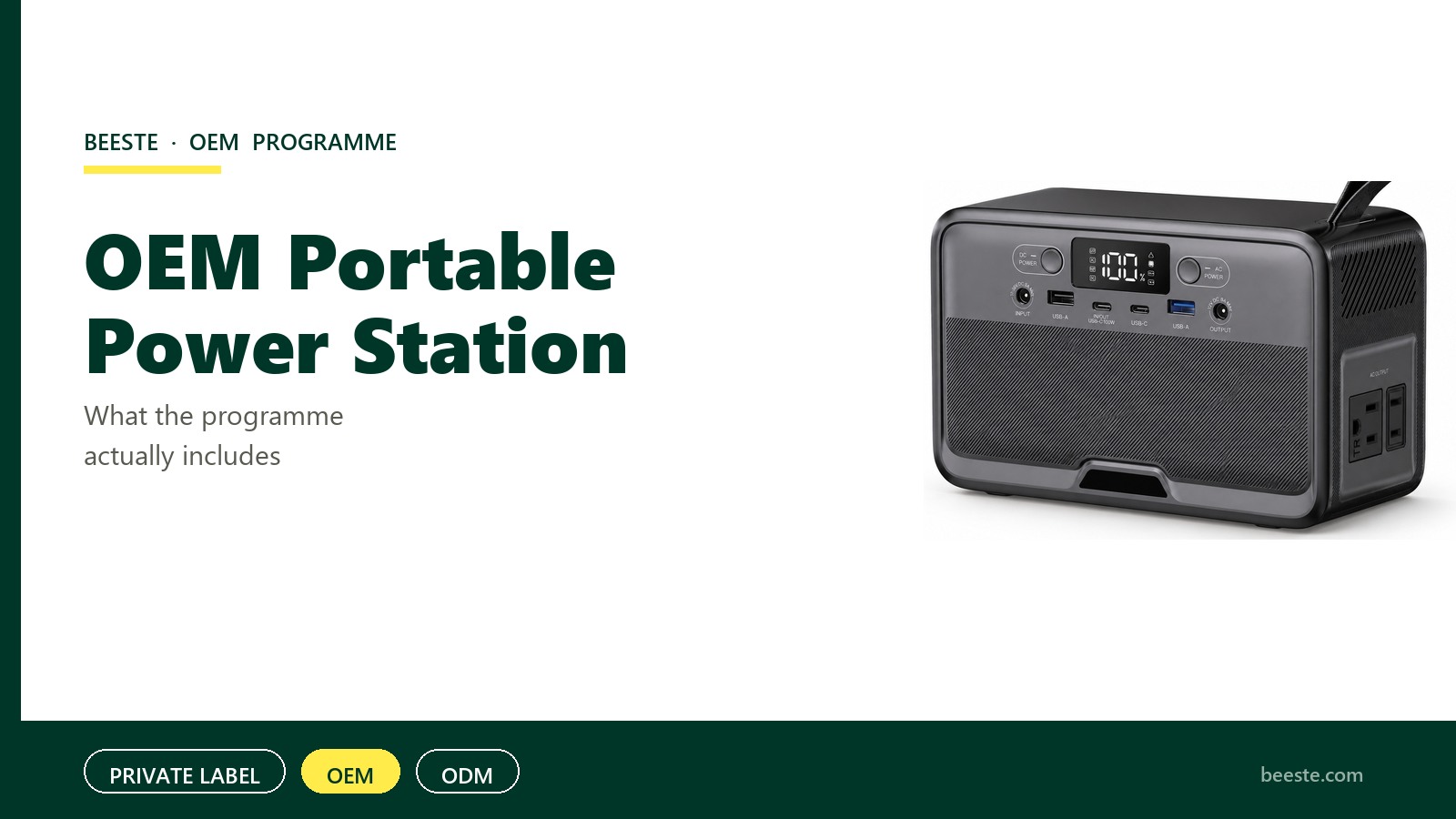
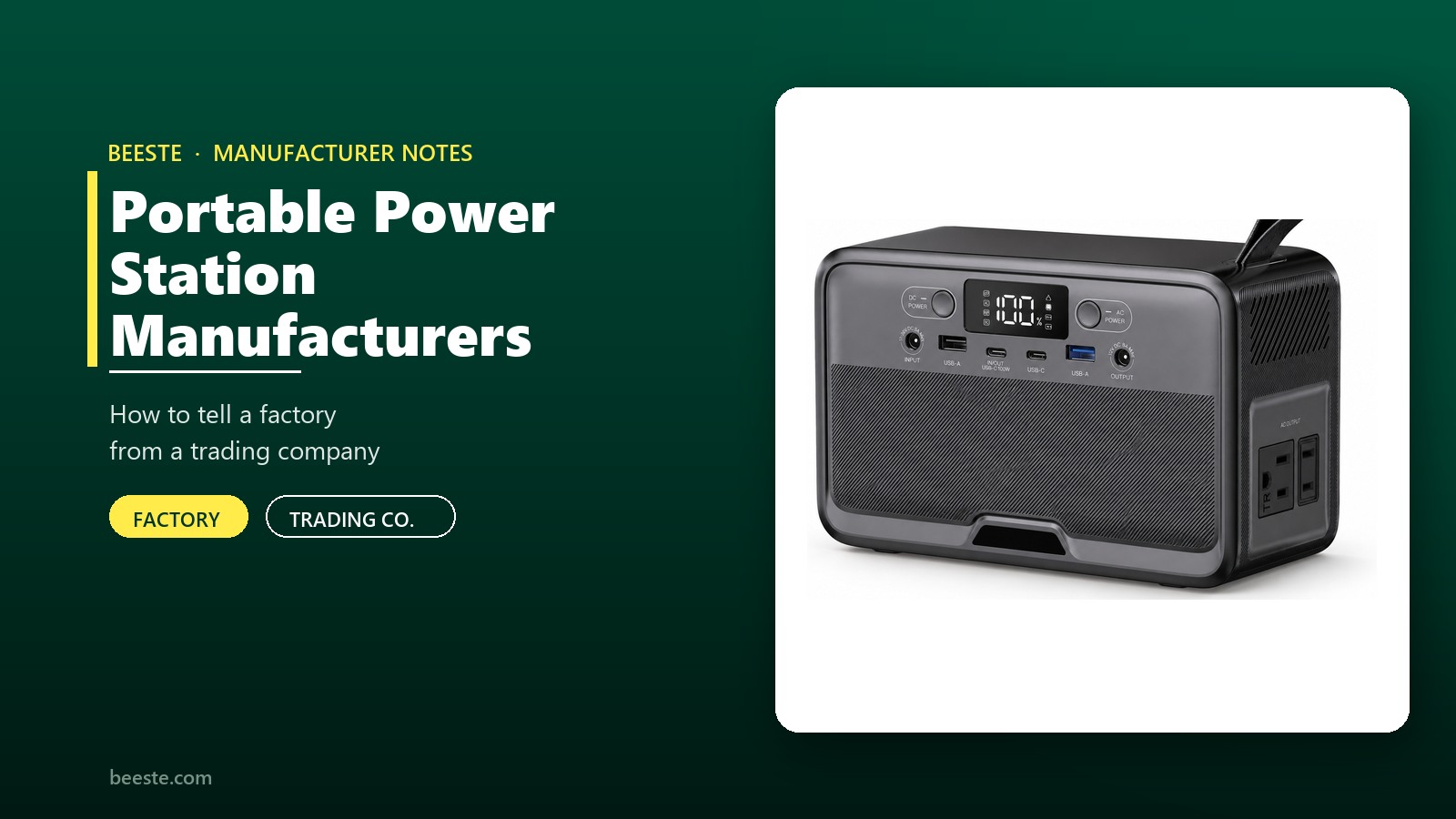
Confirm which one is being quoted before comparing price; the gap is usually the panel, not the battery. Our portable power station and solar panel lines are listed separately for exactly this reason. How station factories themselves are organised — cell sourcing, pack assembly, inverter design — is covered in portable power station manufacturers.
The Four Capabilities That Separate Manufacturers
Score each layer separately rather than accepting a single "we are a factory" answer.
1. Cell sourcing and pack assembly
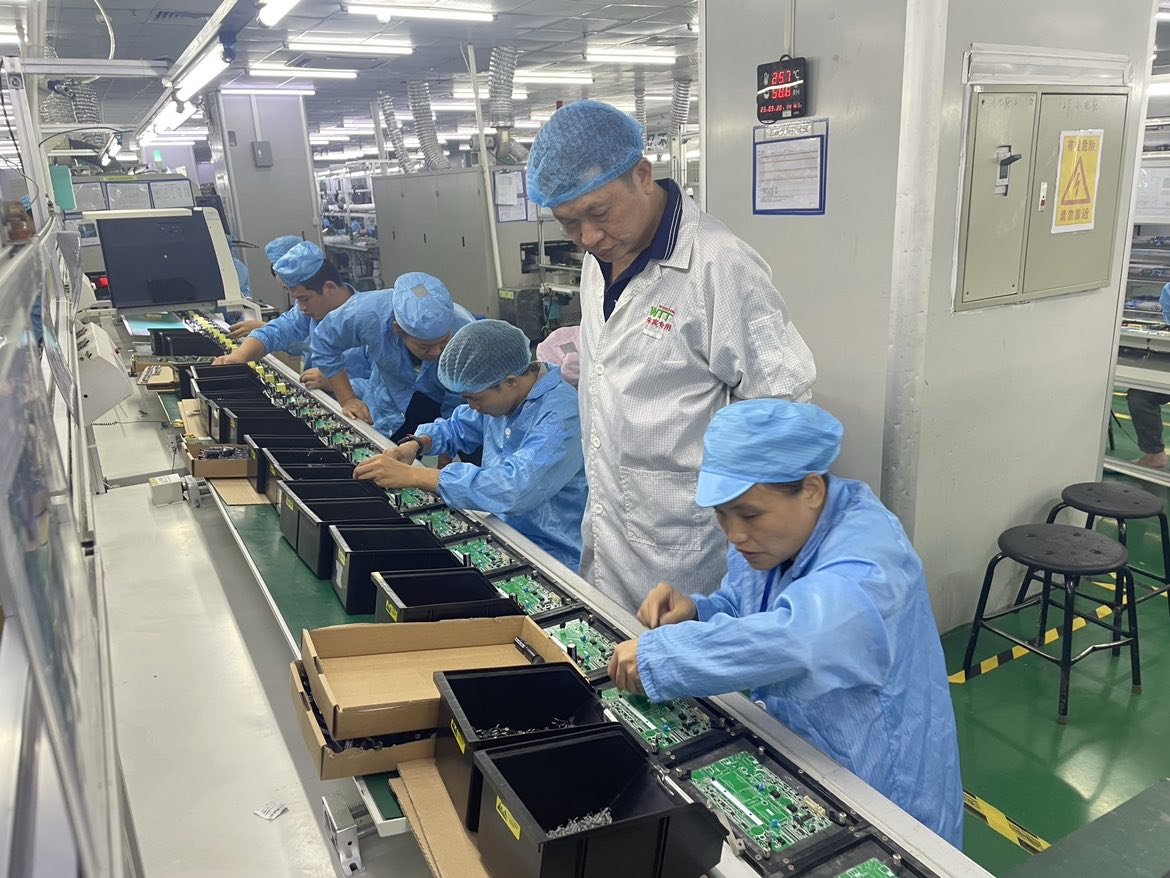
Ask which cell format is used, whether cells are graded and matched before assembly, and who owns the BMS firmware. A pack built from unmatched cells drifts out of balance and loses capacity early. Suppliers who buy pre-assembled packs cannot answer the matching question at all.
2. Inverter and PCBA
The inverter decides whether output is true sine or modified sine, and how the unit behaves under inductive loads such as a fridge compressor. Ask for topology and surge rating in milliseconds, not just continuous wattage. A unit holding 2000W continuous is a different product from one rated 2000W peak.
3. Panel lamination
This is where most "solar generator manufacturers" stop being manufacturers. Folding panels are either laminated (ETFE surface, EVA encapsulant, fibreglass backing, cured under heat and vacuum) or surface-bonded (PET film pressed onto cells). Laminated panels survive repeated folding and humidity; bonded panels delaminate. Ask which process runs on the line.
4. System integration and documentation
Matching panel to station is engineering, not packaging. The panel's working voltage must sit inside the station's MPPT window across the charge curve, and its open-circuit voltage must stay under the input limit in cold weather, when Voc rises. Whoever does that calculation is the system integrator — and should also be the certificate holder on the reports you receive.
How to Compare Suppliers Without a Factory Visit
Seven questions, asked in writing, separate the layers. The third column is what a weak answer reveals.
| Dimension | Question to ask | What a weak answer reveals |
|---|---|---|
| BOM control | Which sub-assemblies are in-house, which bought in? | "All in-house" with no product-level breakdown |
| Cell handling | Are cells graded and matched before assembly? Balance spec? | "A-grade cells" with no grading process |
| Inverter | True or modified sine? Continuous and surge rating, with duration? | One wattage number, no surge duration |
| Panel process | Laminated or surface-bonded? Which encapsulant and backing? | "High efficiency panel" with no process named |
| Ingress protection | What IP rating, tested by whom? | Rating claimed with no test reference |
| Logistics | Units per 20ft and 40ft container, packing dimensions? | No container data — typical of a reseller |
| Documentation | Whose name is on the test reports? | Certificates issued to another company |
Where Trading Companies Hide
Coverage without depth. A site lists 100W to 5000W but no model is identified as the supplier's own design. Real factories usually build a narrower range.
Instant availability at low MOQ. Production runs need tooling and material lead time. Any configuration at very low MOQ comes from stock.
Borrowed documentation. Reports issued to a different legal entity mean the quoting party does not hold the file.
Unanswerable engineering questions. Ask for the MPPT input window. A factory answers in numbers; a trader forwards the question.
Matching the Panel to the Station
Panel and station must match on voltage, not just wattage. Two examples from our line show the arithmetic.
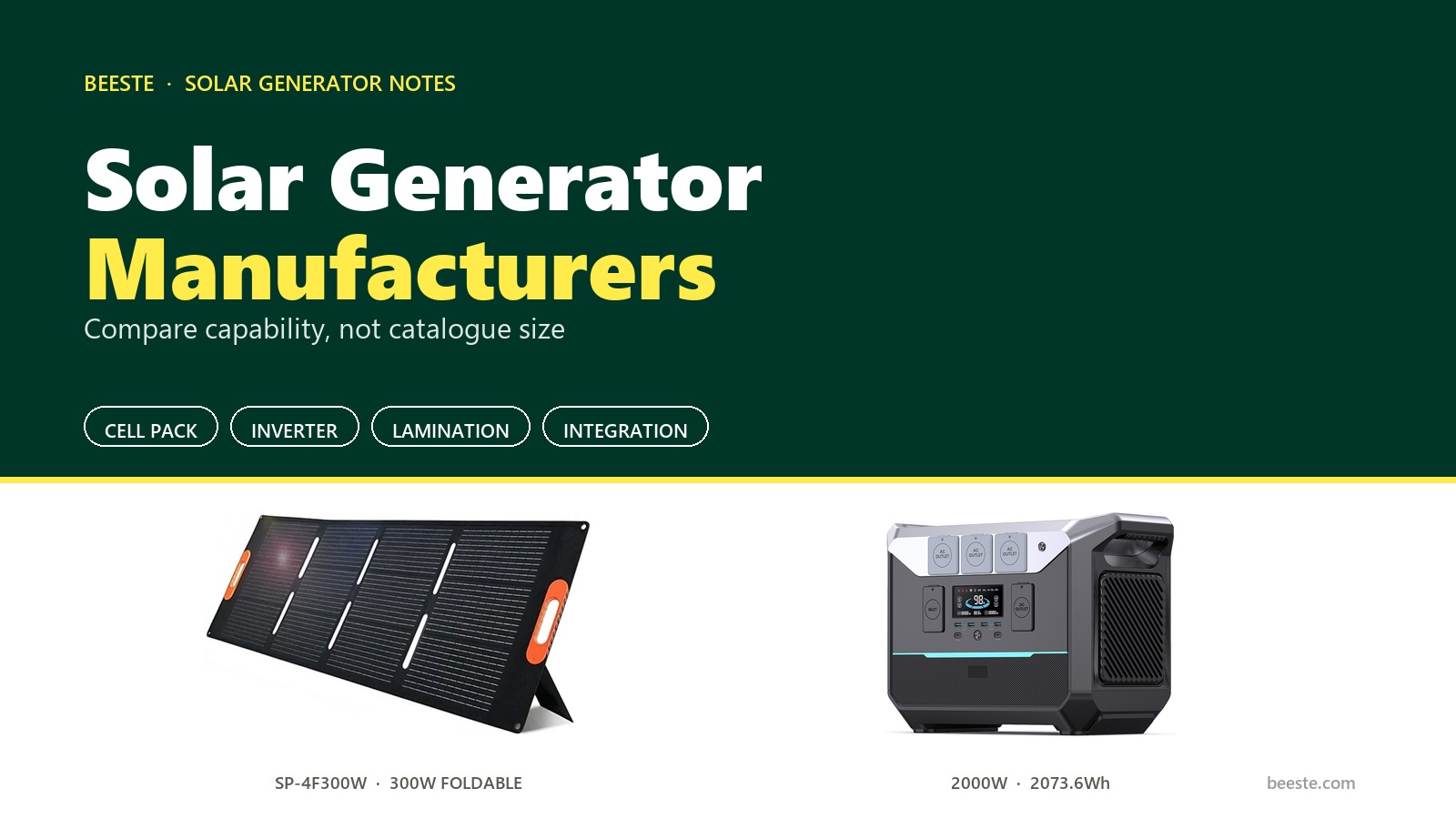
A 100W foldable solar panel runs at 20.5V peak operating voltage, 4.9A, open-circuit 24.0V, in a 2S2P two-fold layout, 3.8kg, folding to 600×565×30mm. That voltage sits inside the input window of small and mid-size stations, which is why it is the usual entry panel for 200W–600W units.
A 300W foldable solar panel runs at 40V and 7.5A, open-circuit 48V, in a 4S4P four-fold layout. Higher voltage means lower current for the same power, so cable losses drop — but the open-circuit figure must be checked against the station's maximum input, because Voc climbs in cold weather.
Pairing that panel with a 2000W portable power station rated at 2073.6Wh gives a sanity check. At roughly 70% of rated output under real sunlight — a normal de-rating for angle, heat and haze — the panel delivers about 210W, so a full charge from empty lands near ten hours. Quoted times that assume 100% panel output all day are arithmetic, not field data.
Two panels in series raise voltage and must stay under the input ceiling; two in parallel raise current and must stay under the input current limit. Ask which arrangement the supplier recommends for your station, and check it against the datasheet rather than the sales sheet.
Frequently Asked Questions
Are solar generator manufacturers the same as solar panel manufacturers?
No. A panel maker produces the panel; a solar generator manufacturer integrates panel and station. Some factories do both, but cell stringing and lamination are a different line, with different quality control, from pack assembly and inverter design. Ask which lines exist on site.
Can one factory supply both the panel and the station?
Some can. The tell is whether the supplier quotes a matched kit with the panel's voltage already checked against the station's MPPT window, and whether both items appear on the same test documentation.
What does "solar generator" mean in a B2B quotation?
Usually a station-plus-panel kit, but the term is used loosely. Confirm whether the price covers the station, the panel or both, and whether the panel is laminated or surface-bonded. Those two variables explain most of the price gap between quotes for the same wattage.
How do I check that a panel and station are actually matched?
Three numbers: the panel's working voltage must fall inside the station's MPPT input range; its open-circuit voltage, adjusted upward for cold, must stay below the maximum input; and its current must stay under the input current limit. Get all three in writing.
Next Step
Send the wattage, load profile and destination market, and we will return a matched configuration plus container loading figures, so you can compare landed cost instead of unit price. If you are still at the specification stage, send your specification — panel voltage, inverter topology and ingress rating are the three items that move the bill of materials most. Ready to price it? Request a quote.
OEM Portable Power Station: What the Programme Actually Includes
Related Article