WEEE Registration for Portable Power Stations: Who Registers
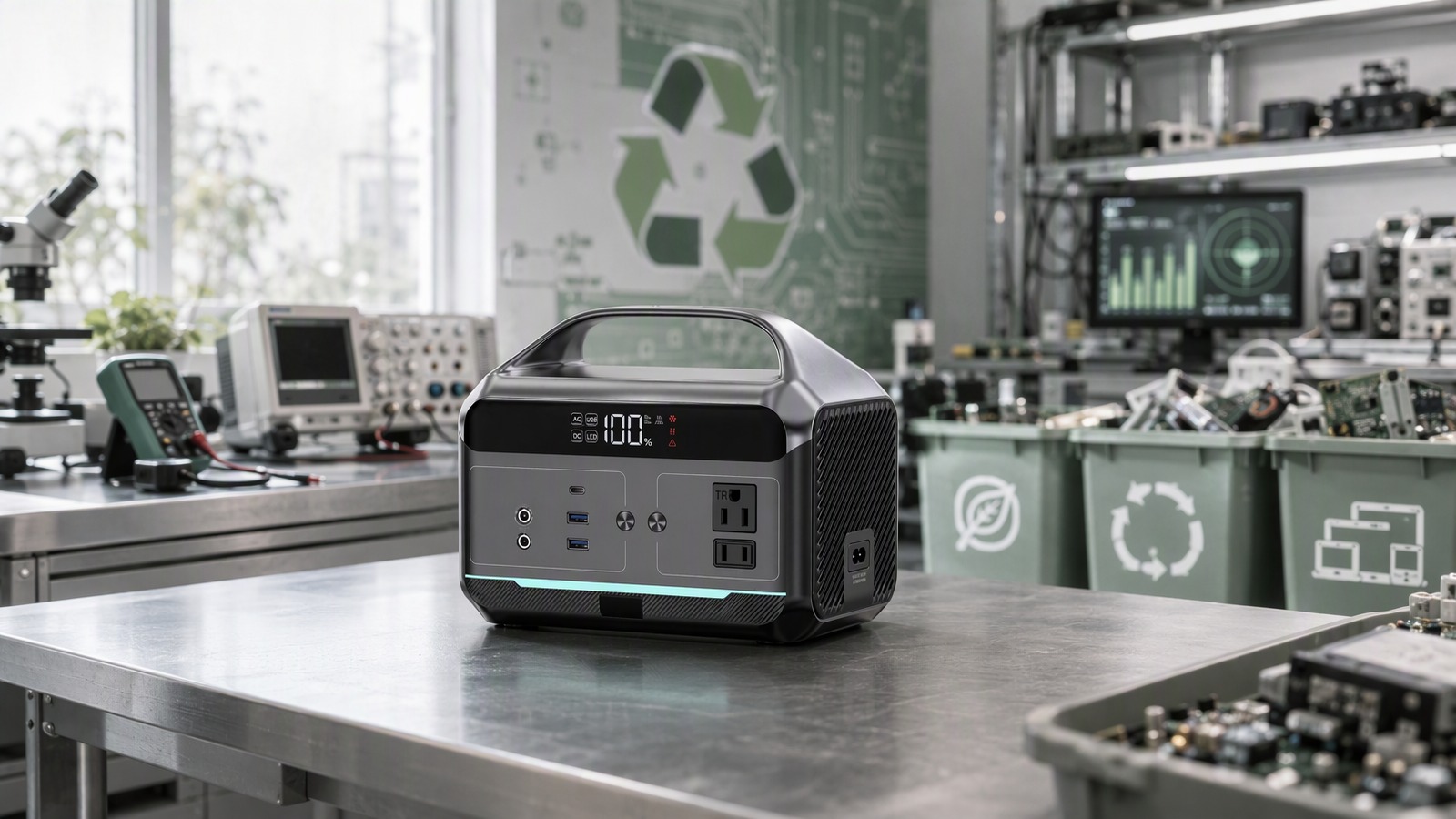
Short answer: WEEE registration is separate from CE marking. Before selling a portable power station in an EU member state, the entity that first places it on that country's market must register as a producer and finance take-back — and in Germany that filing needs a Germany-based authorised representative. Registration is per country and per equipment type, not per shipment, and sits alongside separate battery and packaging obligations.
What WEEE covers — and what it does not
The WEEE Directive 2012/19/EU governs waste electrical and electronic equipment. Since 15 August 2018 it has operated on an open scope: unless a product falls under a specific exclusion, equipment is in scope and assigned to one of six categories in Annex III. A portable power station is equipment and therefore in scope.
It is also not part of CE marking. CE covers placing a compliant product on the market; WEEE covers what happens when it becomes waste, and who pays — a supplier's declaration of conformity says nothing about the second. Member states must collect the equivalent of 65% of the average weight of equipment placed on their market, financed by producers. Confirm the Annex III category with the national body: it sets your reporting volumes and take-back route.
Who counts as the producer
The obligation follows the first placing on the market in each country — normally the importer, distributor or seller, including one shipping directly to end users from outside the EU. For a brand owner importing finished power stations, the registration is usually theirs, not the factory's.
Registration is per country and per equipment type
There is no single EU-wide WEEE register. Each member state runs its own, and a producer registers wherever it first places the equipment on the market. Within a national register, registration is issued per type of equipment, not per unit — so a new product family can require an additional registration even when the company is already registered there.
Marketplaces ask for the number before listing, making registration a commercial gate too.
Germany: the authorised representative requirement
In Germany the WEEE Directive is implemented by the ElektroG, and registration is handled by the Stiftung EAR. A company without an establishment in Germany cannot complete it alone: an authorised representative based in Germany must be mandated to file on its behalf and to carry the ongoing obligations, with a minimum mandate period set by the register. This is the step that most often delays a market entry, because it is a third-party appointment rather than a form.
Other member states apply their own arrangements, in some cases with a local representative too. Check country by country.
WEEE is not the only producer obligation
Three regimes usually apply to the same product, and they are registered separately:
- WEEE — the equipment: registration, take-back, recycling financing.
- Battery producer responsibility — the cells inside the product carry their own registration and collection duties at national level.
- Packaging — cartons and inserts are covered by packaging producer responsibility, which in Germany is a further register again.
Each register issues its own number, so these run in parallel rather than in sequence — and late starts hold up a launch.
Before the first shipment
| Step | What it involves | Held by |
|---|---|---|
| Confirm the category | Match the product to an Annex III category | Producer |
| Identify the producer | Who first places the equipment on the market in each country | Importer / distributor / seller |
| Appoint a local representative | Mandatory in Germany; check each further country | Producer |
| Register and obtain the number | Per country, per equipment type | Producer |
| Arrange take-back financing | Contract a compliance scheme or collective system | Producer |
| Add battery and packaging registrations | Separate registers and bodies | Producer |
| Finalise the label | Registration number, responsible entity, battery collection marking | Producer, before mass production |
Work up from the last row: the label cannot be finalised before the responsible entity is settled.
FAQ
Does a portable power station need WEEE registration, or do the battery rules cover it?
Both apply, and they are separate. The equipment is in scope of WEEE; the cells trigger battery producer obligations. Registering for one does not satisfy the other.
Can a manufacturer outside the EU register with the German register directly?
No. A company without an establishment there must mandate a Germany-based authorised representative, who files and carries the ongoing duties.
Is WEEE part of CE marking?
No. CE covers placing a compliant product on the market; WEEE is a producer-responsibility regime covering take-back and recycling. For the CE framework, see our guide to EU certification requirements.
Working with BEESTE
BEESTE (Shenzhen BEESTE Technology Co., Ltd.) manufactures LiFePO4 portable power stations and works with three kinds of partner:
- OEM/ODM & Customization — private-label programmes, including label artwork carrying your brand, registration numbers and responsible-entity details.
- Distribution & Wholesale — product, packaging and logistics data in the form the registers ask for.
- Projects & Installation — storage systems for larger sites, with input on market-entry paperwork.
We can supply the product-side data that registration forms draw on — declarations, safety and EMC reports, battery reports, UN 38.3 summaries, and packaging weights and dimensions. The registrations are held in your name, as producer in each country of sale.
Tell us your target countries and SKU, and we will confirm the product-side data set before you file.
UN38.3 Portable Power Station Manufacturing: What Buyers Must Verify
What Certifications Are Required to Sell Portable Power Stations in the EU
Related Article